Key Points:
- Chinese DRAM chipmaker CXMT surged 471% in its stock market debut, pushing valuation past $140 billion.
- CXMT’s market capitalization surpassed legacy American semiconductor pioneer Intel during first-day trading.
- Surging domestic demand for AI server memory and Big Fund Phase III backing fueled massive investor interest.
- The company is expanding production of DDR5 and High Bandwidth Memory to power homegrown AI processors.
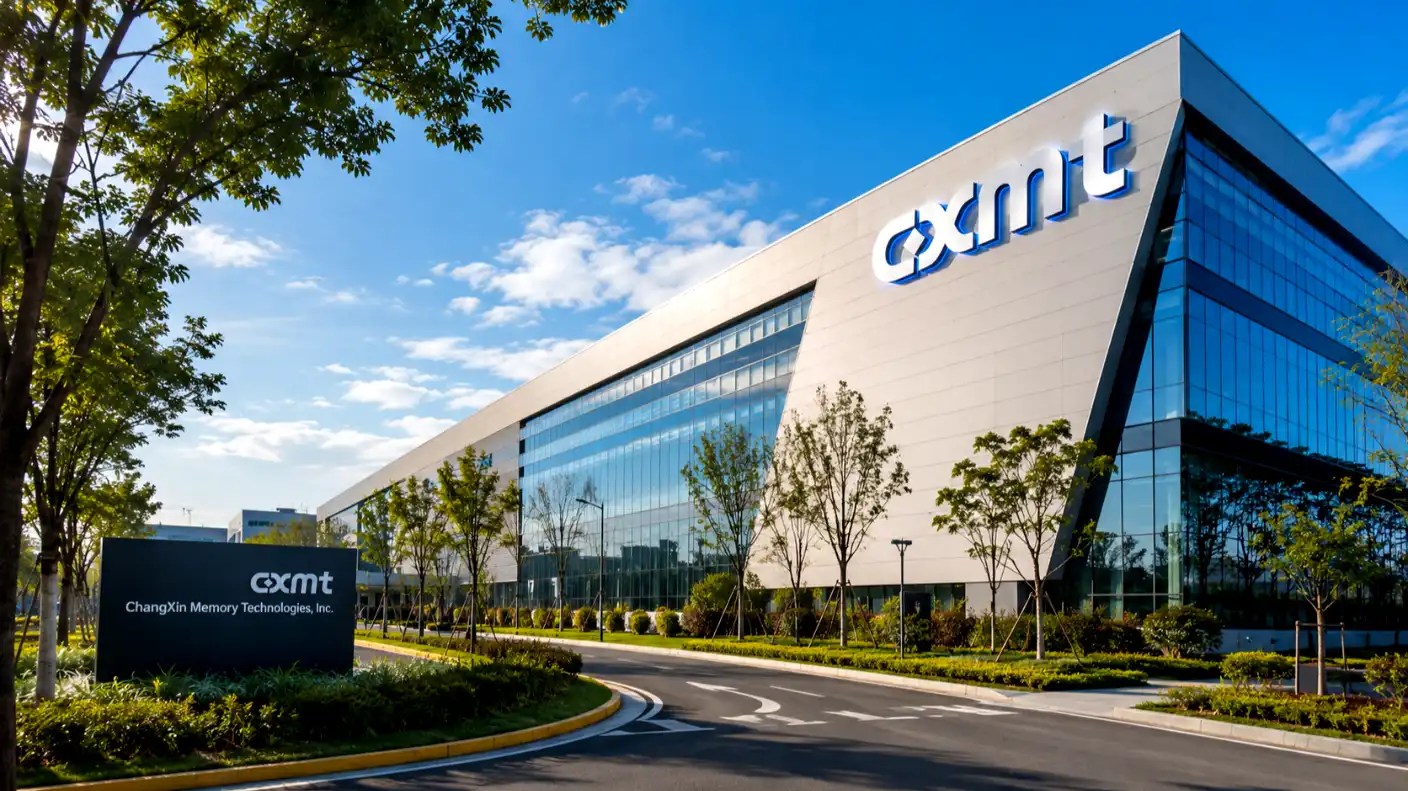
China’s premier memory chipmaker ChangXin Memory Technologies (CXMT) delivered a record-breaking stock market debut, surging 471% on its first day of trading. The explosive price spike pushed the Hefei-based semiconductor giant’s market capitalization past 1 trillion yuan ($140 billion), temporarily surpassing the market value of American chip pioneer Intel Corporation. Driven by insatiable domestic demand for artificial intelligence memory and strong sovereign policy backing, CXMT’s blockbuster listing marks a major milestone in China’s drive for semiconductor self-sufficiency.
Domestic institutional and retail investors poured billions of dollars into CXMT’s initial public offering on Shanghai’s high-tech STAR Market board. The IPO represents China’s largest semiconductor equity float of the year, raising tens of billions of yuan to fund cleanroom expansion and advanced research programs. Trading subscription numbers confirmed that domestic fund managers oversubscribed the retail tranche by more than 2,500 times, reflecting intense domestic enthusiasm for home-grown hardware suppliers capable of insulating the national tech sector from foreign trade sanctions.
The first-day trading rally carried immense symbolic weight across global financial markets. By climbing to a market valuation exceeding $140 billion, CXMT briefly passed Intel Corporation, whose market capitalization stood near $110 billion following recent broader market adjustments. While Intel maintains a significantly larger global revenue base, stock market traders priced in CXMT’s rapid capacity expansion, protected domestic market share, and central position in supplying memory chips to China’s massive telecommunications and artificial intelligence sectors.
Founded in 2016 in Anhui province, CXMT operates as China’s undisputed leader in dynamic random-access memory (DRAM). The company mass-produces low-power LPDDR5X memory for flagship Chinese smartphones alongside high-density DDR5 memory modules for cloud computing servers. Major domestic technology brands—including smartphone makers Xiaomi, Oppo, and Honor, alongside enterprise server builders Inspur and Lenovo—are actively integrating CXMT’s memory chips into their primary hardware portfolios to reduce dependence on foreign suppliers.
To support China’s rapidly expanding artificial intelligence ecosystem, CXMT is accelerating its High Bandwidth Memory (HBM) engineering roadmap. HBM stacks multiple DRAM dies vertically to deliver ultra-fast data transfer speeds required by high-density AI accelerators. CXMT engineered domestic HBM2E and HBM3 memory modules tailored specifically to power homegrown artificial intelligence processors, including Huawei’s Ascend 910 series and graphics processors from Moore Threads and Biren Technology. By providing localized memory solutions, CXMT enables domestic data centers to train complex large language models without relying on restricted Western hardware.
The timing of CXMT’s public listing coincided with a severe global memory shortage that drove contract prices to record highs. As foreign memory manufacturers allocated up to 70% of their production lines to premium AI data center orders, standard consumer DRAM contract prices jumped 90% in the first quarter and another 60% in the second quarter. Global supply tightness forced domestic Chinese electronics manufacturers to turn directly to CXMT to secure memory allocations, generating record quarterly revenues and expanding CXMT’s gross profit margins.
CXMT’s rapid technological advancement relies on unprecedented state financial backing. China launched the third phase of its National Integrated Circuit Industry Investment Fund, known as Big Fund Phase III, with a registered capital base of $47.5 billion (344 billion yuan). A substantial portion of this sovereign capital directly funds CXMT’s multi-phase mega-fabs in Hefei and Beijing. State-backed capital allows CXMT to maintain multi-billion-dollar annual research budgets and purchase high-precision manufacturing equipment without facing short-term commercial debt pressure.
CXMT’s surging valuation arrives despite persistent trade scrutiny from trade officials in Washington. The Bureau of Industry and Security inside the United States Department of Commerce is evaluating additional equipment export controls to restrict Chinese access to advanced DRAM production tools. In response, CXMT collaborated closely with domestic toolmakers like Naura Technology Group, Piotech, and Shanghai Micro Electronics Equipment. By deploying Chinese-made etching, cleaning, and thin-film deposition machines, CXMT’s production lines are achieving high wafer yields while reducing reliance on Western equipment vendors.
The 471% stock surge demonstrates that Chinese capital markets are fully committed to financing domestic semiconductor champions. As artificial intelligence applications expand into smart manufacturing, autonomous vehicles, and consumer electronics, memory bandwidth and storage capacity will remain primary bottlenecks in computing. By combining massive domestic market demand with state equity backing and rapid technical progress, CXMT is cementing its position as a permanent, powerful force in the global semiconductor industry.