Key Points:
- Traditional retailers are rapidly expanding their private label portfolios to counter falling margins and weak consumer spending.
- S&P Global Ratings projects that private label goods will comprise up to 20% of China’s FMCG retail mix for top chain stores over the next eight years.
- Private-label products are typically 16% cheaper for consumers but generate gross margins 8% to 15% higher for retailers than national brands.
- Big tech and delivery platforms are actively buying up grocery startups to secure valuable private-label food assets.
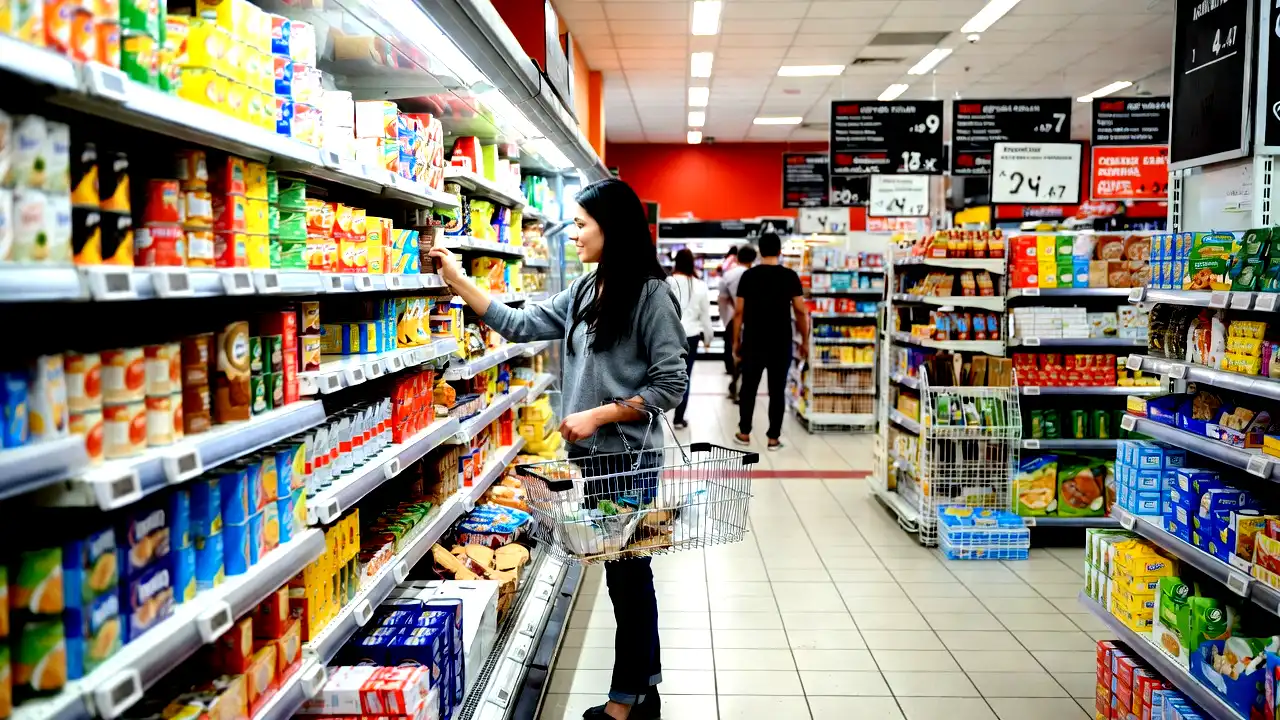
A major transformation is sweeping through the retail sector in the world’s second-largest economy as brick-and-mortar grocery chains scramble to adapt to changing consumer habits. Facing intense pressure from a sluggish economy, falling consumer spending, and relentless online competition, supermarkets are turning away from traditional business models. Instead of relying on supplier-funded shelf fees, major retailers are focusing on developing and expanding their own private-label products. This structural shift from branded merchandise to store-owned goods represents a crucial bid to secure profit margins and build long-term customer loyalty in an increasingly crowded marketplace.
Industry projections confirm the rapid acceleration of store-branded products in the country. S&P Global Ratings expects the private-label category to comprise up to 20% of the fast-moving consumer goods retail mix for the top 100 chain stores over the next eight years, representing a massive jump from the single-digit levels recorded in 2025. This transition is not a temporary discount strategy but a core corporate margin buffer. Historically, supermarkets relied heavily on slotting fees paid by major national brands to list products on shelves, but the rise of e-commerce has eroded this supplier-funded income, forcing supermarkets to capture profit margins directly from merchandise sales.
From a financial perspective, the economics of private labels are highly favorable for both retailers and price-sensitive consumers. Research from consumer tracking firms shows that private-label products are on average 16% cheaper than their branded equivalents. Despite these lower price tags, store-branded foods generate gross margins that are 12% to 15% higher than national brands, while daily household goods yield a premium of 8% to 12%. By cutting out intermediary distributors and eliminating expensive national marketing budgets, supermarkets can pass savings to shoppers while keeping more profit for themselves.
The overall scale of this market segment is expanding at an impressive rate. Data from agricultural and retail tracking groups shows that the domestic private-label grocery market surpassed $55 billion in 2025, growing approximately 17% year-on-year. Industry projections estimate that this market will reach $80 billion by 2030, driven heavily by Gen Z shoppers and middle-class urban consumers who prioritize product quality and value-for-money over flashy brand names. This fast-growing segment is outperforming the overall retail sector, which is currently expanding at a slow pace of just 2% to 3% annually.
Global retail giants are leading this operational restructuring. For instance, Walmart is aggressively remodeling over 100 of its hypermarkets across the country to make them more compact and efficient. As part of this optimization, the retail giant is shrinking its product selection to a tight core of roughly 10,000 unique items, down from the massive catalogs of previous decades. It is replacing underperforming third-party brands with its own private-label lines, including its fresh food line and its premium club brand. By replacing traditional supermarket spaces with compact, own-brand-heavy stores, the company is managing to capture market share even as local competitors retreat from physical spaces.
Local retail chains and tech platforms are also deploying massive resources to capture this high-margin segment. Traditional players like Yonghui Supermarket are restructuring their physical locations to focus on fresh, store-branded foods, though their private-label lines still account for less than 5% of overall sales, leaving significant room for growth. Meanwhile, e-commerce giants like JD.com are leveraging their vast user databases to optimize product development. JD’s private brand, which analyzes search profiles, review feedback, and real-time purchasing behavior to design new household items, boasts a new-product success rate of over 90%, far surpassing the traditional industry average of 10% to 20%.
The rise of rapid, hyper-local grocery delivery has also supercharged the private-label race. Pupu Supermarket, a pioneer in the 30-minute fresh grocery delivery sector, has built an own-brand empire in southern China, generating over 5 billion yuan (approximately $700 million) in private-label sales. The platform overcomes the digital trust deficit by using clean ingredient labels and rigorous quality control protocols on its store brands. Recognizing the immense value of these proprietary supply chains, tech giant Meituan recently agreed to acquire delivery startup Dingdong Maicai for approximately $717 million, with Dingdong’s extensive private-label food portfolio cited as a key motivation for the buyout.
This structural pivot is fundamentally transforming the relationship between supermarkets and their manufacturing suppliers. Previously, large manufacturers dictated pricing terms and forced retailers to absorb marketing costs. Today, supermarkets are forming close, collaborative partnerships with agile, research-heavy original equipment manufacturers. This new supply chain logic allows supermarkets to design, test, and bring new custom-branded foods to market in as little as 12 months, compared to the years of development required under traditional systems. This flexibility allows retailers to respond instantly to shifting consumer trends, such as the sudden demand for low-sodium or organic ingredients.
Ultimately, the rapid rise of private labels proves that the survival of brick-and-mortar retail in a highly digitized economy relies on differentiation and pricing control. While traditional supermarkets that rely on slotting fees continue to suffer from declining traffic and weak profitability, those that can build strong, trusted own-brand ecosystems are finding a viable path to sustainable growth. As economic conditions force consumers to remain highly value-conscious, the supermarkets that can deliver premium-quality products under their own banners will continue to widen their lead, permanently rewriting the playbook for global retail.