Key Points:
- Tencent has finalized a $3 billion memory supply agreement with ChangXin Memory Technologies to bolster its domestic cloud infrastructure.
- The deal is designed to mitigate risks posed by international trade barriers that have limited Chinese firms’ access to high-end foreign semiconductor components.
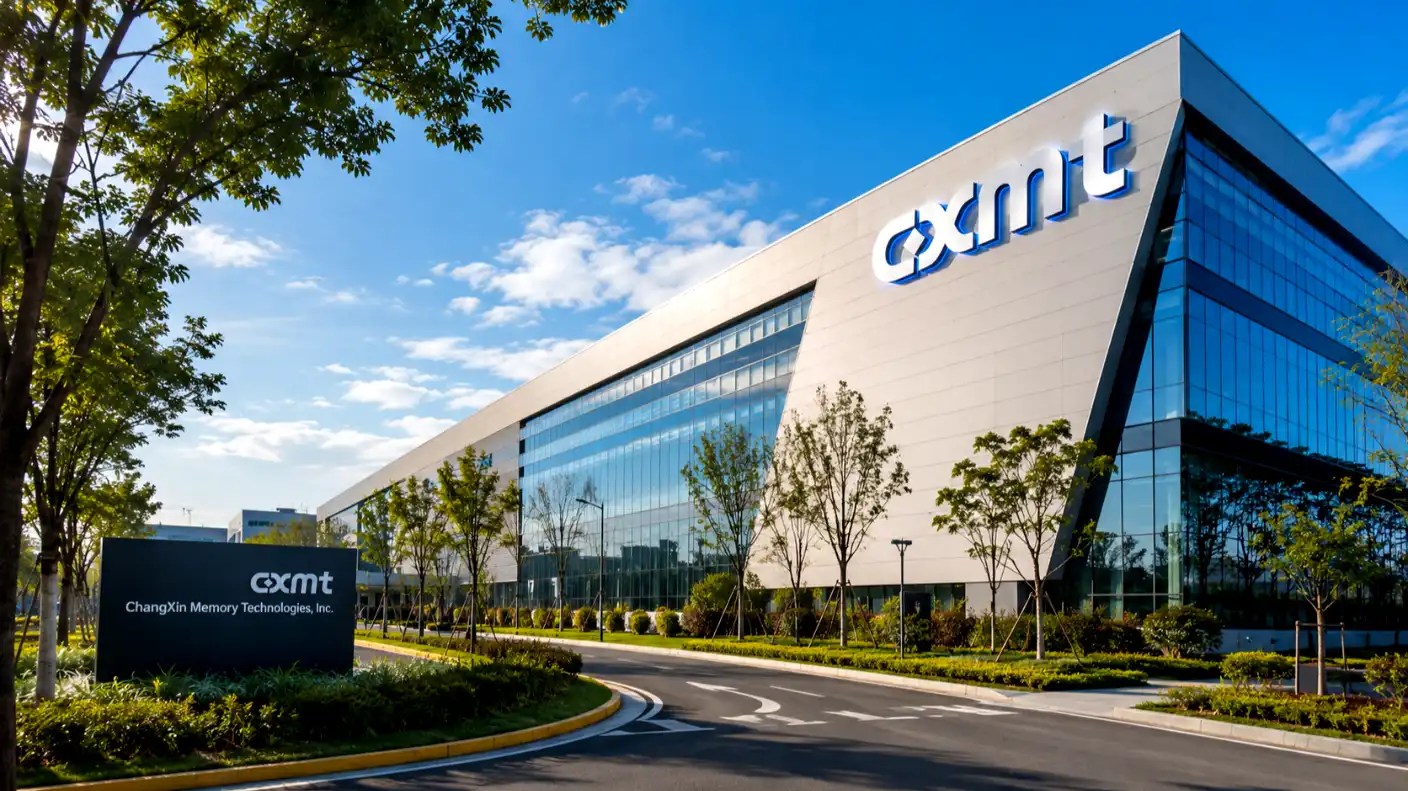
- CXMT is rapidly scaling its DRAM production capacity to become a primary supplier for China’s booming AI-driven data center market.
- This collaboration highlights a growing trend of “domestic-to-domestic” sourcing, where major tech platforms directly fund the development of local hardware partners.
The Chinese semiconductor landscape is experiencing a massive shift toward domestic integration, highlighted by a landmark $3 billion agreement between internet giant Tencent and ChangXin Memory Technologies (CXMT). As international export controls continue to restrict the flow of advanced Western technology, this deal marks a strategic move by one of China’s most prominent cloud service providers to secure a stable, home-grown supply of high-performance DRAM memory. The partnership underscores a broader national mandate to build a self-sustaining technology ecosystem capable of supporting the massive demands of large-scale artificial intelligence models and cloud infrastructure.
The scale of this investment indicates the vital importance of memory chips in the current AI era. Large language models and predictive algorithms are hungry for high-speed, high-density DRAM. For a company like Tencent, which operates vast data center networks that support millions of concurrent users, the memory subsystem is a primary determinant of performance. By locking in a multi-year supply contract with CXMT, Tencent ensures that its AI development pipeline remains shielded from the volatility of global trade, allowing its engineering teams to innovate without the constant fear of supply chain disruption.
For CXMT, the deal serves as a massive validation of its technological progress. Despite facing significant international pressure, the company has continued to refine its fabrication processes, narrowing the performance gap between its products and those from legacy global leaders. A contract of this size—valued at $3 billion—provides the company with the necessary capital to further invest in next-generation manufacturing tools and research. It effectively turns Tencent into both a customer and a long-term partner, creating a symbiotic relationship that benefits both firms’ bottom lines.
The shift toward domestic sourcing is also changing the economic dynamics of China’s semiconductor industry. In previous years, the preference was always for established global suppliers, who offered proven quality and massive economies of scale. However, the current geopolitical climate has changed the value proposition. Today, “reliability” means “domestic availability.” This trend is funneling billions of dollars back into the local economy, helping to build out a robust supply chain that spans from raw silicon processing to finished memory modules.
Tencent’s move is expected to trigger a wave of similar agreements across the Chinese tech sector. Competitors are already closely watching the details of this partnership, and many are now likely evaluating their own dependencies on external memory providers. If domestic firms can successfully demonstrate that they have the capacity to support the rigorous needs of top-tier cloud providers, the reliance on overseas vendors could decrease significantly by the end of the decade. This would fulfill a major national objective, effectively insulating the country’s essential digital infrastructure from any potential future trade shocks.
However, the path forward is not without its hurdles. CXMT must demonstrate that it can maintain high yields and consistent quality as it scales production to meet the massive demands of the cloud computing market. DRAM fabrication is notoriously difficult, requiring a high degree of precision and constant process refinement. To successfully replace global incumbents, CXMT will need to prove its reliability in real-world, high-traffic data centers over an extended period. The partnership with a demanding client like Tencent is the ultimate testing ground for this capability.
As the industry moves toward 2030, this deal stands as a marker of the new reality in the semiconductor space. The era of a seamless global market for components is being replaced by a more fragmented, regionalized model, where tech giants work hand-in-hand with hardware partners to ensure their survival and growth. Tencent’s $3 billion commitment to CXMT is more than just a purchase order; it is a declaration that the future of China’s AI infrastructure will be forged by local hands. For investors and industry analysts alike, this partnership is a critical bellwether for the future of tech sovereignty.