Key Points:
- Industry experts urge the European Union to deepen partnerships with South Korean battery manufacturers to reduce critical supply chain risks from China.
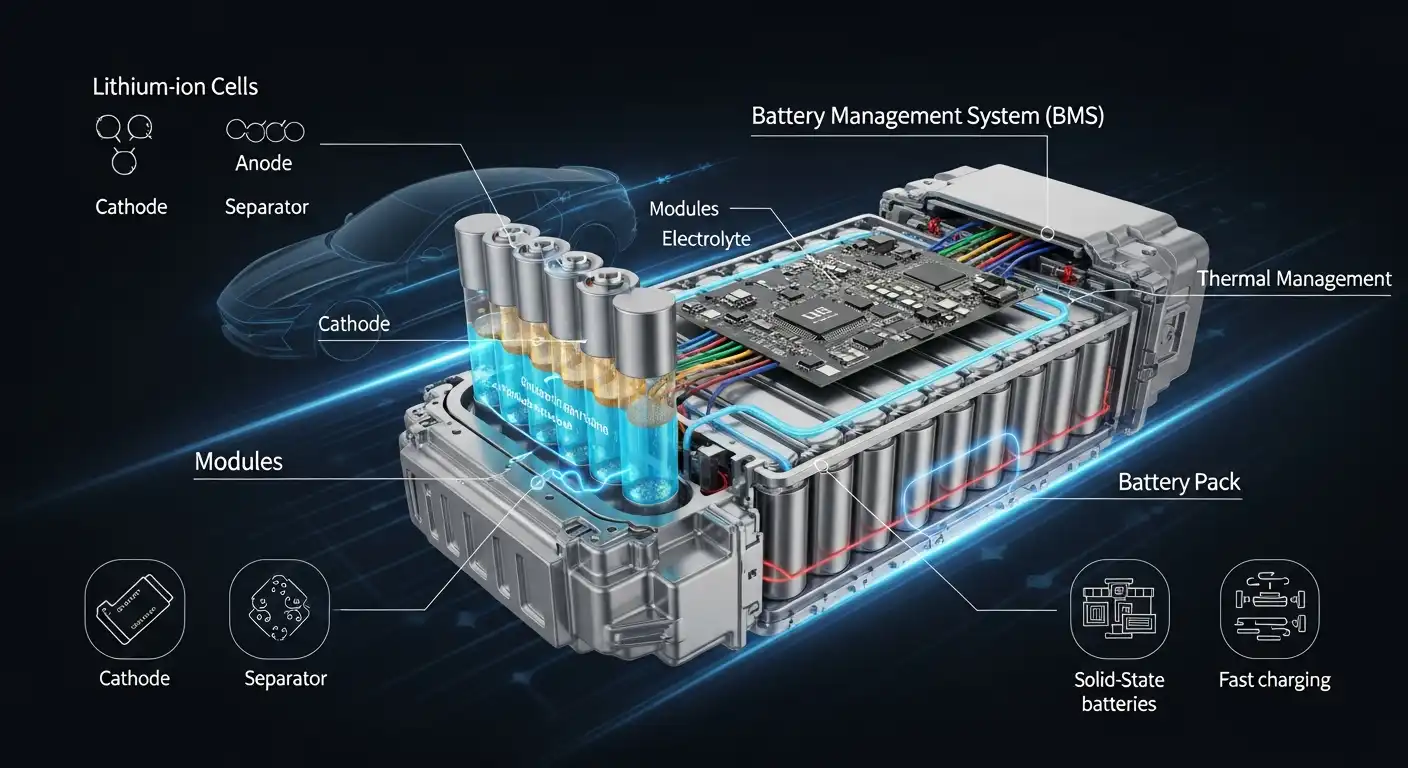
- China currently produces nearly 80% of global battery cells and controls 94% of the world’s lithium iron phosphate (LFP) battery output.
- South Korean producers LG Energy Solution, Samsung SDI, and SK On already account for roughly 78% of Europe’s installed battery manufacturing capacity.
- Upcoming European Union regulations, including the Battery Passport and local manufacturing requirements, create strong incentives for carmakers to choose transparent supply chains.
The European Union faces an urgent dilemma in its race to electrify road transportation. While European leaders aim to build a self-sufficient clean energy economy, European automakers remain heavily dependent on Chinese supply chains for critical electric vehicle batteries. Industry experts warn that relying solely on local European startups will not close this gap in time. Instead, policy analysts urge Brussels to form deeper industrial alliances with South Korea’s leading battery producers to reduce strategic supply chain vulnerabilities.
China currently dominates every tier of the global battery supply chain. Chinese companies manufacture roughly 80% of the world’s battery cells and control a staggering 94% of global production for lithium iron phosphate (LFP) cells. In Europe, the share of electric vehicles running on LFP batteries grew from 3% in 2022 to 10% in 2024, with almost all of these packs originating from Chinese factories. Without a coordinated alternative strategy, analysts project that Chinese battery suppliers could expand their European market share from 30% to 50% by 2027.
Europe initially hoped that homegrown battery companies would secure the continent’s automotive future. However, domestic startups have encountered crippling technical hurdles, funding shortfalls, and severe production delays. High-profile setbacks and restructuring across early European battery ventures have created a massive supply shortfall just as European carmakers ramp up electric vehicle production lines. With regional gigafactory plans stalling, European automotive brands face the difficult choice of buying cheap Chinese cells or risking vehicle production slowdowns.
South Korea provides the fastest and most realistic pathway for Europe to break this dependence. The country’s top three battery manufacturers—LG Energy Solution, Samsung SDI, and SK On—command roughly 30% of the global electric vehicle battery market. Unlike unproven startups, these three giants possess decades of manufacturing expertise, mature factory operations, and long-standing relationships with major global automakers like Volkswagen, BMW, Stellantis, and Ford. They already supply high-performance nickel-based batteries that power millions of electric cars worldwide.
Crucially, South Korean manufacturers already operate an extensive industrial footprint inside the European continent. South Korean facilities across Poland and Hungary currently account for approximately 78% of Europe’s total installed battery manufacturing capacity. LG Energy Solution operates a flagship plant in Wroclaw, Poland, while Samsung SDI and SK On run large-scale gigafactories in Hungary. These operational facilities give European carmakers immediate access to localized, high-volume production without having to wait years for new factories to break ground.
South Korean battery firms are also investing aggressively to expand their global presence and upgrade their chemistry portfolios. LG Energy Solution alone is allocating over $30 billion to expand manufacturing capacity across Europe, North America, and Asia. At the same time, Korean producers are developing low-cost LFP cells, mid-nickel alternatives, and next-generation solid-state batteries aimed for commercial rollout before 2030. This diversified product lineup will give European carmakers cost-effective options that match Chinese pricing while exceeding safety and performance standards.
European regulatory frameworks are simultaneously tightening, creating stronger incentives for carmakers to pivot toward compliant partners. Under the Critical Raw Materials Act, the European Union aims to cap reliance on any single non-EU country for essential materials at 65% by 2030. Furthermore, the upcoming EU Battery Passport regulation will require all batteries sold in the bloc to carry digital records detailing carbon footprints, recycled content, and raw material origins. South Korean firms maintain far greater supply chain transparency than Chinese competitors, positioning them well to meet these strict compliance benchmarks.
Proposed industrial legislation in Brussels could further accelerate this strategic realignment. European lawmakers are considering local content requirements under the Industrial Acceleration Act, which would mandate that at least 70% of electric vehicle components originate within the bloc to qualify for subsidies. Because South Korean suppliers already operate within EU borders, European carmakers can readily integrate their cells to meet local manufacturing rules. This dynamic offers European leaders a viable framework to protect domestic manufacturing while isolating critical supply chains from geopolitical disruptions.
Deepening ties between European automakers and South Korean manufacturers creates a balanced partnership that serves both economic and climate goals. European car companies secure reliable, cutting-edge battery supplies from trusted democratic allies, while South Korean producers gain stable long-term demand to offset shifting market dynamics. By aligning European industrial policy with South Korea’s manufacturing muscle, Europe can accelerate its clean energy transition without surrendering its technological independence.