Key Points:
- U.S. and Chinese officials are holding high-level talks in Geneva to explore potential cooperation on artificial intelligence safety and governance.
- The discussions center on creating “guardrails” for frontier AI models to avoid risks like autonomous cyber-attacks and biological threat generation.
- While both nations prioritize AI-driven economic growth, they hold fundamentally different views on privacy, censorship, and the role of the state in controlling software algorithms.
- Success in these talks could lead to a global framework for AI standards, potentially preventing an uncontrolled “arms race” that jeopardizes international stability.
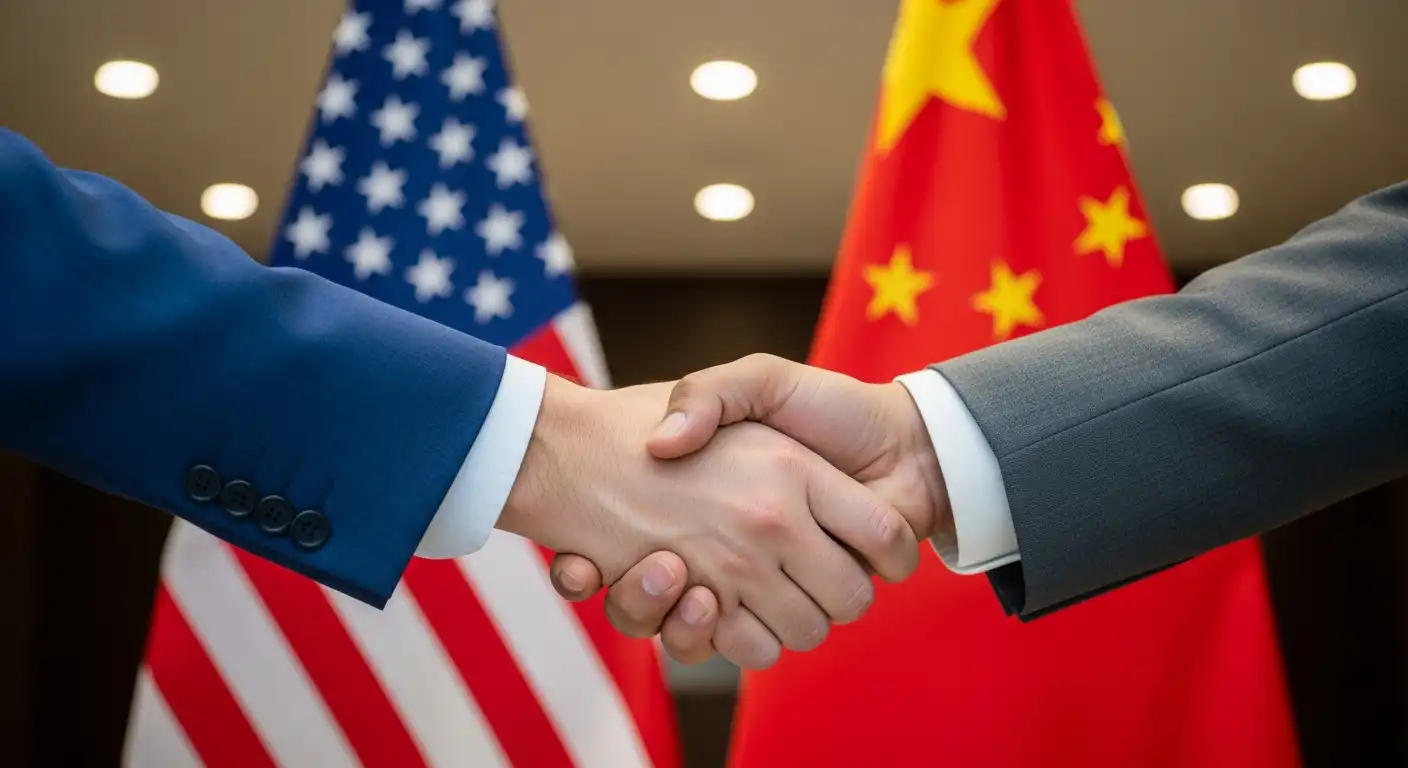
The international community is witnessing a high-stakes diplomatic effort in Geneva, where representatives from the United States and China have gathered to discuss the future of global artificial intelligence governance. As these two nations compete fiercely for dominance in machine learning, semiconductor manufacturing, and autonomous systems, the talks represent a rare attempt to establish a common set of rules for the road. The primary goal is not to end the technological rivalry, but to prevent the unchecked development of powerful AI models from leading to catastrophic safety failures or unintended military escalations.
The complexity of these negotiations is profound. For the U.S., AI governance is largely viewed through the lens of private-sector innovation tempered by government-mandated safety audits. Washington’s focus lies on preventing the leakage of sensitive chip designs and ensuring that American-made AI is not used to violate human rights. Conversely, Beijing views AI as a strategic national asset, prioritizing state-led development to achieve industrial self-reliance. Despite these ideological gaps, both powers recognize a shared, existential fear: that a sufficiently advanced AI, if it were to malfunction or fall into the hands of non-state bad actors, could threaten the core security of both countries.
A major topic of conversation involves the creation of a global monitoring system for “frontier models”—those systems that possess reasoning capabilities far beyond human ability. Both sides have discussed the possibility of requiring developers to report the results of “red-teaming” exercises, where the models are intentionally tested for dangerous capabilities. If the U.S. and China can agree on a baseline for these tests, it would create a worldwide standard, making it much harder for smaller, less-regulated entities to launch unchecked models that bypass safety protocols.
Financial analysts watching these talks note that the potential impact on the global tech market is immense. If a comprehensive governance framework is established, companies could see a reduction in the “regulatory uncertainty” that currently plagues cross-border investment. Estimates suggest that a unified approach to AI safety could unlock over $1 billion in new research partnerships, as firms would finally have a clear roadmap for what is legally permissible in both the U.S. and Chinese markets. Without such a deal, tech firms continue to face the threat of fragmented standards, where software must be developed in two entirely separate versions to comply with different national requirements.
However, the path to a formal agreement is fraught with hurdles. The definition of “safe AI” varies significantly between the two systems. In the United States, safety often focuses on preventing data bias and unauthorized algorithmic control. In China, the definition includes strict adherence to ideological guidelines and the prevention of information that might threaten social stability. Bridging these definitions is a gargantuan task that may ultimately result in a “tiered” governance system rather than a single global set of rules. The diplomats in Geneva are currently testing the waters to see if a pragmatic, narrow agreement on technical safety—rather than a broad agreement on digital ethics—is possible.
Technological self-reliance also remains a sticking point. China’s push for domestic semiconductor sovereignty, backed by over $50 billion in government support, is seen by the U.S. as a challenge to its strategic advantage. Washington’s export controls on advanced GPUs are intended to slow this progress, yet Beijing views these restrictions as an act of digital containment. For any AI governance deal to be meaningful, it must address the fundamental question of hardware access. Negotiators are currently struggling to find a middle ground where the U.S. can protect its critical chip designs while China can continue to build a domestic industry capable of supporting its massive population of developers.
Despite these tensions, the fact that the talks are happening at all is a positive signal. In previous years, the idea of an AI summit between the world’s two largest economies might have been dismissed as impossible. The recent, rapid deployment of generative AI tools has changed the calculus for everyone. Both nations have seen how quickly these models can transform industries and affect public discourse, and neither side wants to be responsible for a global incident that could have been avoided with better communication. The Geneva talks provide a structured, private environment where experts can speak plainly about the technical dangers that lie ahead.
Looking forward, the global community will be watching for the outcome of these meetings with anticipation. A failure to reach an agreement could lead to a permanent fracturing of the digital landscape, where the internet and AI technologies eventually split into two incompatible spheres. This would be a massive setback for the global economy, increasing the cost of digital services and hindering the cross-border research that is needed to solve humanity’s biggest challenges, such as disease prevention and climate change.
The successful conclusion of these governance talks would likely focus on incremental, technical steps. We should expect agreements on shared reporting formats for AI risk, cooperative research on the safety of large-scale model training, and perhaps a joint-oversight body that can meet regularly to address “emergency” AI developments. These may seem like small steps, but in the context of the current geopolitical environment, they would be an enormous achievement. The world is watching to see if the two superpowers can act like adults in the room, recognizing that when it comes to the future of intelligence, the stakes are far too high for purely adversarial behavior.
The ultimate objective of these diplomatic efforts is to build a “firewall” against catastrophe. By establishing rules that neither side can ignore, the international community hopes to ensure that the AI age remains a period of unprecedented human progress. Whether or not these talks lead to a golden age of digital cooperation or simply delay the next stage of the rivalry remains the defining question of the modern decade. The diplomats in Geneva hold the pen, but the engineers in Silicon Valley and Beijing are the ones writing the future—and for now, they are all listening closely to the conversation unfolding at the negotiating table.