Key Points:
- Gold futures dropped 2.88% to settle near $4,529.90 per ounce following hawkish central bank remarks at Jackson Hole.
- Silver fell 2.37% to $67.785 an ounce, while Palladium surged 6.72% to $1,428.50 on targeted industrial buying.
- Federal Reserve Chair Kevin Warsh warned that inflation remains too high, driving market bets on potential interest rate hikes.
- High-grade copper advanced 1.05% to $6.6590 per pound, supported by ongoing demand from artificial intelligence data center construction.
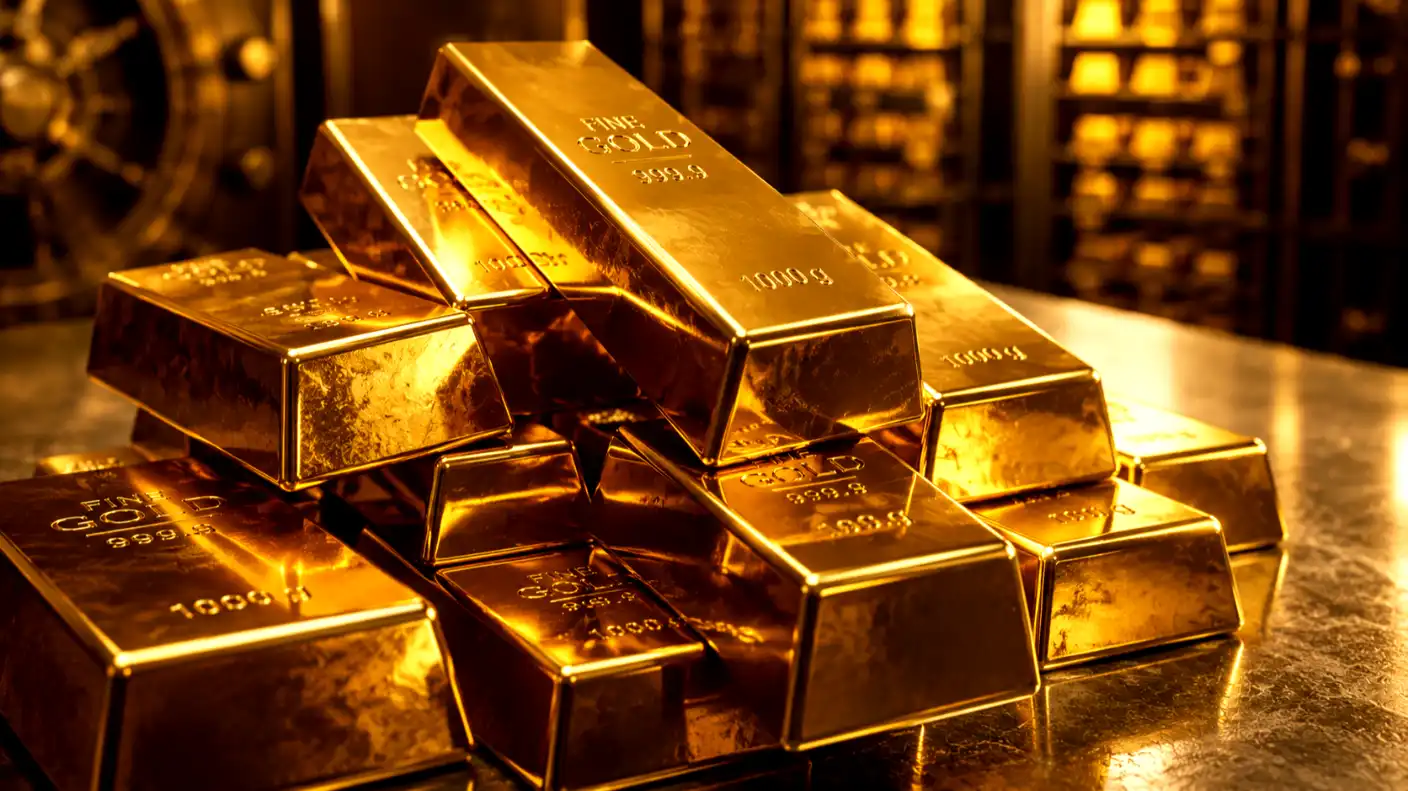
Global commodities markets experienced a sharp realignment across precious and industrial metals as traders responded to aggressive monetary policy signals from the United States. Gold futures dropped 2.88% to trade at $4,529.90 per ounce, pulling back from recent multi-month peaks near $4,700. Concurrently, silver slipped 2.37% to $67.785 an ounce. The downward move in precious metals contrasted with strong gains in select industrial and automotive metals, where palladium surged 6.72% to reach $1,428.50 an ounce, and copper gained 1.05% to hit $6.6590 per pound.
The primary catalyst driving the precious metals pullback was a hawkish policy tone delivered at the Federal Reserve’s annual economic symposium in Jackson Hole, Wyoming. In his keynote address, Federal Reserve Chair Kevin Warsh emphasized that policymakers remain intensely focused on defeating inflation. Warsh cautioned that recent modest improvements in price data do not prove that underlying inflation has meaningfully resolved, warning that the central bank remains prepared to raise borrowing costs if price pressures fail to cool quickly toward the official 2.0% target.
Financial market anxiety has been fueled by economic indicators showing that domestic inflation remains persistent. The personal consumption expenditures price index rose 3.7% year-on-year in July, while core inflation, excluding food and energy, held elevated at 3.3%. With six-month annualized inflation measures tracking above 4%, central bankers reiterated that policy must remain restrictive. Following the Jackson Hole address, interest rate futures markets lifted the implied probability of an interest rate increase at upcoming policy meetings to more than 40%, up from 34% earlier in the week.
The prospect of higher-for-longer borrowing costs triggered immediate profit-taking across non-yielding precious metals. Because gold and silver generate no regular interest yield, rising risk-free Treasury yields increase the opportunity cost of holding physical bullion compared to cash and short-term debt instruments. The benchmark 10-year Treasury yield firmed near 4.67%, while the 30-year yield held near 5.20%, encouraging institutional portfolio managers to lock in profits following gold’s massive multi-week rally.
While precious metals faced selling pressure, industrial and automotive metals displayed striking divergence. Platinum traded virtually flat, inching up 0.03% to $1,854.30 per ounce, while palladium staged a massive breakout, jumping 6.72% to $1,428.50 an ounce. Automotive analysts attributed the sharp palladium rally to targeted restocking by global catalytic converter manufacturers and tight physical supply lines following regional mining disruptions in Southern Africa.
High-grade copper also demonstrated resilient physical demand, advancing 1.05% to trade at $6.6590 per pound. Sponsoring the copper advance is the massive worldwide expansion of artificial intelligence data centers, power generation infrastructure, and electrical grid upgrades. Building out high-density server farms and high-voltage transmission lines requires millions of pounds of copper cabling, busbars, and transformers, providing a durable structural floor for industrial metal valuations that offsets broader macroeconomic tightening concerns.
Despite the short-term pullback in gold, long-term precious metals strategists emphasize that fundamental macroeconomic drivers remain supportive. Total United States national debt surpassing $40 trillion, paired with ongoing Treasury bond buyback interventions of $4 billion per operation, keeps the long-term currency debasement trade firmly in play. Furthermore, persistent geopolitical friction in the Middle East and restricted shipping corridors through the Strait of Hormuz continue to inject risk premiums into global commodity trade.
Institutional participation through regulated channels also provides a strong secondary backstop. Bullion-backed exchange-traded funds added more than 28 tonnes of gold in a single week earlier in the month, marking the strongest institutional buying stretch of the year. While short-term derivative traders adjusted positions around the $4,530 technical support zone, wealth managers and central banks continue to treat price dips as opportunities to accumulate hard assets against sovereign debt risks.
As financial markets navigate the transition between summer trading and the heavy autumn corporate calendar, commodities are adjusting to a complex dual reality. While the Federal Reserve’s hawkish inflation stance creates temporary headwinds for precious metals, robust physical demand across energy infrastructure, data center construction, and automotive manufacturing provides strong fundamental support. Moving forward, upcoming consumer inflation reports and central bank interest rate decisions will determine whether gold stabilizes above key support levels or undergoes a deeper consolidation phase.