Key Points:
- Spot gold prices fell 1.8% to $4,134.86 per ounce, setting the precious metal on track for a 2% weekly decline.
- Decidedly hawkish signals from newly appointed Fed Chair Kevin Warsh pushed the U.S. Dollar Index to its highest level since May 2025.
- Nine of nineteen FOMC policymakers anticipate at least one interest rate hike this year, raising December hike expectations to 87%.
- The sell-off was compounded after Geneva peace talks were suspended, raising doubts about the durability of the U.S.-Iran truce.
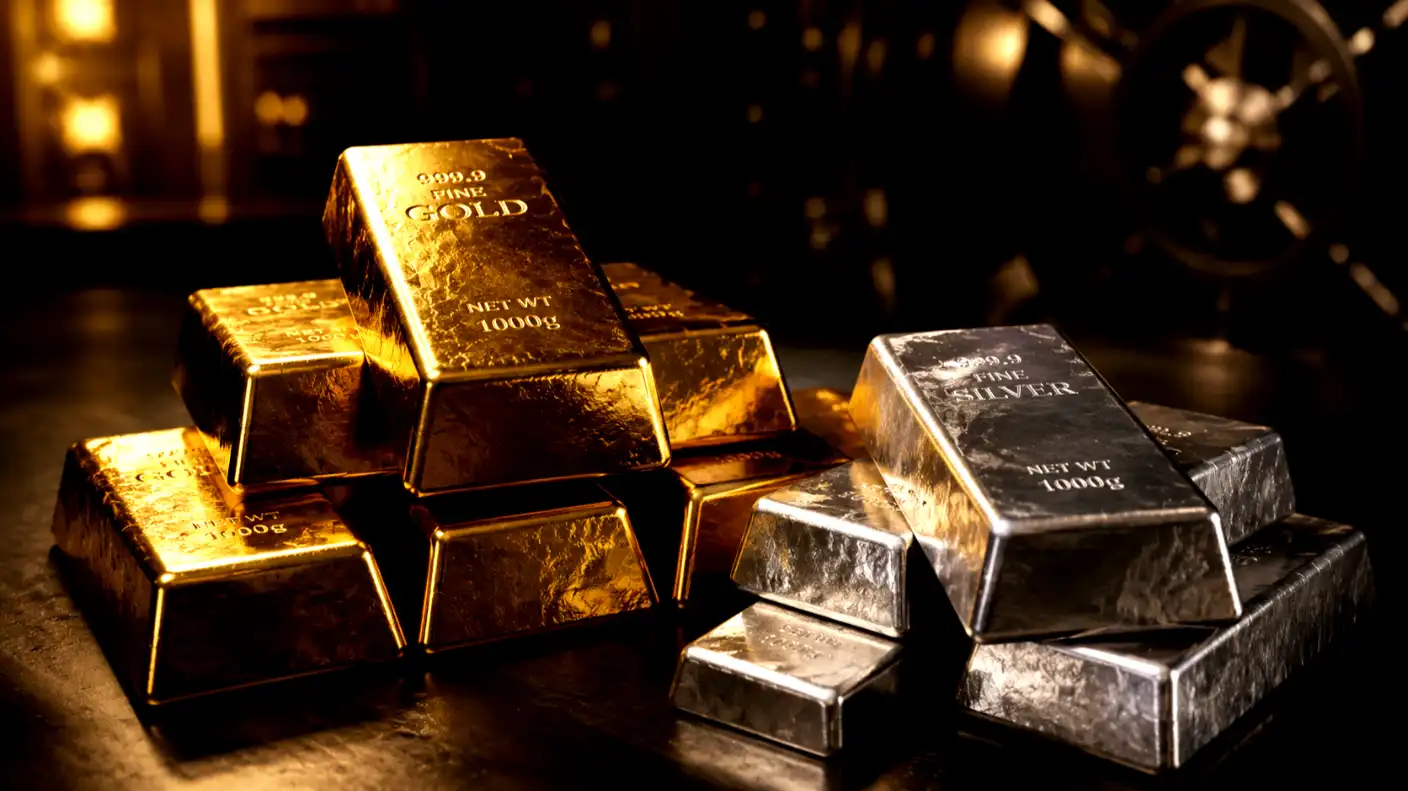
Precious metals extended their losses during end-of-week trading as a powerful surge in the U.S. dollar and hawkish central bank policies overshadowed any brief optimism surrounding a Middle East ceasefire. Spot gold prices declined by 1.8% to trade at $4,134.86 per ounce, putting the safe-haven asset on track for a third consecutive weekly drop of roughly 2%. Investors quickly pulled back their capital as the Federal Reserve’s latest economic projections revealed a highly aggressive stance, completely neutralizing the temporary relief brought by the diplomatic breakthrough between Washington and Tehran.
The primary driver of the downward momentum is the decidedly hawkish tone delivered during the central bank’s latest policy meeting, which was the first under the leadership of new Chair Kevin Warsh. Although the Federal Open Market Committee voted unanimously to keep the benchmark interest rate unchanged in the 3.50% to 3.75% range, its accompanying projections caught traders off guard. The updated dot plot revealed that nine of the nineteen central bank policymakers expect at least one interest rate increase later this year. This policy shift signals that borrowing costs will remain elevated far longer than the market had previously anticipated.
Following Warsh’s firm statements, U.S. Treasury yields surged, prompting a rapid rally in the foreign exchange market. The U.S. Dollar Index jumped by 0.8% in a single session to hit its highest level since May 2025, marking a one-year peak against a basket of major global currencies. Because physical bullion is priced in greenbacks, a stronger dollar makes the yellow metal significantly more expensive for international buyers, dragging down demand. Additionally, higher-for-longer interest rates increase the opportunity cost of holding non-yielding assets like gold, pushing investors to rotate capital toward Treasury bonds instead.
The sudden change in central bank expectations has forced derivative traders to aggressively rewrite their financial models. According to the CME FedWatch Tool, the probability of a U.S. interest rate hike by the end of the year has jumped to 87%, up sharply from the 61% chance priced in before the meeting. Financial researchers have been quick to adjust their long-term commodity forecasts in light of this hawkish pivot. Prominent investment analysts at Goldman Sachs trimmed their year-end target price for gold to $4,900 per ounce, representing a downward revision from their previous bullish forecast of $5,400.
Earlier in the week, gold prices had enjoyed a brief, temporary rally following the formal signing of a 14-point interim peace memorandum of understanding between Washington and Tehran. The landmark agreement, which established a 60-day negotiation window, allowed for the immediate resumption of commercial shipping traffic through the highly contested Strait of Hormuz. Easing fears of a prolonged Middle East energy shock initially pushed international crude oil prices sharply lower. This decline in energy costs tempered concerns about a renewed, energy-driven global inflation spike, which temporarily gave precious metals some upward support.
However, this geopolitical tailwind proved highly short-lived as fresh diplomatic friction emerged on the international stage. Gold’s downward slide was further amplified after Switzerland announced that highly anticipated talks to finalize the Middle East peace accord would not take place as planned. U.S. Vice President JD Vance reportedly suspended his planned trip to Geneva to meet with Iranian negotiators, raising immediate questions among market participants regarding the durability of the recently announced truce. This diplomatic setback has reintroduced a layer of geopolitical risk, though it has not been enough to offset the massive pressure of rising U.S. interest rates.
The downward pressure on bullion was also compounded by thinner trading volumes across major Asian financial hubs. Markets in mainland China and Hong Kong were closed for the traditional Dragon Boat Festival holiday, keeping many regional buyers away from the market. Asian buyers have historically served as a critical pillar of support for physical gold during global market corrections, but the holiday closure meant that trading activity was highly subdued. Without this physical buying support to absorb the selling pressure, the market fell further during Asian hours.
The selling pressure was not restricted to gold, as other industrial and precious metals followed a similar downward trajectory. Spot silver fell by 2.2% to settle at $64.36 per ounce, while platinum and palladium also posted significant losses on global commodity exchanges. This synchronized decline across the metals sector shows that macro monetary policies and dollar strength remain the dominant drivers of commodity prices, completely overriding localized supply-and-demand fundamentals. Investors are increasingly choosing to sit on the sidelines until the currency market stabilizes.
As the trading week draws to a close, the immediate future of the precious metals market remains highly wobbly. If the U.S. dollar continues its upward march, spot gold could face another round of technical selling, potentially pushing prices down toward the $4,100 support zone. However, long-term industry bulls argue that the underlying structural support for gold remains intact, as central banks continue to buy bullion at record levels to diversify their reserves. For now, the combination of a hawkish Federal Reserve and geopolitical uncertainty has created a highly volatile trading environment, forcing investors to adopt a highly cautious stance.