Key Points:
- New Fed Chair Kevin Warsh has completely rewritten the central bank’s playbook, stripping out the predictable “forward guidance” loved by Big Tech.
- At his first meeting, Warsh slashed the Fed’s policy statement to just 132 words, introducing market-driven volatility to high-multiple tech shares.
- The Fed’s updated dot plot delivered a hawkish surprise, raising the year-end median rate to 3.8% and signaling a potential 2026 rate hike.
- This policy shift directly threatens the tech giants’ massive, debt-funded $760 billion artificial intelligence capital expenditure programs.
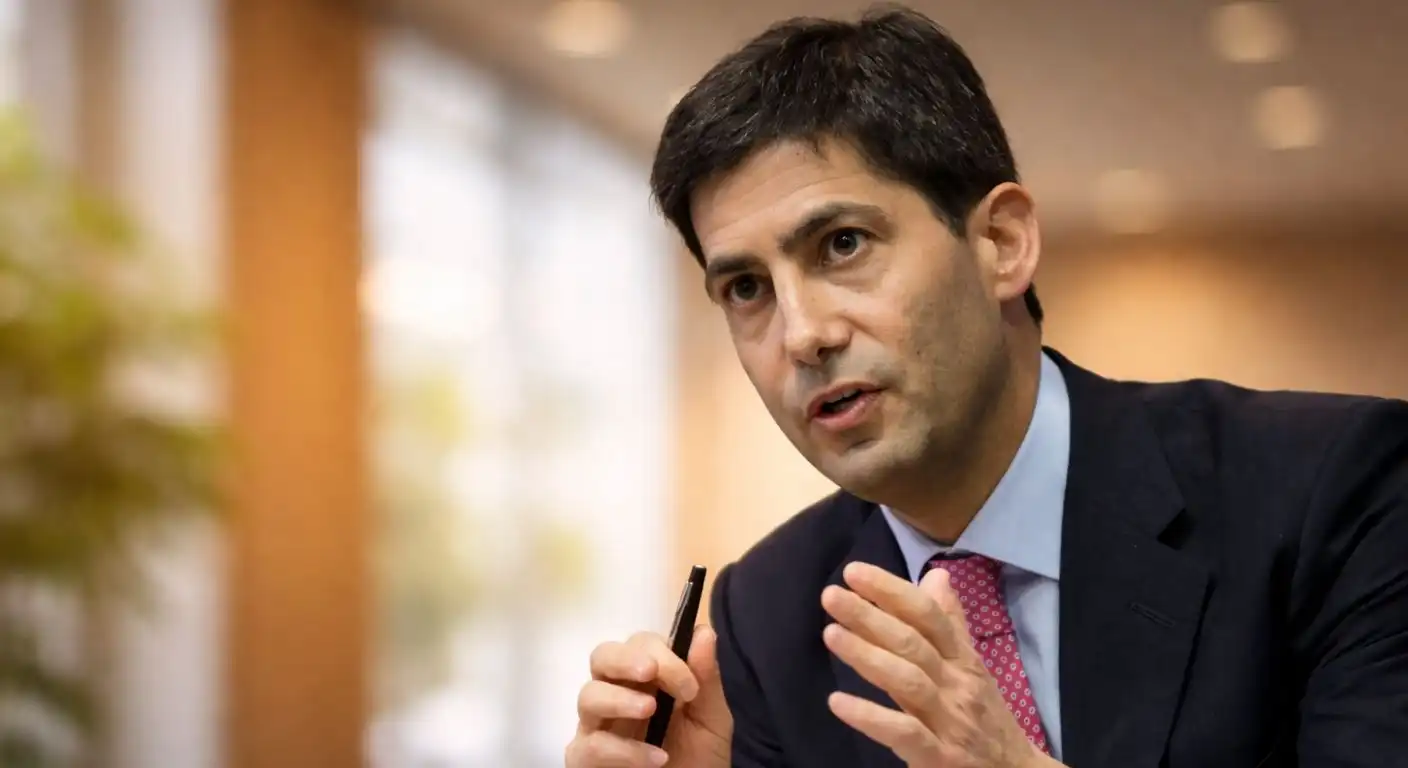
Big Tech’s long-running era of easy money and predictable policy is entering a highly volatile phase, prompting top financial analysts to warn of a major valuation squeeze. Strategists are pointing out that newly appointed Federal Reserve Chairman Kevin Warsh has effectively “screwed” the high-flying artificial intelligence and technology giants by introducing a much quieter, highly unpredictable, and decidedly hawkish monetary stance. During his highly anticipated debut press conference, Warsh moved quickly to dismantle the market-coddling communication practices of his predecessor, Jerome Powell. This sudden policy shift has injected fresh volatility into financial markets, leaving high-multiple tech giants exposed to rising capital costs.
For years, Silicon Valley’s largest technology conglomerates—collectively known as the “AI tech beasts”—enjoyed an incredibly supportive environment under the previous central bank leadership. The former chair made a habit of overcommunicating the central bank’s next moves, routinely popping up in intra-meeting interviews and delivering highly clear, predictable “forward guidance” to reassure investors. Most importantly, he leaned heavily on the side of cutting interest rates, maintaining a distinct easing bias even when structural inflation pressures began to accelerate earlier this year. This highly predictable, low-yield environment acted as a massive cushion for tech stock valuations, allowing companies to trade at expensive, near-historic multiples.
Kevin Warsh’s debut has completely shattered this accommodative playbook, proving that there is a new sheriff in town. At his first policy meeting, the new Fed Chair took an aggressive step toward reducing the market’s unhealthy dependency on central bank guidance. The Federal Open Market Committee’s (FOMC) official policy statement was dramatically slashed to just 132 words, representing a massive reduction from the 341-word statement issued in April. More importantly, Warsh pointedly removed any forward-looking hints or forward guidance regarding the future direction of interest rates. By choosing to let the economic data speak for itself, the new chair has brought a level of market-driven volatility that Big Tech is ill-equipped to handle.
This sudden loss of forward-looking policy predictability represents a severe threat to the valuation models used by Wall Street to price high-flying tech stocks. Companies like Apple, Microsoft, Alphabet, and Nvidia rely on long-term cash-flow projections to justify their highly expensive earnings multiples. Under standard financial theory, the present value of future earnings is highly sensitive to the cost of capital. When a central bank introduces uncertainty and raises the risk of higher interest rates, it automatically drives up the discount rate used by investors, resulting in a structural de-rating of high-multiple software and technology shares.
The timing of this hawkish policy shift is particularly painful for tech giants currently locked in a highly capital-intensive artificial intelligence arms race. To maintain their technological advantage, these massive corporations are spending cash at an unprecedented rate, constructing giant data centers, deploying thousands of fiber networks, and purchasing expensive silicon processors. Hyperscaler capital expenditures are projected to top a massive $760 billion this year alone, forcing even the most cash-rich companies to tap public debt and credit markets for billions of dollars. With Warsh introducing volatility and higher capital costs, funding these massive, unconstrained AI buildouts is about to become significantly more expensive.
To make matters worse for the tech beasts, the Fed’s updated Summary of Economic Projections, or dot plot, delivered a highly hawkish surprise. While the central bank voted unanimously to keep its benchmark interest rate steady in the 3.50% to 3.75% range, its quarterly forecasts suggested that borrowing costs are headed higher. The median projection for the federal funds rate at the end of the year was revised upward to 3.8%, representing a significant 40 basis point increase from the previous March estimate of 3.4%. This upward revision implies that at least nine out of eighteen Fed officials now anticipate a 25 basis point rate hike before the year ends, completely taking rate cuts off the table.
This hawkish monetary backdrop is colliding with a corporate earnings season that remains remarkably strong. For the second quarter of the year, estimated year-over-year earnings growth for the S&P 500 stands at a robust 21.9%, which would mark the second consecutive quarter of earnings expansion above the 20% mark. While these stellar earnings show that the underlying economy remains highly resilient—supported by robust consumer demand and massive AI capital expenditures—the persistent threat of interest rate hikes limits any potential stock market gains. Wall Street strategists warn that even blockbuster corporate earnings cannot save tech stocks if the cost of capital continues to climb.
The only major source of potential relief for the central bank’s inflation headache is the ongoing geopolitical de-escalation in the Middle East. Global commodity markets have stabilized following the signing of a tentative U.S.-Iran peace framework, which has allowed for the immediate, phased reopening of the critical Strait of Hormuz shipping lane. Easing fears of a prolonged energy shock have pushed Brent crude oil prices back below the $80 per barrel mark. While Wall Street analysts note that a sustained drop in energy prices could eventually allow the Fed’s hawkish tone to fade, they agree that the risk of a rate hike remains significantly higher under Warsh’s leadership.
As the new era of Federal Reserve policy begins, the relationship between Big Tech’s capital spending and the central bank’s discount rate will heavily dictate the future of the technology sector. If Kevin Warsh continues to starve the market of predictable guidance while keeping the threat of rate hikes active, it will force a highly painful financial discipline on the world’s largest companies. Tech giants will no longer be able to finance their massive, unconstrained AI projects on cheap, predictable debt, forcing them to justify their massive valuations through immediate, tangible software revenues. The ongoing policy shift proves that the easy-money era that birthed the AI boom is officially over.