Key Points:
- Engineering teams are prioritizing safety as heavier, 200-pound bipedal humanoids move from public demonstrations to physical workplaces.
- Unlike traditional deterministic factory machines, modern humanoids run on probabilistic AI, creating more unpredictable human-robot interactions.
- Financial projections show the global humanoid market could reach 1 billion units by 2050, with a valuation of $7.5 trillion.
- Nvidia launched “Halos for Robotics” as an industry-first functional safety stack, partnering with Agility Robotics to test the platform on Digit.
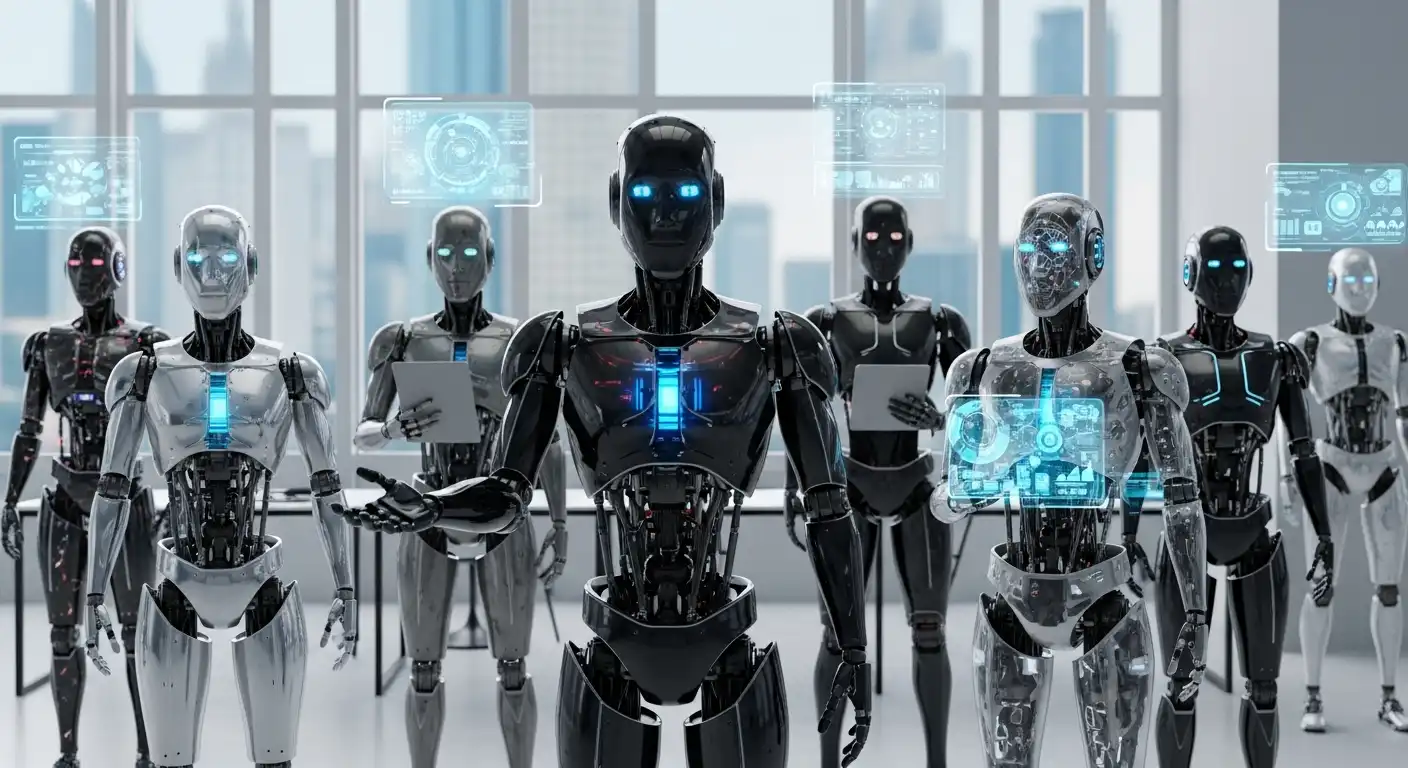
Humanoid robots recently marched through a major industrial convention center, demonstrating their ability to deliver snacks, shake hands with visitors, and even perform choreographed dance moves. While these public showcases spark immense excitement, a series of viral mishaps around the world has raised critical questions about the readiness of these machines. From a bipedal model dancing uncontrollably in a public restaurant to another kicking a small child during a performance in China, these incidents highlight a massive engineering challenge. As manufacturers prepare to move these autonomous machines out of isolated laboratories and onto factory floors, warehouses, and eventually private homes, ensuring they do not accidentally injure humans has become the industry’s most pressing goal.
The core of the safety challenge lies in the physical design and weight of modern humanoids. Traditional industrial robots operate inside fenced, isolated cells where humans are strictly prohibited from entering during operation. Humanoids, however, work alongside people without physical barriers. As these machines get larger and heavier, with many models now approaching 200 pounds, the risk of physical injury rises. If a heavy, bipedal robot suddenly loses power or experiences a hardware fault, it can lose its balance, fall over, and potentially crush a nearby human worker. This instability represents a major safety concern that traditional industrial safety standards are not equipped to address.
The fundamental difference in how humanoids operate compared to traditional factory machinery compounds this physical hazard. Traditional industrial automation is deterministic, meaning the machine adheres to a rigid, pre-programmed set of coordinates and rules to produce a constant, predictable result. In contrast, modern humanoids utilize advanced artificial intelligence, making them probabilistic. They operate on statistical likelihoods rather than absolute certainty, analyzing their surrounding environments in real time to make autonomous decisions. Because they must navigate dynamic, unpredictable workspaces where humans are constantly moving, their behaviors are inherently less predictable, necessitating multiple redundant layers of physical and digital safeguards.
Despite these significant safety hurdles, capital is pouring into the humanoid sector at an unprecedented rate. Financial researchers project that the global humanoid market could reach 1 billion operational units by 2050, with the total market value soaring to $7.5 trillion. In the nearer term, some estimates suggest the industry will generate up to $200 billion in revenue by 2035. This massive commercial potential is driving startup valuations to historic highs. For example, Agility Robotics, an Oregon-based firm whose Digit humanoid is already performing basic tasks in a pilot auto-parts warehouse, recently announced plans to list publicly at a valuation of $2.5 billion.
Under current workplace safety protocols, any potential contact between a human and a robot triggers an immediate shutdown or speed reduction. While these rules prevent injuries, they also severely limit productivity. A robot that freezes every time a human coworker walks past cannot maintain the efficiency required for fast-paced logistics and manufacturing. Furthermore, these abrupt safety stops prevent humanoids from engaging in cooperative tasks, such as handing an object directly to a coworker or helping them lift a heavy box. Overcoming this limitation requires a transition from basic proximity-stop sensors to highly intelligent, predictive safety systems.
To solve this bottleneck, major semiconductor and software companies are developing advanced physical artificial intelligence safety systems. Nvidia recently launched Halos for Robotics, an industry-first functional safety platform designed specifically for humanoid and industrial machines. The system blends high-performance artificial intelligence computing with certified safety software to help developers build protection directly into a robot’s core architecture. Rather than treating safety as an afterthought or an external sensor add-on, this physical AI stack enables the machine to process environmental data and make split-second decisions to avoid collisions without stopping its workflow.
The new software framework utilizes advanced algorithms to predict human movement up to several seconds in advance. By combining onboard robot computing with external depth sensors and cameras, the system builds a continuous, 360-degree awareness of the surrounding environment. This design creates a high degree of redundancy. If the robot’s primary visual sensor misinterprets a human’s path, a secondary software layer can immediately intervene to adjust the machine’s joints and prevent a collision. This continuous evaluation allows humanoids to make physical contact with humans safely when required for collaborative tasks, such as passing tools or coordinating heavy lifting.
Agility Robotics has signed on as the first commercial partner to deploy this new safety operating system in its Digit humanoid fleet. By integrating this advanced software, the company aims to move its robots out of the protective Plexiglas cages that currently surround them in warehouse trials. Testing and validating these systems under real-world conditions will provide the necessary data to secure official safety certifications. The goal is to prove to industrial regulators and corporate buyers that autonomous, two-legged machines can navigate busy, high-traffic corridors safely alongside human workers.
Ultimately, the future of the humanoid robotics industry depends on whether manufacturers can successfully build public and regulatory trust. Speculative financial valuations and impressive laboratory demonstrations will not translate into mainstream commercial success if the machines pose a physical threat to workers. Establishing standardized safety frameworks, refining predictive AI algorithms, and proving mechanical stability in complex settings are the critical milestones ahead. As these technologies mature, they will reshape the global labor landscape, moving humanity one step closer to a future where robots and humans coexist as safe, productive partners.