Key Points:
- Hyundai Motor’s union announced an escalation of partial strikes to four-hour daily walkouts from July 20 to 22.
- The dispute marks the automotive industry’s first-ever strike over the deployment of humanoid robots such as Boston Dynamics’ Atlas.
- Union demands include a 149,600-won base pay raise, an extension of the retirement age to 65, and a bonus tied to 30% of net profits.
- Management has offered an 80,000-won base salary increase, a 350% performance bonus plus 10 million won, and 15 company shares.
A historic labor dispute has intensified in South Korea as the country’s largest automaker faces a highly unconventional challenge. The labor union representing workers at Hyundai Motor announced that its members will extend and escalate their partial strikes next week. The planned walkouts, scheduled to run from July 20 to 22, will halt production lines for four hours per shift. This escalation follows a series of initial two-hour walkouts earlier in the week, raising deep concerns over widespread manufacturing disruptions as both sides remain deadlocked over wage increases and job security.
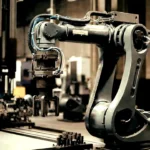
This newly announced wave of industrial action represents the automotive industry’s first-ever labor strike over the deployment of humanoid robots on the assembly line. While typical labor disputes focus entirely on wages and benefits, the current conflict is directly linked to the rapid advancement of artificial intelligence and robotics. The union’s 39,668 members are demanding formal, preemptive job protections and joint labor-management agreements before the automaker deploys its newly developed “Atlas” humanoid robot at its manufacturing plants.
The source of this automation anxiety stems from the company’s aggressive robotics roadmap. The automaker, which acquired a majority stake in robot pioneer Boston Dynamics, plans to begin deploying the six-foot-two fully electric Atlas humanoid robot to its manufacturing facilities. While early test runs will begin in non-unionized U.S. plants by 2028, the company eventually plans to deploy more than 25,000 robotic units across its global factories to handle repetitive, physically demanding tasks like parts sequencing and component assembly. Union leaders fear that these automated workers will systematically erode human labor hours and lead to eventual workforce downsizing.
Beyond the robotic job security demands, the two sides remain sharply divided over direct compensation packages. The union is demanding a 149,600-won increase in monthly base pay and a massive performance-based bonus equivalent to 30% of the company’s net profit from the previous year. This demand has gained significant traction among workers after major semiconductor companies in the country awarded massive bonuses to their employees to share in the windfall profits generated by the artificial intelligence boom, raising expectations across the entire industrial sector.
The automaker is highly capable of funding substantial pay increases, having recently recorded a record consolidated net profit of 10.36 trillion won (approximately $6.8 billion). However, management has offered a significantly lower compensation package to preserve capital for its expensive electric vehicle and robotics transition. The company’s counteroffer includes an 80,000-won increase in monthly base pay, a performance bonus equivalent to 350% of the monthly salary plus a flat 10 million won payment, and 15 shares of company stock. The union has flatly rejected this offer, claiming it fails to reflect the record-breaking contributions of the workforce.
Another major sticking point in the 15 rounds of failed negotiations is the union’s push to extend the mandatory retirement age from 60 to 65. As South Korea’s population ages and public pension payouts are delayed, senior factory workers face growing financial insecurity. The union argues that extending the retirement age is a vital social safety net that protects experienced workers from falling into poverty. However, management has strongly resisted this extension, arguing that retaining older, higher-paid workers increases labor costs and prevents the company from hiring younger, tech-savvy engineers needed to run its automated lines.
The initial round of partial strikes has already inflicted significant financial damage on the automaker. During the first phase of the walkouts, which ran from Monday to Wednesday, production workers left their shifts two hours early, effectively halting assembly lines for four hours per day. Industry analysts estimate that this initial three-day stoppage disrupted the production of roughly 5,000 vehicles and cut total sales revenue by over 200 billion won (approximately $132 million). The planned four-hour strikes next week will double the daily stoppage time, exponentially increasing the financial toll on the company’s operations.
This extended production halt threatens to disrupt the automaker’s global delivery schedules ahead of several major vehicle launches planned for the second half of the year. The company is currently coordinating production timelines for highly anticipated premium models, including the Genesis GV90 and refreshed versions of its signature sport utility vehicles, the Palisade and Sonata. Any prolonged manufacturing delays in South Korea—which serves as the primary global hub producing about half of the company’s worldwide sales—will quickly trigger inventory shortages at dealerships across North America and Europe.
To insulate workers’ fixed incomes from the inevitable drop in labor hours caused by automation, the union is also pushing for a transition from the current hourly wage system to a full monthly salary system. Under the current hourly framework, assembly line workers rely heavily on overtime and night shift allowances to supplement their base pay. A full monthly salary system would guarantee fixed, stable wages regardless of fluctuations in active working hours. While both sides recently agreed to form a joint task force to study the feasibility of this transition, they have failed to reach an agreement on the implementation timeline.
Ultimately, the escalation of the labor dispute at the country’s largest automaker represents a defining moment for the future of industrial relations in the age of automation. By launching the first-ever strike over humanoid robots, the union has established a powerful precedent that technology rollouts can no longer occur without labor consent. As the planned four-hour daily walkouts approach, the ability of both sides to find a compromise that balances competitive corporate robotics with human job security will likely serve as a vital blueprint for labor negotiations across the entire global automotive industry.