Key Points:
- Kioxia shares fell by 12% in recent trading, mirroring a wider sell-off in semiconductor and AI-related infrastructure stocks.
- Market analysts suggest that high investor expectations for AI revenue are meeting a reality check as capital expenditure cycles show signs of cooling.
- The volatility has spread across the memory chip industry, with concerns mounting over inventory levels and slower-than-anticipated demand for high-end consumer hardware.
- Investors are rotating capital away from speculative AI hardware plays and toward more defensive assets, causing temporary instability in the broader tech landscape.
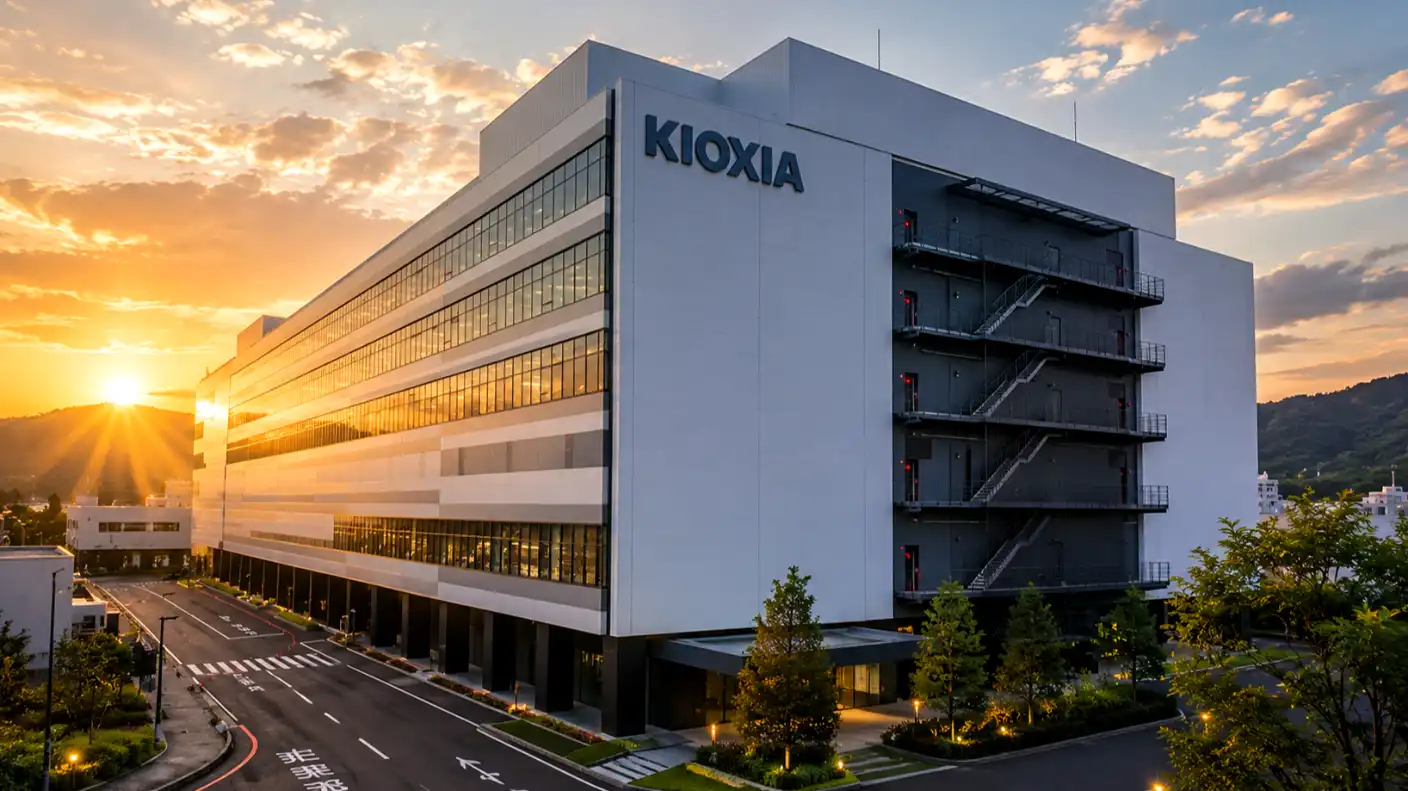
Global semiconductor markets faced a sharp downturn this week as shares of Kioxia Holdings tumbled more than 12% following a broader wave of investor caution regarding artificial intelligence. The decline reflects a growing realization among market participants that the relentless rally in AI-linked hardware stocks may have outpaced the actual current revenue growth of many component suppliers. As investors reassess the valuation of firms providing critical memory and storage solutions, the entire technology sector is experiencing a period of intense volatility.
The sell-off in Kioxia—one of the world’s leading flash memory producers—serves as a bellwether for the wider semiconductor industry. Memory chips are fundamental to everything from personal computers and smartphones to massive data center clusters. However, the industry has long been known for its boom-and-bust cycles. After a period of record demand driven by the initial AI infrastructure build-out, manufacturers are now facing a period where supply is catching up to—and in some cases exceeding—the immediate demand from hardware integrators.
When stock prices move this aggressively, it often signals a shift in the “narrative” rather than a fundamental collapse of the business. For the past two years, the narrative was one of unlimited growth driven by generative AI. Now, the conversation has shifted toward efficiency, profit margins, and actual return on investment for the companies buying these chips. Investors are asking whether the multi-billion dollar expenditures on AI data centers are generating enough software revenue to justify continued hardware purchases at current price levels.
The 12% drop in Kioxia’s value highlights the vulnerability of companies heavily exposed to the storage market. As AI models require increasingly faster data retrieval, the demand for high-end NAND flash and solid-state drives has been immense. However, this sector is notoriously price-sensitive. When demand from consumer electronics—such as laptops and mobile devices—remains stagnant, even a strong performance in the AI server market cannot fully compensate for the lost volume in other categories. The result is a balancing act that investors are currently finding difficult to price correctly.
This market correction has also hit other semiconductor players, with several major chipmakers seeing similar, albeit less dramatic, declines. The widespread nature of this sell-off suggests that it is not a company-specific problem but an industry-wide revaluation. Institutional investors are taking profits after a prolonged bull run and hedging their bets against potential economic headwinds. While the long-term outlook for AI remains bullish, the market is signaling that it no longer accepts “AI-linked” as a sufficient reason for unchecked valuation growth.
The current situation is complicated by high interest rates, which make it more expensive for companies to borrow the capital needed to build new fabrication plants. With a single factory costing over $15 billion to develop, the semiconductor industry is arguably the most capital-intensive sector on the planet. Any sign that demand might moderate causes immediate concern about the profitability of these massive, multi-year construction projects. If companies cannot maintain high capacity utilization, their margins can erode very quickly.
Despite the current pessimism, industry fundamentals remain relatively healthy. The ongoing expansion of global data centers continues to require massive storage capacities. Furthermore, the push for edge computing—where AI processing happens on the device rather than in the cloud—is expected to create a new, sustained source of demand for flash memory. This shift may offer a buffer against the volatility of the enterprise server market, but it will take time to manifest in the company’s financial reports.
Looking forward, the focus for Kioxia and its peers will be on operational discipline. The companies that navigate this period best will be those that keep their debt low, maintain strong partnerships with major cloud providers, and innovate in the face of pricing pressure. For now, the market is in a “wait and see” mode. Until the next set of earnings reports provide more clarity on whether AI infrastructure spending is hitting a plateau or simply moving to a more mature phase, investors should expect continued ups and downs in the semiconductor space.