Key Points:
- Malaysia is attracting massive international investment into its critical minerals sector as Western nations seek alternatives to China.
- The country holds an estimated 16.1 million metric tons of non-radioactive rare earth deposits valued between $170 billion and $200 billion.
- Australia’s Lynas operates the largest rare earth processing plant outside China in Kuantan, expanding heavy rare earth capacity by 50%.
- Malaysia enforces a nationwide ban on raw ore exports to mandate domestic refining, chemical separation, and permanent magnet production.
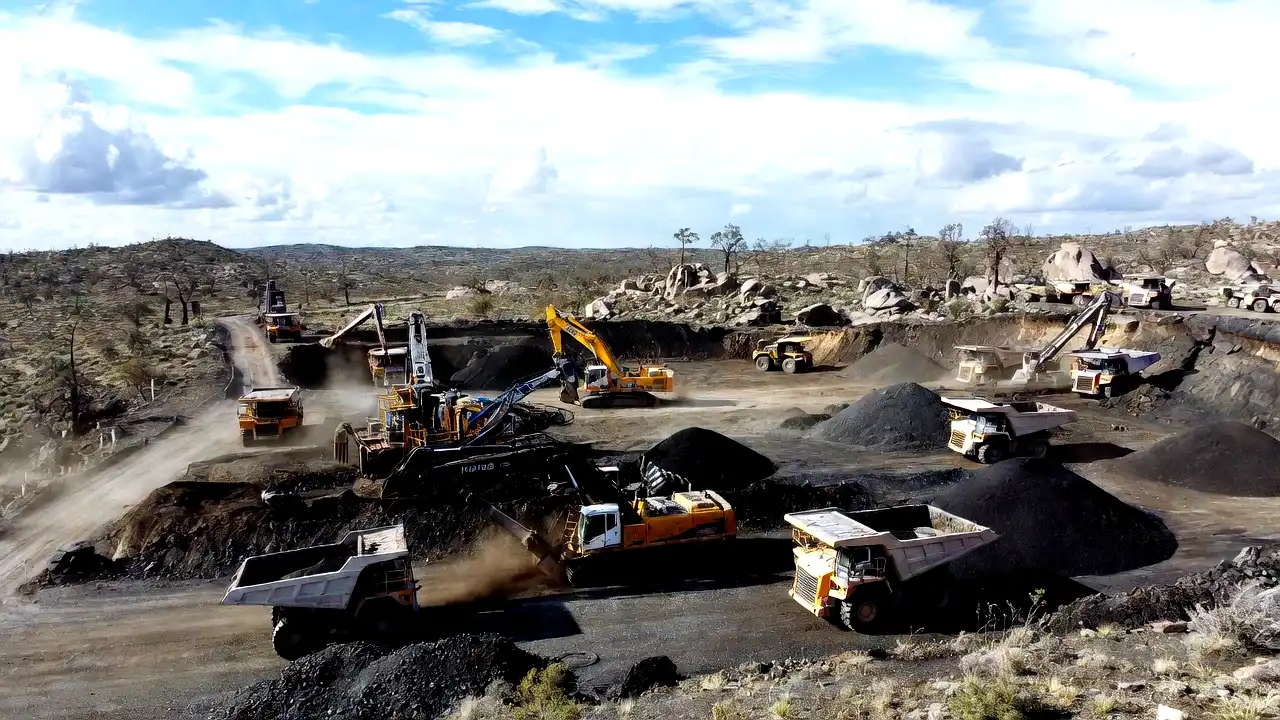
Malaysia is rapidly emerging as a premier global destination for critical minerals investment as Western nations and international manufacturers seek alternatives to China’s dominant rare earth supply chains. Governments and mining companies from the United States, Australia, France, and Japan are courting Malaysian authorities to secure long-term access to essential minerals used in electric vehicles, advanced defense systems, and renewable energy technologies. The surge in foreign interest comes as Beijing prepares tighter export controls on vital processing technologies and refined magnet metals.
Malaysia possesses significant geological endowments, containing an estimated 16.1 million metric tons of non-radioactive rare earth elements (NR-REE) spread across resource-rich states like Perak, Pahang, Kedah, and Terengganu. Government geological surveys value these untapped mineral deposits between $170 billion and $200 billion. Unlike conventional hard-rock deposits that carry radioactive thorium and uranium, Malaysia’s ionic clay reserves allow for cleaner in-situ leaching methods that lower environmental remediation overhead.
The country already anchors the non-Chinese rare earth ecosystem as the host of the world’s largest processing refinery outside China. Australian mining giant Lynas operates a massive chemical separation plant in Kuantan, Pahang, which supplies approximately 10% of global refined rare earth materials to automakers and industrial manufacturers in the West. Lynas recently completed a 180 million Australian dollar ($120 million) expansion to build dedicated heavy rare earth separation circuits, increasing refined output by 50% to process dysprosium and terbium.
To capitalize on surging geopolitical interest, the Malaysian government instituted strict resource policies to build a complete domestic industrial ecosystem rather than simply exporting raw commodities. In 2024, federal authorities enforced a nationwide ban on exports of unprocessed rare earth ores and mineral concentrates. The statutory mandate requires foreign mining developers and domestic license holders to build local processing, separation, and refining facilities inside Malaysia before shipping finished oxides and metals overseas.
Western governments are formalizing bilateral agreements to integrate Malaysian processing hubs into their national security supply chains. The United States finalized a comprehensive critical minerals memorandum of understanding and reciprocal trade pact with Malaysia, aimed at facilitating direct American capital investment into domestic extraction and advanced magnet fabrication. The bilateral framework ensures that American automakers and defense contractors can source refined magnet materials directly from certified Malaysian processing centers.
European and Asian mining consortia are also mobilizing major capital investments across the country. French critical materials engineering firm Carester formed a joint venture with local operator Malaco Mining to construct a commercial rare earth separation plant in the northern state of Perak. Meanwhile, domestic conglomerates such as Berjaya Corporation are launching specialized mining subsidiaries and partnering with international chemical refiners to develop downstream magnet manufacturing parks.
The global scramble for Malaysian minerals stems from China’s overwhelming stranglehold across the global supply chain. China currently controls roughly 60% of worldwide rare earth mining output, accounts for 85% of global chemical processing capacity, and manufactures over 90% of high-strength neodymium-iron-boron (NdFeB) permanent magnets. Beijing has repeatedly demonstrated a willingness to restrict critical mineral exports during geopolitical disputes, forcing automotive and aerospace giants to diversify their supply chains.
In addition to Western partnerships, Malaysia maintains pragmatic economic ties with Chinese mineral technology firms. Because China possesses unmatched intellectual property for separating all 17 individual rare earth elements at commercial scale, Malaysian state investment entities are evaluating selective joint ventures with Chinese equipment manufacturers. This dual-track diplomacy allows Malaysia to absorb advanced processing technology while remaining a trusted, neutral supplier to Western commercial markets.
The rapid expansion of critical mineral refining presents technical and regulatory challenges for Malaysian authorities. State and federal agencies must coordinate mining concessions, establish strict groundwater monitoring protocols around in-situ leaching sites, and enforce rigorous wastewater treatment standards. The Ministry of Investment, Trade and Industry affirmed that while Malaysia welcomes foreign capital, all international operators must adhere to strict environmental, social, and governance (ESG) benchmarks to retain operational licenses.
As global demand for clean energy hardware and artificial intelligence data infrastructure accelerates through 2030, Malaysia’s strategic combination of deep mineral reserves, operating refinery infrastructure, and favorable geography positions the Southeast Asian nation as an indispensable node in the global energy transition. By enforcing local processing mandates and securing multi-billion-dollar international alliances, Malaysia is transforming its natural wealth into a durable, high-tech industrial foundation.