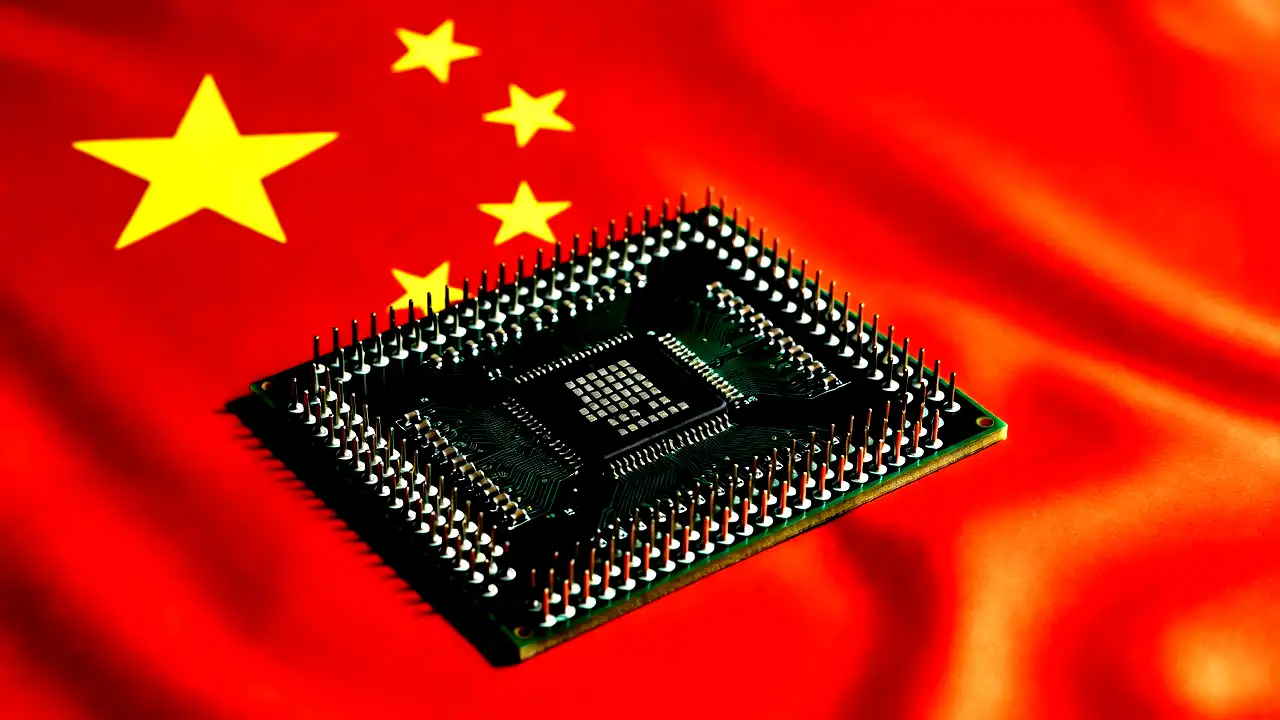
Key Points:
- Meituan has successfully trained a large-scale AI model utilizing only domestic Chinese chips, bypassing the need for restricted foreign-made hardware.
- The project highlights the rapidly improving efficiency of Chinese semiconductor alternatives in handling complex machine learning workloads.
- This success serves as a critical milestone for Chinese companies striving for “tech sovereignty” amidst global export controls on advanced GPUs.
- The company plans to integrate this new AI model into its logistics and delivery algorithms, which already serve hundreds of millions of users daily.
Meituan, the giant behind China’s leading food delivery and local services platform, has achieved a major milestone in the quest for technological independence. The company officially announced that its latest artificial intelligence model was trained entirely using domestically produced semiconductor chips. This breakthrough serves as a significant proof-of-concept for the Chinese tech industry, demonstrating that high-performance AI development is possible without reliance on restricted, high-end foreign processors. As international trade barriers tighten, Meituan’s success provides a blueprint for other local firms aiming to sustain their AI innovation pipelines.
For years, the gold standard for AI development has been the use of top-tier foreign-made processors, which remain the most efficient tools for training large-scale models. However, severe export restrictions have limited the availability of these chips in China, forcing local companies to adapt or face stagnation. Meituan’s engineers tackled this challenge by optimizing their software stack to squeeze maximum performance out of existing domestic hardware. By rewriting core parts of the training framework, the team proved that high-performance results are achievable even when the hardware is not globally leading.
This achievement is a major win for the broader Chinese semiconductor ecosystem. It shows that the investments of over $1 billion by various firms and state-backed funds into local chip design are beginning to yield tangible results. While these domestic alternatives still lag behind the absolute peak of global performance in terms of sheer raw speed, they are now “good enough” to handle professional-grade AI tasks. For companies that operate at Meituan’s scale, having a viable domestic path means that business operations can continue uninterrupted, even if global supply chains face further shocks.
The implications for Meituan’s core business are immediate. The company processes millions of delivery orders, reviews, and customer inquiries every single day. By running its own AI models on its own hardware, Meituan can reduce its reliance on expensive cloud services hosted by external providers. This helps the firm lower its operational overhead and gain total control over data security. With the new model in place, the company expects to optimize delivery routes by an additional 1.5% to 2%, a change that translates into millions of dollars in fuel savings and faster service for customers.
Market analysts suggest that this development will trigger a “domino effect” across the Chinese tech sector. Competitors are already closely studying Meituan’s approach to see how they can replicate similar software optimizations. If a major platform can successfully train a competitive AI model using domestic chips, the perceived “monopoly” held by global GPU leaders begins to erode. This creates a powerful incentive for other Chinese companies to invest in local hardware, which in turn provides more revenue and R&D capital to the domestic chip manufacturers.
Building a self-contained AI ecosystem is a long-term play. While Meituan’s recent success is impressive, the company acknowledges that the next generation of models will require even more computational power. The team is already working on the next phase of its training pipeline, focusing on even larger models that require massive clusters of networked domestic chips. The challenge will be to ensure that these clusters can communicate with each other as effectively as the leading global standards, a task that requires both high-end hardware and genius-level software engineering.
The government is also taking notice. Policies supporting the “localization” of high-tech infrastructure are now being tied to tax incentives and state subsidies for companies that prove they can operate without foreign dependencies. Meituan’s announcement is essentially a report card for these policies, showing that the investments in domestic talent are moving the needle. As more companies follow suit, China is positioning itself to become a largely self-sufficient AI power, capable of developing, training, and deploying its own models at a scale that very few other nations can match.
Ultimately, this breakthrough is about more than just a single AI model—it is about the future of global competitiveness. Tech companies across the world are realizing that access to hardware is the new “oil” of the digital age. By proving that it can thrive without foreign chips, Meituan has lowered the stakes of the ongoing technology trade war. It has demonstrated that when a company has enough data, enough talent, and enough determination, it can overcome even the most daunting supply chain limitations. This story is just beginning, and the success of China’s domestic chip effort is now a force that global markets must account for.