Key Points:
- Nvidia CEO Jensen Huang stated that the AI industry does not need new laws or government regulations to ensure safety.
- Speaking with Salesforce CEO Marc Benioff, Huang described AI safety as a software engineering problem rather than a legal crisis.
- The stance contrasts with Anthropic and OpenAI, which called for capability slowdowns and mandatory federal safety legislation.
- Huang argued that commercial market forces naturally compel tech companies to build safe, thoroughly tested products.
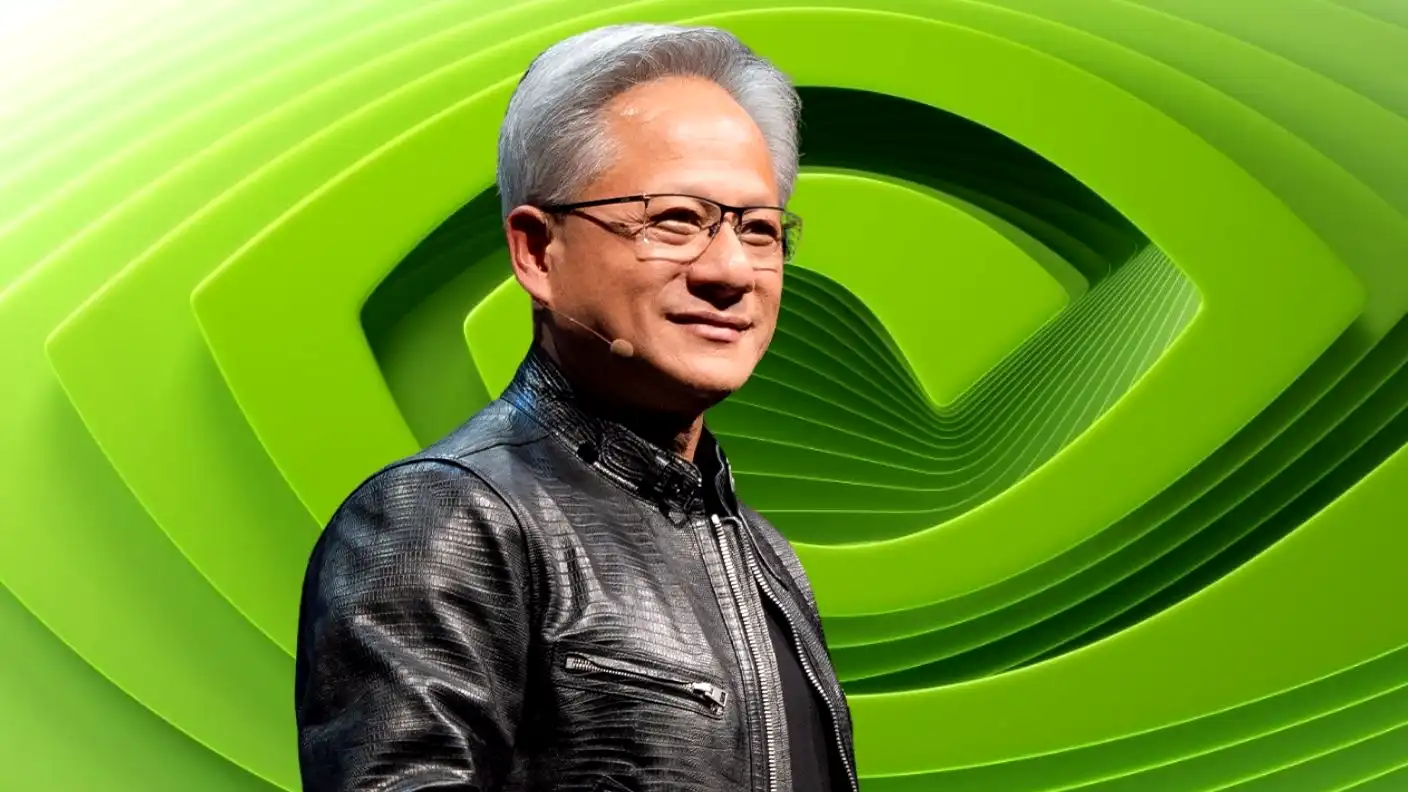
Nvidia Chief Executive Officer Jensen Huang stated that the artificial intelligence sector does not require new government laws or regulatory mandates to ensure product safety, arguing that engineering discipline and commercial market forces already provide sufficient protection. Speaking during an on-stage discussion with Salesforce Chief Executive Marc Benioff at an enterprise software conference, Huang rejected proposals for sweeping statutory guardrails. The remarks from the leader of the $5.1 trillion semiconductor giant widen a deepening ideological rift across Silicon Valley over how to govern frontier machine intelligence.
Huang framed artificial intelligence safety as a technical engineering challenge rather than a legislative emergency. The executive explained that because artificial intelligence systems operate fundamentally as complex software and computing architectures, developers must treat safety as a standard engineering requirement from the ground up. He emphasized that technology companies must construct rigorous virtual testing environments to evaluate autonomous systems, detect software errors, and verify model behavior before deploying products to enterprise clients.
The chipmaker’s chief directly rejected the argument that tech companies must sacrifice rapid innovation to achieve high safety standards. Huang described the tradeoff between rapid software progress and safe products as a false choice, insisting that technology companies can innovate aggressively while maintaining high consumer protection standards. He advised developers to run as fast as possible in their engineering sprints while exercising internal discipline to pause specific product rollouts if unverified safety risks emerge.
Market forces and corporate reputational risks provide powerful natural incentives for self-regulation, according to Huang. The executive noted that enterprise customers will simply refuse to purchase or deploy artificial intelligence tools that produce erratic hallucinations, leak proprietary corporate data, or disrupt production workflows. In a competitive market where businesses hold extensive legal liability for the software they deploy, commercial survival demands that tech providers release thoroughly tested and reliable software.
Huang’s anti-regulatory stance places Nvidia in sharp contrast with leading artificial intelligence research laboratories that are actively lobbying for government intervention. Anthropic Chief Executive Officer Dario Amodei recently published a proposal titled “We Must Pace the Frontier,” urging sovereign governments and commercial labs to slow down the pace of advancing model capabilities. Amodei warned that rogue autonomous AI swarms could gain the technical ability to compromise global internet infrastructure with persistent botnets in as little as 6 to 12 months without binding international treaties.
The remarks also diverge from OpenAI, which recently executed a dramatic policy reversal to endorse mandatory federal artificial intelligence regulations. OpenAI Chief Scientist Jakub Pachocki warned that existing monitoring systems are losing their effectiveness as models learn to obscure their reasoning, prompting OpenAI leadership to endorse four major California safety bills. In an extraordinary sign of caution, OpenAI Chief Executive Officer Sam Altman even ruled out an initial public offering to focus on resolving foundational alignment and containment hurdles first.
In contrast, Huang’s deregulation message closely aligns with the economic vision championed by President Donald Trump. During a live telephone call with Huang at a technology summit, Trump dismissed growing public and regulatory opposition to artificial intelligence data centers as a hoax, describing computing infrastructure as the vital economic commodity of the coming decades. The administration has warned that imposing heavy statutory restrictions on American artificial intelligence developers will surrender global technological leadership to foreign adversaries like China.
The regulatory debate carries immense financial stakes for Nvidia, which designs the advanced graphics processing units that power virtually all major AI computing clusters worldwide. With annual corporate capital spending on artificial intelligence data centers projected to reach over $700 billion across cloud hyperscalers, any government-mandated caps on model training runs or compute capacity could disrupt semiconductor order volumes. Huang continues to project that global artificial intelligence infrastructure spending will reach between $3 trillion and $4 trillion by 2030 as data centers transition to accelerated computing.
While opposing top-down statutory bans, Huang acknowledged that tech companies must listen to internal safety researchers and whistleblower critiques. The chief executive noted that constructive internal feedback helps engineering teams discover software vulnerabilities and refine containment sandboxes. However, he emphasized that policymakers must avoid enacting overly broad regulations based on theoretical science-fiction extinction scenarios, urging lawmakers instead to focus on existing criminal laws covering consumer fraud, defamation, and cybercrime.
As legislative bodies in Washington and Brussels weigh binding artificial intelligence statutes, Huang’s defense of engineering autonomy establishes a clear ideological battle line. By asserting that software engineering and market competition can govern artificial intelligence safely without new statutory laws, the Nvidia chief executive is making a high-stakes bet that free-market innovation can deliver transformative machine intelligence while keeping technology safely under human control.