Key Points:
- Brent crude climbed to $96.80 per barrel, and WTI reached $92.14 following weekend military strikes on oil tankers.
- United States forces struck three Iranian tankers near Kharg Island after Iranian missiles targeted two American warships.
- Commercial vessel traffic through the Strait of Hormuz dropped to an average of 10 ships per day, the lowest since May.
- OPEC+ held crude output steady for October as analysts project Middle East shipping disruptions will persist through 2026.
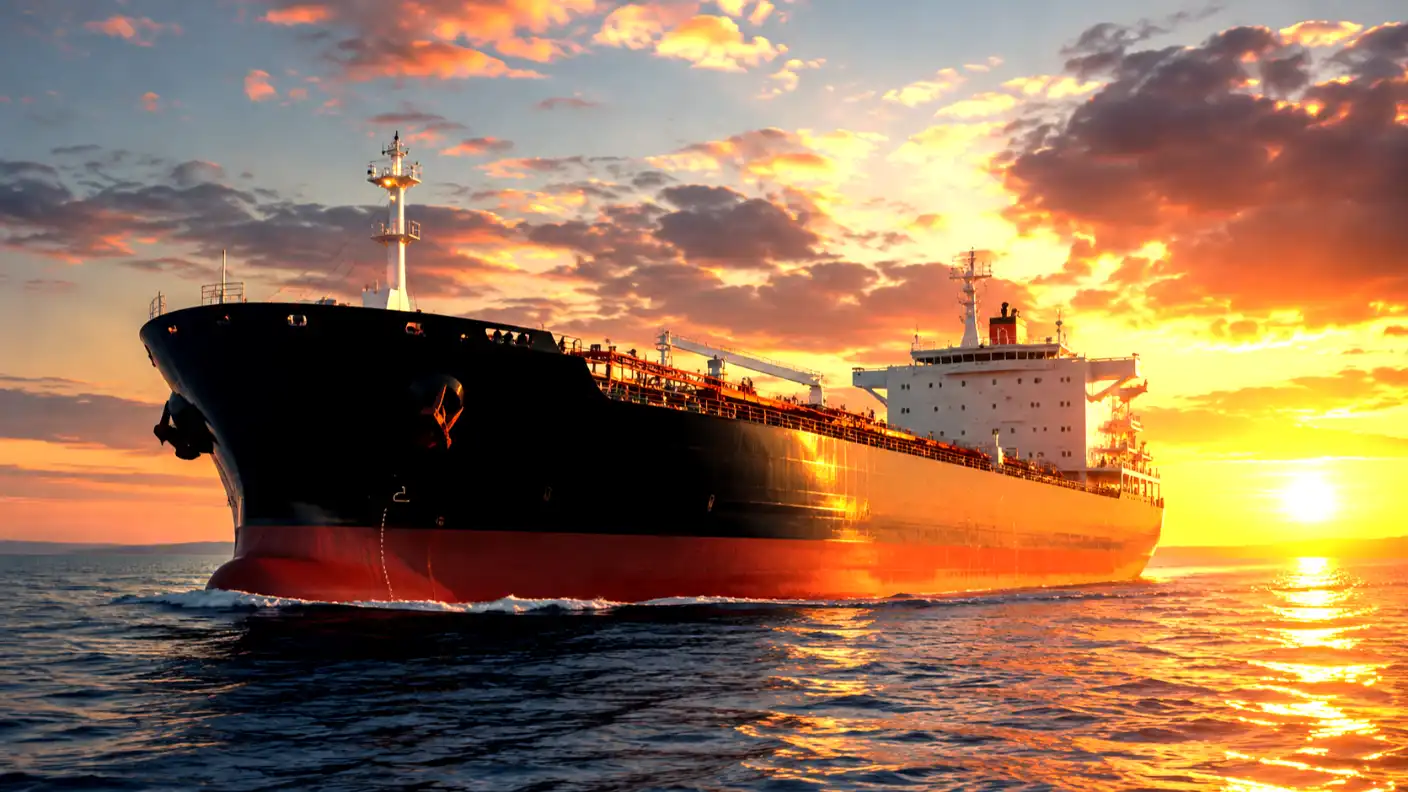
Global crude oil prices climbed higher as direct military exchanges between the United States and Iran expanded to target commercial oil tankers in the Persian Gulf. International benchmark Brent crude futures gained 52 cents, or 0.54%, to reach $96.80 per barrel, while United States West Texas Intermediate (WTI) crude advanced 66 cents, or 0.72%, to trade at $92.14 per barrel. The price gains extend last week’s sharp rally, during which Brent surged 7.8%, and WTI jumped nearly 10%, driven by escalating maritime attacks and severe shipping bottlenecks through the Strait of Hormuz.
The latest price surge followed a series of coordinated weekend strikes by both nations. United States Central Command announced that American military forces struck three Iranian oil tankers, destroying one vessel operating near Kharg Island, Iran’s primary crude export hub. American military commanders stated that the operation retaliated against Iranian ballistic missile launches targeting two United States Navy warships, warning that military forces will impose steep economic penalties for attacks on American naval vessels.
Iranian military forces escalated the confrontation by targeting commercial merchant ships transiting the region. The naval wing of Iran’s Islamic Revolutionary Guard Corps confirmed that it attacked three commercial oil tankers traveling through unauthorized transit lanes in the Strait of Hormuz, while deploying drones and missiles against additional United States-linked vessels in regional waters. The reciprocal strikes mark a significant escalation, transforming commercial merchant vessels into direct instruments of geopolitical and economic warfare.
Maritime tracking data confirms that commercial vessel traffic through the Strait of Hormuz has plunged to its lowest level since May. An average of only 10 commodity cargo vessels transited the narrow strait per day over the past 10 days, representing a small fraction of historic shipping volumes. The strategic waterway normally channels roughly 20% of the world’s petroleum supply, connecting major Middle Eastern crude producers—including Saudi Arabia, Iraq, the United Arab Emirates, Kuwait, and Qatar—to global consumer markets.
Iranian leadership signaled that maritime shipping restrictions could expand further across regional waterways. Secretary of Iran’s Supreme National Security Council Mohsen Rezaei announced that Tehran is preparing to declare a formal restricted maritime zone outside the Strait of Hormuz in the coming days. The proposed prohibited zone would extend from the United States naval blockade line into parts of the Persian Gulf, subjecting non-compliant commercial vessels to potential seizure, military interdiction, or severe financial fines.
Energy analysts warn that prolonged maritime hostilities will delay the recovery of global oil shipments well into next year. Market strategists project that Middle Eastern crude exports will remain heavily constrained through the end of 2026, with only a gradual reopening possible late in the fourth quarter. Analysts do not expect commercial tanker traffic through the Strait of Hormuz to return to pre-conflict baseline volumes until the first half of 2027, locking a substantial risk premium into international fuel prices.
The Organization of the Petroleum Exporting Countries and its allies, known as OPEC+, maintained a cautious stance amid the market volatility. During an extraordinary weekend ministerial meeting, the producer alliance voted to leave its planned crude production policy unchanged for October, pausing a previous cycle of scheduled output increases. Alliance ministers agreed to keep output quotas steady while technical committees establish baseline production quotas for 2027, preventing immediate supply increases from offsetting Middle Eastern shipping losses.
Surging crude benchmarks are driving up the cost of refined petroleum fuels worldwide, intensifying inflationary pressures across global transport and industrial sectors. International Brent crude prices have surged nearly 60% since early 2026, pushing wholesale diesel and jet fuel prices to record levels across North America, Europe, and Asia. In the United States, retail diesel prices recently climbed to an all-time record of $5.85 per gallon, raising freight shipping surcharges and driving up the retail cost of consumer goods.
International tanker operators and maritime insurers are responding by suspending transit routes or imposing prohibitive surcharges. Marine insurance syndicates have raised emergency war-risk premiums for Persian Gulf voyages by more than 300%, adding hundreds of thousands of dollars in operating expenses per voyage. Many international shipping conglomerates are rerouting ultra-large crude carriers around the Cape of Good Hope, adding 14 days of sailing time and millions of dollars in fuel costs to each round trip between the Middle East and European ports.
As military forces remain on high alert throughout the Persian Gulf, energy traders are watching for further signs of escalation that could push Brent crude past the $ 100-per-barrel psychological barrier. While diplomatic mediators continue working to establish safe maritime corridors, the deliberate targeting of oil tankers and commercial shipping infrastructure ensures that global energy markets will navigate heightened price volatility and tight physical supplies in the months ahead.