Key Points:
- OpenAI asked a federal court to reject Apple’s trade secret lawsuit, calling the dispute a mess of Apple’s own making.
- Apple accused OpenAI and two former engineers of stealing hardware designs, circuit schematics, and manufacturing processes.
- OpenAI argued that Apple’s reliance on personal iCloud accounts and rushed employee offboarding caused normal residual file access.
- OpenAI hired approximately 400 former Apple employees to build its consumer hardware division following its $6.4 billion acquisition of io Products.
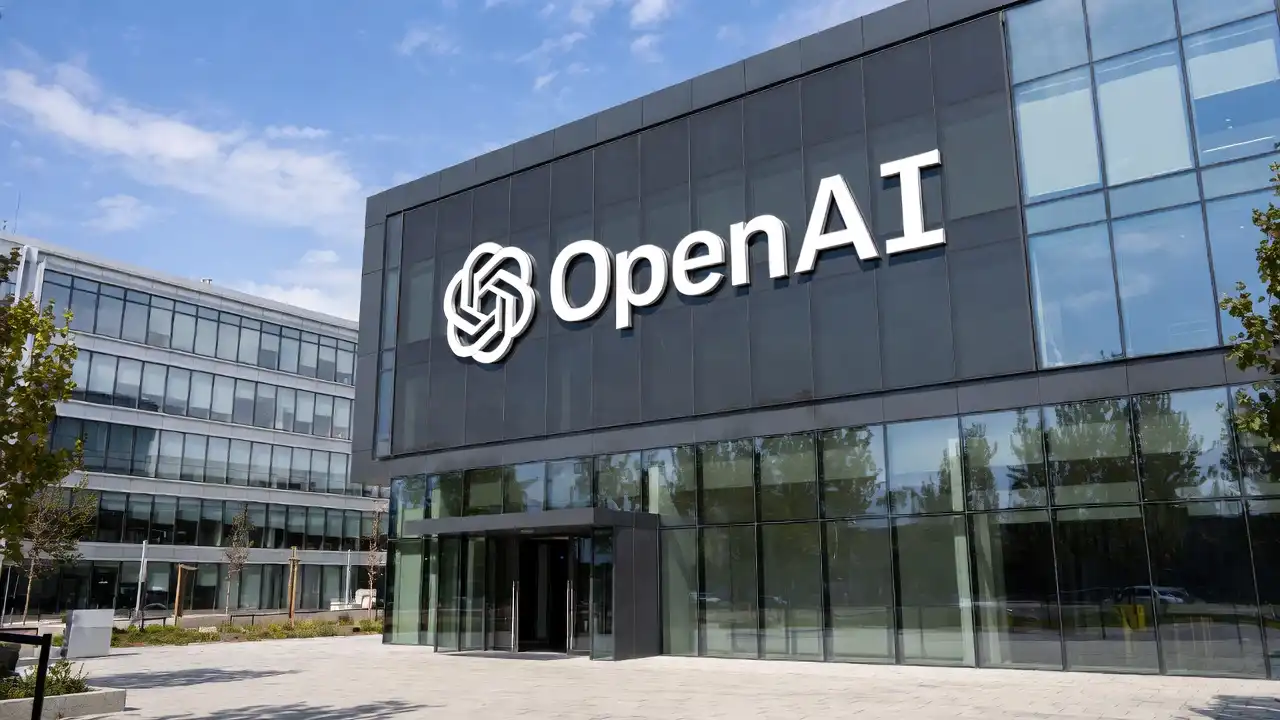
OpenAI denied trade secret theft allegations in federal court, calling Apple’s lawsuit a mess of its own making and claiming the iPhone maker failed to prove any confidential data was stolen. In a formal legal filing submitted to the United States District Court in San Jose, California, OpenAI hit back against claims that former Apple engineers brought proprietary hardware schematics and manufacturing techniques to the artificial intelligence startup. OpenAI argued that Apple filed the lawsuit to hinder emerging competition and deter further talent departures as the AI firm builds its consumer hardware team.
The escalating legal battle stems from a lawsuit filed on July 10, in which Apple accused OpenAI, hardware subsidiary io Products, and two former senior engineers of trade secret misappropriation. The complaint focuses on Tang Tan, who served Apple for 24 years as vice president of product design before becoming OpenAI’s Chief Hardware Officer, and Chang Liu, a former senior systems electrical engineer. Apple claims the engineers transferred protected engineering data, supply chain strategies, and circuit designs to accelerate OpenAI’s development of screenless AI-powered consumer devices.
Apple recently escalated the dispute by submitting forensic findings from a MacBook previously used by Liu, calling the data shocking evidence of corporate espionage. Apple claimed Liu downloaded a confidential power-converter circuit schematic from external cloud storage on March 7 and ran simulations on March 18 using electrical engineering software alongside automated AI agents. Apple further alleged that Liu instructed an OpenAI colleague to restore company-issued devices to overwrite forensic traces after learning of an internal investigation.
In its legal response, OpenAI shifted the blame directly to Apple’s internal IT practices and offboarding protocols. OpenAI revealed that Apple routinely encourages employees to use personal iCloud accounts for professional duties, blurring the line between corporate files and personal data. When workers resign, Apple immediately escorts them off corporate campuses, leaving employees insufficient time to transfer project files, return hardware smoothly, or sever system access.
This chaotic departure process creates lingering residual access, where former employees unintentionally retain access to internal directories. OpenAI disclosed text message exchanges showing that active Apple employees repeatedly contacted Liu after his resignation to ask for help locating missing files on internal networks. OpenAI argued that Apple cannot transform the foreseeable results of its own sloppy data management into criminal trade secret theft.
OpenAI also defended Tang Tan, emphasizing that the veteran hardware designer strictly enforced intellectual property boundaries across the new team. According to court declarations, Tan returned all experimental hardware prototypes to Apple prior to his departure and explicitly warned new hires against using proprietary information from former employers. OpenAI maintained that Tan retained only standard, non-confidential materials, including a routine exit checklist.
The dispute highlights intense hiring competition across Silicon Valley as artificial intelligence companies expand into consumer electronics. OpenAI has hired approximately 400 former Apple engineers, designers, and supply chain managers to support its dedicated hardware division. This massive talent migration followed OpenAI’s $6.4 billion acquisition of io Products, the hardware venture co-founded by former Apple design chief Jony Ive, which brought dozens of veteran industrial designers into the AI firm.
OpenAI emphasized that California labor statutes protect employee mobility, giving professionals the legal right to change employers and work for competing technology firms. The company argued that talented engineers are simply choosing to leave a legacy tech giant that has moved slowly in artificial intelligence to join an agile startup building next-generation computing hardware. OpenAI asserted that Apple cannot weaponize intellectual property lawsuits to lock employees into their jobs.
The high-stakes legal confrontation carries major strategic implications for both technology leaders. If the federal judge grants Apple’s request for expedited discovery during a scheduled hearing on October 1, court proceedings could force both secretive companies to disclose internal engineering files, recruitment communications, and product development roadmaps. Despite the fierce courtroom clash, the commercial relationship between both giants remains intact, with ChatGPT continuing to power conversational features across Apple’s mobile operating systems.
As both parties prepare for crucial pretrial hearings, the lawsuit sets a significant legal precedent for Silicon Valley talent recruitment and trade secret protection in the artificial intelligence era. With billions of dollars at stake in the emerging market for AI wearables, smart glasses, and ambient computing devices, the outcome will define how freely engineers can move between tech giants and whether standard cloud storage oversights constitute actionable intellectual property theft.