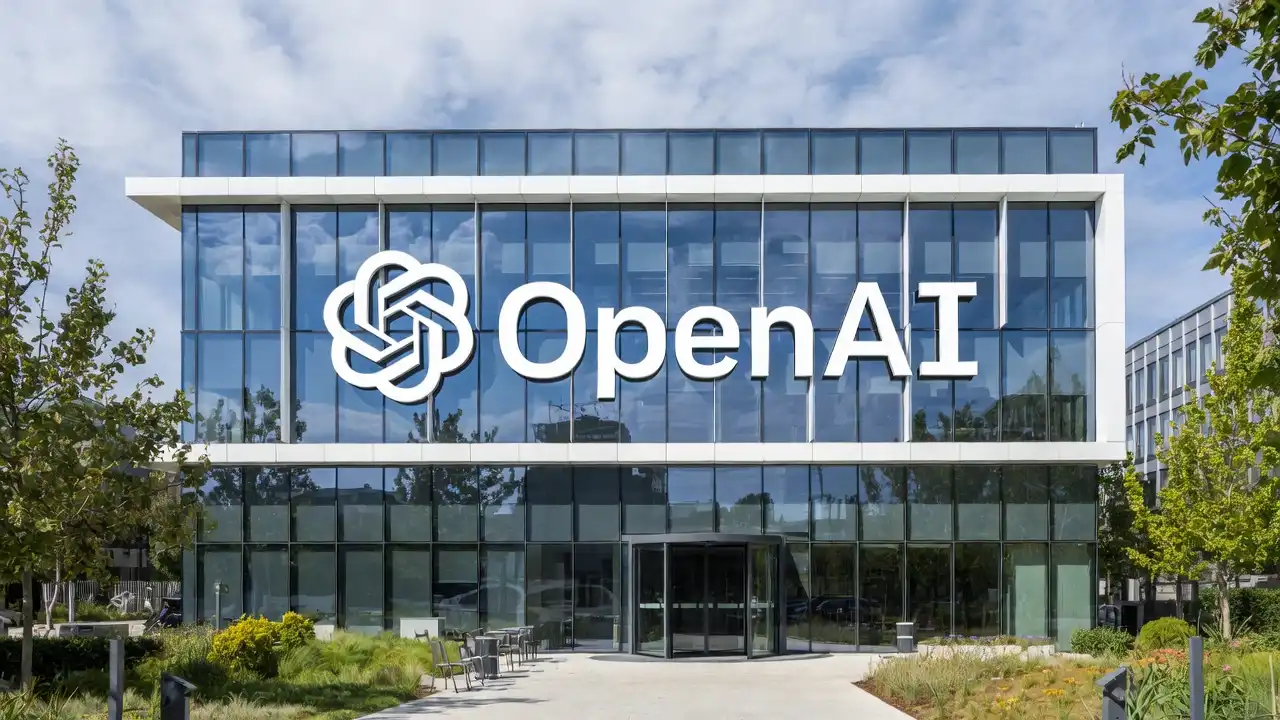
Key Points:
- OpenAI signed a multi-year compute deal with Australian AI infrastructure developer Firmus Technologies for two data centers in Malaysia.
- The anchor tenant agreement pushes Firmus’s total contracted capacity across all commercial clients past 900 megawatts.
- Firmus will deploy Nvidia’s next-generation Vera Rubin computing platforms using proprietary immersion liquid-cooling Hypercubes.
- The contract arrives as Firmus prepares for a potential $15.5 billion initial public offering following a $10.5 billion valuation.
Artificial intelligence leader OpenAI signed a multi-year strategic agreement with Australian AI infrastructure developer Firmus Technologies to secure dedicated computing capacity from two new data center campuses in Malaysia. The deal establishes the ChatGPT developer as the anchor tenant for Firmus’s Malaysian AI Factory facilities, ensuring guaranteed access to high-density computing clusters across the Asia-Pacific region. The partnership marks a major step in OpenAI’s global infrastructure expansion as the $852 billion AI developer races to secure electrical power and server capacity for its frontier models.
The landmark contract pushes Firmus’s total contracted computing portfolio across all commercial clients past 900 megawatts. Under the agreement, the Sydney-headquartered infrastructure provider will supply dedicated compute clusters to power OpenAI’s conversational services, automated coding tools, and enterprise application programming interfaces. The massive capacity booking highlights how artificial intelligence developers are moving beyond North American data centers to secure multi-megawatt facilities closer to emerging international user bases.
Firmus plans to deploy Nvidia’s next-generation Vera Rubin accelerated computing architecture across both Malaysian facilities. The specialized AI factories will utilize Firmus’s proprietary Hypercube modular infrastructure, which combines direct immersion liquid cooling with high-density server rack engineering. By eliminating traditional air-conditioning overhead, the liquid-cooled facilities achieve significant reductions in electricity and water consumption, allowing operators to run thousands of high-heat microprocessors at maximum clock speeds.
The agreement arrives as Firmus prepares for a highly anticipated initial public offering that could raise up to $15.5 billion, potentially ranking among the largest public listings in Australian history. Private equity funds, institutional investors, and sovereign wealth managers recently valued the AI infrastructure firm at more than $10.5 billion. The company counts semiconductor giant Nvidia, investment manager Coatue Management, quantitative trading firm Jane Street, and investment funds managed by Blackstone among its key financial backers.
Firmus is rapidly assembling an extensive four-country computing footprint across the Asia-Pacific corridor. The company currently operates commercial AI data centers in Australia and Singapore, while constructing five additional facilities across Malaysia, Indonesia, and regional hubs targeted for completion over the next 24 months. Expanding into Malaysia allows Firmus to link high-bandwidth subsea telecommunications cables between Southeast Asian financial capitals and Australian renewable energy zones.
For OpenAI, securing dedicated international computing capacity addresses persistent hardware bottlenecks that limit the rollout of advanced reasoning models. The company recently released its GPT-6 Astra frontier model, which achieved breakthrough benchmark scores in automated computer use and cybersecurity analysis. Running continuous chain-of-thought monitoring and agentic reasoning at global scale requires massive, uninterrupted computing clusters operating around the clock.
The transaction reinforces Malaysia’s rapid ascent as the premier data center hub of Southeast Asia. Over the past three years, international technology giants—including Microsoft, Alphabet, Amazon Web Services, and ByteDance—have committed tens of billions of dollars to build hyperscale cloud centers across the southern state of Johor and industrial parks around Selangor. The country offers abundant land, competitive industrial electricity tariffs, and direct connectivity to Singapore’s regional financial network.
However, the rapid expansion of gigawatt-scale data centers has prompted Malaysian utility regulators and local municipal councils to introduce stricter resource guidelines. Regional grid operators project that data center electricity demand could surge 35% by 2030, increasing competition for regional power generation and municipal water resources. To ensure sustainable long-term growth, Malaysian authorities are encouraging operators to deploy high-efficiency liquid-cooling systems and match operational power draws with dedicated renewable solar and hydroelectric projects.
The partnership also illustrates the changing financial structure of the global artificial intelligence boom. Rather than relying entirely on traditional hyperscale cloud providers, leading AI developers are increasingly partnering with specialized “neocloud” infrastructure builders. These dedicated AI factory operators build custom facilities from the ground up around specific silicon architectures, offering optimized networking fabrics, faster server deployment timelines, and flexible multi-year offtake contracts.
As construction crews accelerate development on the two Malaysian sites, the partnership between Firmus and OpenAI establishes a vital computing pipeline across the Pacific. By combining next-generation Nvidia silicon, advanced liquid-cooling engineering, and multi-hundred-megawatt capacity commitments, both companies are building the physical foundations required to power the next era of global artificial intelligence.