Key Points:
- Global investment in artificial intelligence data centers is projected to approach $7 trillion worldwide by 2030.
- Power equipment and cooling suppliers are securing multi-year backlogs as developers race to prevent severe electrical bottlenecks.
- Grid connection delays now stretch up to 24 months in emerging markets and over eight years in major developed economies.
- Direct-to-chip liquid cooling adoption is expected to exceed 53% across new facilities as server rack densities surpass 100 kilowatts.
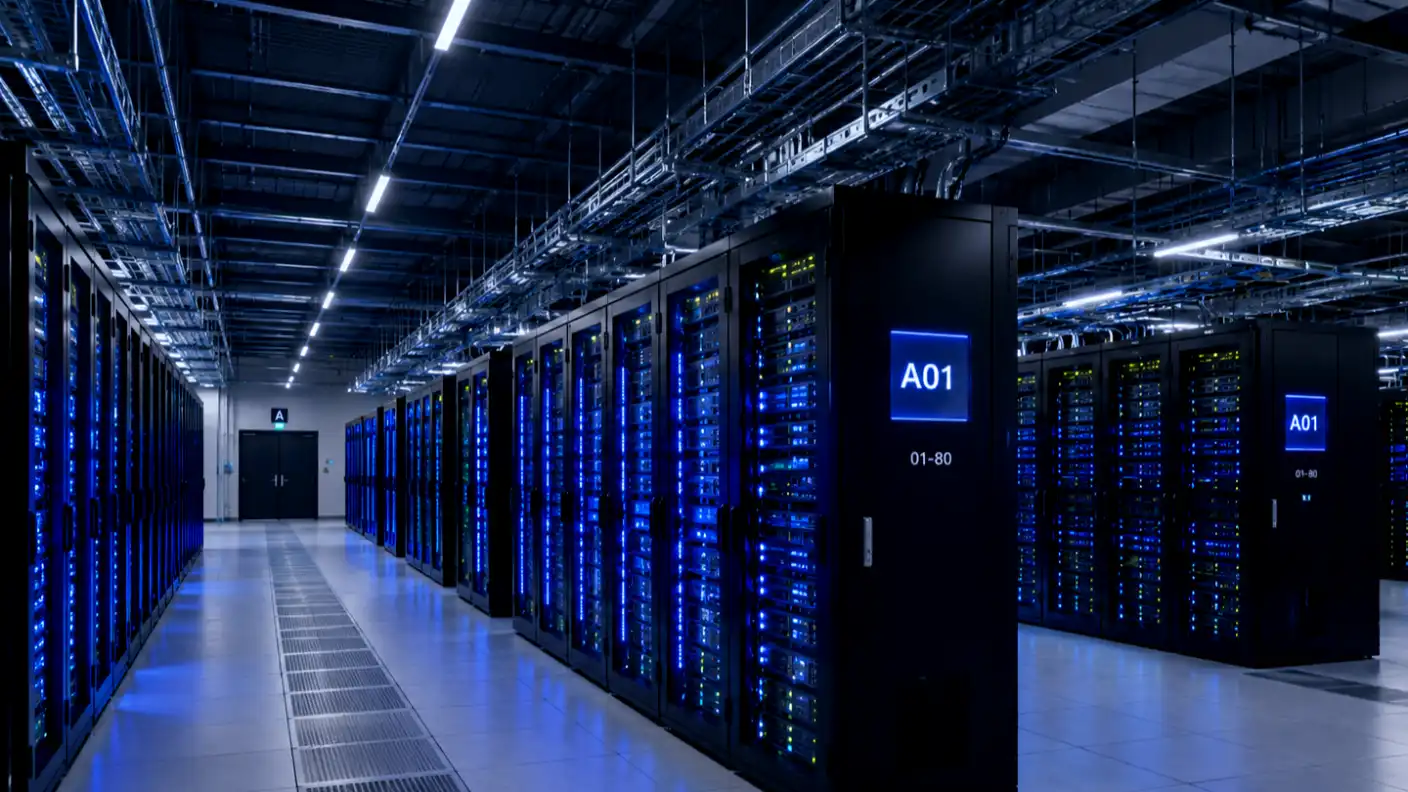
While semiconductor designers like Nvidia dominate headlines in the artificial intelligence boom, a specialized group of electrical power and cooling equipment manufacturers is capturing massive profits from a worldwide data center construction wave. Global technology giants and cloud infrastructure operators are pouring unprecedented capital into physical facilities to house dense artificial intelligence computing clusters. This infrastructure race has triggered severe supply-chain shortages and surging order books for industrial suppliers producing power transformers, backup generators, high-voltage switchgear, and liquid-cooling distribution networks.
Industry research forecasts that global investment in artificial intelligence and cloud data centers will approach $7 trillion by 2030. Tech hyperscalers aim to construct and commission new computing campuses within six months to meet booming enterprise demand for generative AI models. However, physical infrastructure bottlenecks are frustrating these aggressive schedules. Delays in connecting new data centers to regional electrical grids now stretch from 24 months in emerging markets to more than eight years in major developed economies.
The rapid increase in computing power per server rack has made electrical delivery hardware the most contested asset in commercial construction. Heavy transformers convert high-voltage electricity drawn from municipal transmission grids into stable currents suitable for microchips, power distribution units, and cooling loops. Because standard transformer lead times now exceed three to four years, infrastructure builders are purchasing high-voltage electrical equipment years before breaking ground on data center foundations.
Heavy electrical manufacturers across Asia and North America are posting record order backlogs as a direct result of the building spree. South Korean transformer specialist HD Hyundai Electric reported that its order backlog climbed 23% to reach $8.5 billion, driven by surging export demand from American hyperscalers building data hubs in the United States, Germany, and the United Kingdom. Chinese supplier Hainan Jinpan Smart Technology also logged record orders for cast-resin dry transformers tailored for high-density indoor server environments.
Power management giants, including Schneider Electric, Vertiv, and Eaton, are securing multibillion-dollar pipeline commitments from commercial cloud operators. These infrastructure specialists provide the critical link between municipal utility lines and sensitive silicon chips. Their modular power rooms, uninterruptible power supply (UPS) batteries, and solid-state power distribution units protect delicate AI clusters from voltage sags, power surges, and electrical harmonic distortion.
Thermal management has emerged as an equally urgent engineering challenge for data center operators. Traditional air-cooling fans and raised-floor chillers cannot dissipate the intense heat generated by modern AI server racks, which now consume between 50 and 130 kilowatts of power per rack compared to standard legacy server racks that drew fewer than 10 kilowatts. As a result, direct-to-chip liquid cooling—which circulates coolant fluid directly over microprocessors—is rapidly becoming mandatory for high-density computing facilities.
Market analysts project that liquid cooling adoption will exceed 53% across all newly constructed AI server facilities. Liquid cooling systems improve energy efficiency by up to 40% compared to traditional air-conditioned cooling loops, enabling facility operators to lower power usage effectiveness ratings and reduce municipal water consumption. Equipment providers that deliver end-to-end fluid distribution units, coolant distribution manifolds, and outdoor heat rejection chillers are enjoying historic profit margins as a result.
The fierce competition for electrical hardware has created long-term commercial lock-in between equipment vendors and cloud operators. Because facility layouts, structural plumbing, and electrical topologies are custom-engineered around specific cooling manifolds and switchgear architectures, hyperscalers face immense switching costs once they select an equipment supplier. This dynamic allows established infrastructure manufacturers to maintain strong pricing power and secure recurring multi-year service contracts.
Utility providers and regional governments are also adjusting policies to accommodate the unprecedented power draw of AI clusters. A single gigawatt-scale data center campus requires as much electricity as a medium-sized city with hundreds of thousands of homes. To prevent localized blackouts, data center developers are installing dedicated on-site natural gas turbines, battery energy storage systems, and microgrid controllers from industrial engineering firms like Siemens and ABB.
As the artificial intelligence revolution shifts from initial software experimentation into full-scale enterprise deployment, the physical backbone of the internet is undergoing its largest structural transformation in history. While chip innovations continue to push computational boundaries, the ultimate pace of AI expansion will depend on industrial manufacturing lines producing transformers, pumps, and chillers. The companies building the power and cooling infrastructure are cementing their position as indispensable beneficiaries of the trillion-dollar AI era.