Key Points:
- Samsung unveiled its first AI-powered smart glasses, co-developed with Google and Qualcomm, to challenge Meta’s market dominance.
- Running Google’s display-less Android XR operating system, the glasses feature hands-free integration with the Gemini AI assistant.
- The hardware features Qualcomm’s Snapdragon AR1 Gen 1 chipset, a 12MP autofocus camera, and support for gesture controls.
- Designed in partnership with Gentle Monster and Warby Parker, the premium glasses are scheduled for a commercial launch this fall.
A massive, highly coordinated challenge to the dominant player in the smart eyewear market has officially arrived. During its high-profile Galaxy Unpacked event, Samsung detailed the specifications, software ecosystem, and design partnerships of its upcoming artificial intelligence smart glasses. Developed in a close, three-year collaboration with Google and Qualcomm, the premium wearable represents a major effort to bridge the gap between digital mobile assistants and physical, hands-free hardware.
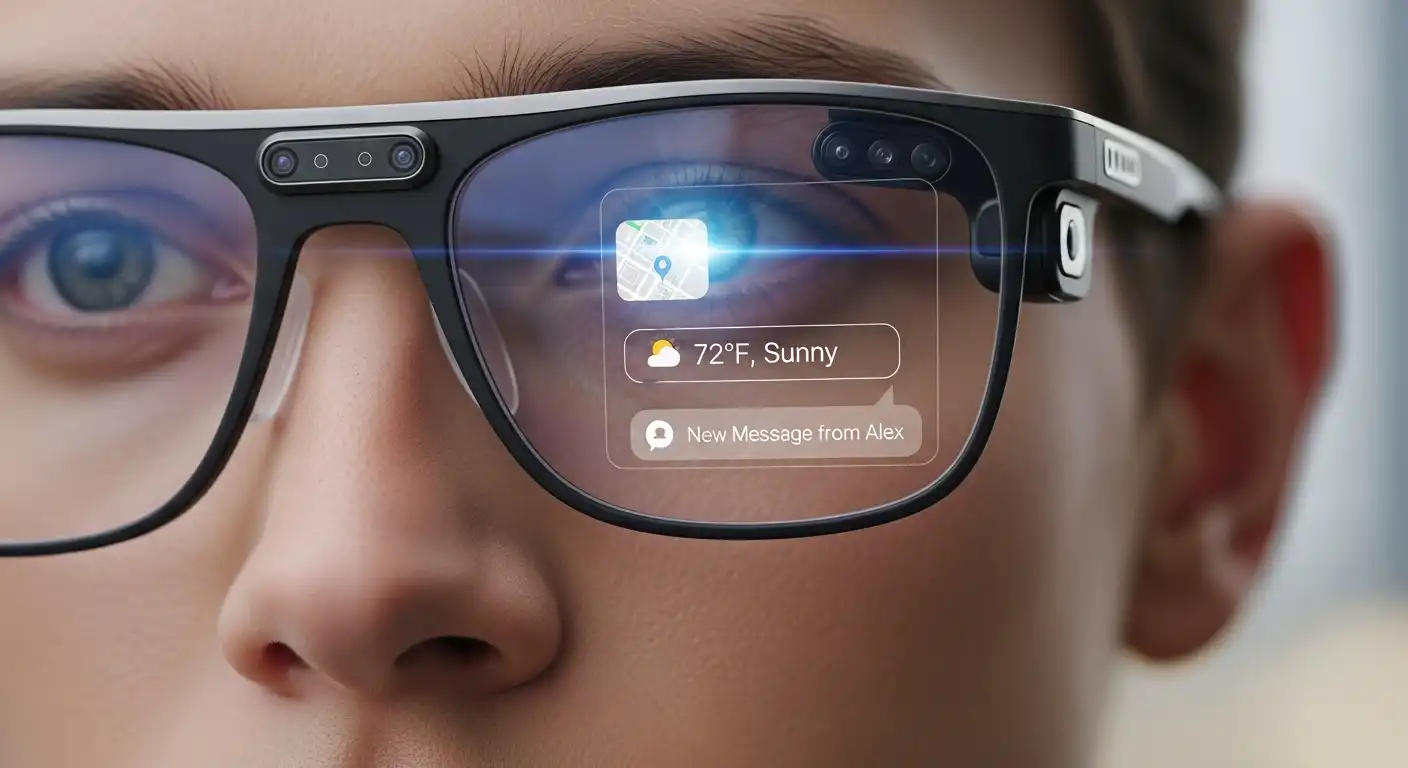
The digital architecture of the new eyewear represents a deep integration of hardware and software designed specifically for continuous, daily use. The glasses run on Google’s newly developed Android XR operating system, designed explicitly to support display-free, audio-centric wearable platforms. To maintain a thin and light profile, the glasses bypass built-in display screens entirely, focusing instead on advanced directional audio, voice interactions, and physical gesture controls to deliver a seamless, heads-up user experience.
Powering this lightweight system is Qualcomm’s Snapdragon AR1 Gen 1 processor, a chip built specifically to run low-power, high-performance on-device AI workloads. Weighing in at approximately 50 grams, the glasses achieve a familiar, lightweight form factor that mirrors traditional high-fashion eyewear. This is a significant design victory, as previous-generation augmented reality headsets often required heavy, bulky components that made all-day wear physically impractical and socially awkward.
To ensure the technology looks as good as it performs, the company partnered with two of the world’s most prominent premium eyewear brands to design the physical frames. Fashion-forward buyers can choose between a bold, black oval-frame aesthetic designed by Gentle Monster, or a timeless, refined green round-frame design from Warby Parker. Both frame designs fully support prescription lens integration, ensuring that daily glasses wearers can easily adopt the smart technology without compromising their vision.
The central hardware feature of the frames is a single, eye-level 12-megapixel (12MP) camera module that introduces a key technical capability most competitors lack. Unlike rival smart glasses that use fixed-focus cameras, the new platform incorporates a rapid, micro-motor autofocus system. This autofocus capability allows the onboard AI assistant to capture sharp, highly detailed images and video of both distant landscapes and close-up documents, which is essential to process real-world text and visual data.
This autofocus camera serves as the primary sensory input for Google’s wearable-optimized Gemini AI assistant. By simply using voice commands, users can ask the assistant to analyze whatever is directly in their line of sight. For example, the camera can capture a photo of a dry-erase whiteboard or a printed presentation slide, and the on-device AI will automatically transcribe, organize, and save the content directly into the user’s connected Notes application.
The assistant also delivers a robust suite of real-time translation, navigation, and notification services directly to the user’s ears through open-ear directional speakers. Travelers can utilize the platform to translate foreign languages in real time, with the system piping tone-matched, translated audio directly into the wearer’s ear. The assistant can also read out summaries of incoming text messages, add events to calendars, and provide step-by-step walking directions through real-time audio navigation.
Beyond voice and touch-sensitive temple controls, the development team is actively testing advanced, non-contact gesture controls to navigate the system. James Choi, executive vice president of the research and development division behind the product, confirmed that the company is evaluating gesture tracking using connected companion devices. Users will eventually be able to control the glasses’ features using subtle finger taps and hand movements tracked by their Samsung smartwatches or the newly launched Galaxy Ring.
This premium product launch directly targets the near-monopoly currently held by Meta Platforms in the smart eyewear category. Market tracking data from the first quarter of the year reveals that Meta’s Ray-Ban collaboration continues to dominate the sector, capturing a massive 69.2% share of the global smart glasses market. By leveraging its extensive global retail distribution networks and its powerful, three-way alliance with Google and Qualcomm, the South Korean tech giant is attempting to break this monopoly and establish a new hardware standard.
Ultimately, the commercial debut of the new intelligent eyewear this fall marks a critical milestone in the transition toward ambient, screen-free computing. By choosing an audio-first, display-free design backed by Google’s Gemini AI and premium fashion partnerships, the company has delivered a highly practical, socially acceptable wearable platform. As the product launches in select international markets over the coming months, its ability to successfully deliver hands-free productivity will determine whether smart glasses can officially become the next major computing category after the smartphone.