Key Points:
- SpaceX transitions into a publicly traded corporation, shifting its operational culture from private ambition to rigorous Wall Street scrutiny.
- Chief Executive Officer Elon Musk faces the complex challenge of balancing heavy artificial intelligence capital investments with sustained profitability.
- Recent financial reports revealed a strong revenue beat of $7.8 billion, offset by massive infrastructure outlays exceeding $18 billion.
- Public market investors demand predictable cash flow projections, testing the company’s ability to maintain high growth without risking financial stability.
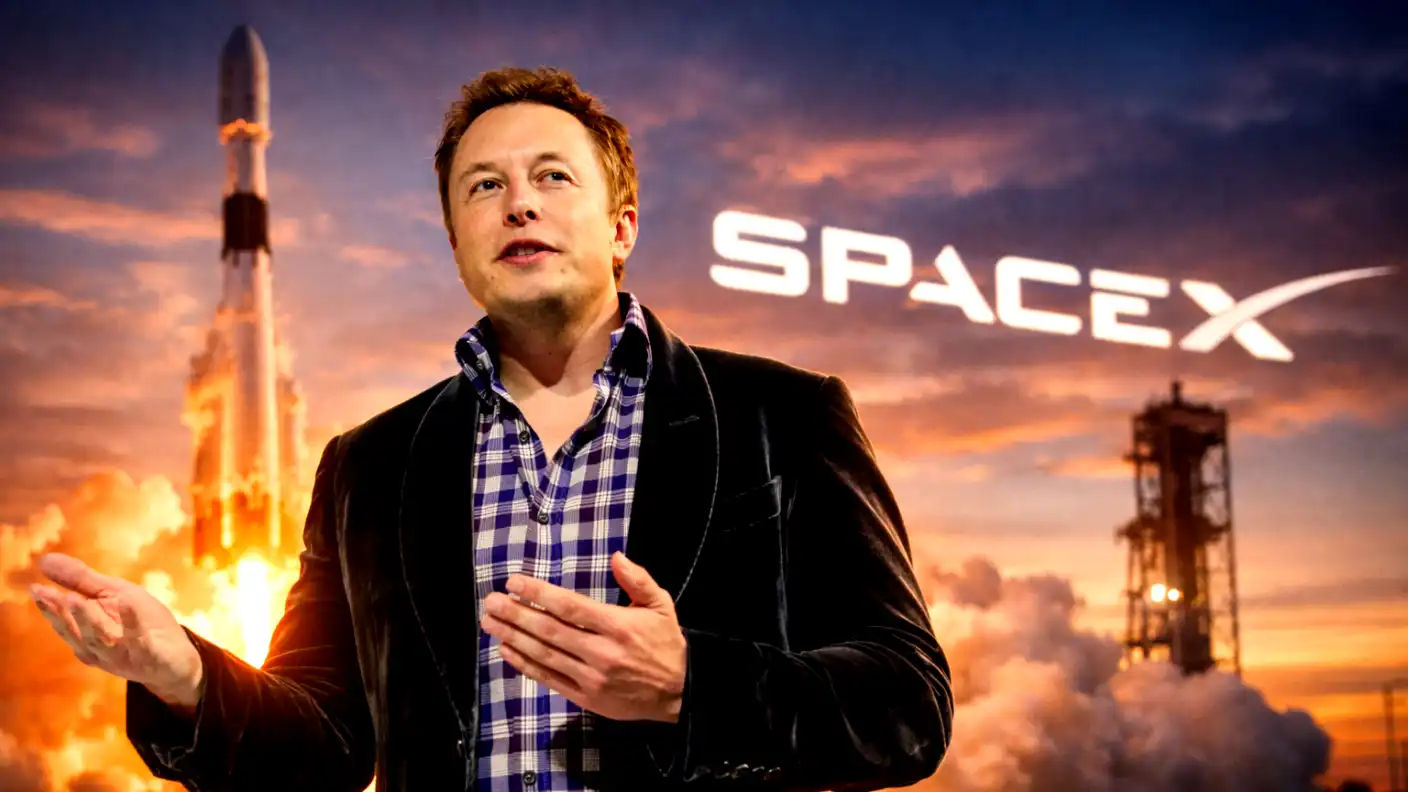
The aerospace and technology landscape has entered a brand-new era following the historic public market debut of SpaceX. For over two decades, Chief Executive Officer Elon Musk operated the enterprise as a private vehicle, allowing him to pursue high-risk, long-term interplanetary missions without answering to quarterly earnings expectations. Selling the visionary dream of colonizing Mars and building a global satellite constellation proved remarkably successful. Now, the real test begins as leadership must satisfy the rigid demands of public shareholders.
The transition from a private startup to a multi-billion-dollar public entity changes the corporate playbook overnight. Public markets operate on predictable financial cadences, requiring consistent margin expansion, disciplined capital allocation, and transparent communication. During its inaugural earnings call, the aerospace manufacturer posted impressive second-quarter revenue of $7.8 billion, comfortably beating Wall Street consensus forecasts. However, that top-line triumph was quickly overshadowed by massive capital expenditure figures that startled short-term traders.
The core financial friction centers on the aggressive scaling of artificial intelligence infrastructure. Out of $18.4 billion in total quarterly capital spending, roughly $15.8 billion was funneled directly into advanced data centers, supercomputing clusters, and specialized processors. While management defended these outlays by pointing to rapid hardware payback periods and surging cloud contracts, the resulting negative free cash flow triggered immediate stock volatility. Public investors accustomed to traditional software margins worry that heavy cash burn could strain corporate liquidity.
Compounding this operational pressure was the recent expiration of initial insider share lock-up restrictions. This regulatory milestone unlocked hundreds of millions of shares, more than doubling the public float and introducing heavy daily trading volume. Maintaining stability amid this massive influx of stock requires clear messaging and flawless operational execution. Musk must now prove that the stellar cash flows generated by the Starlink satellite internet division can reliably finance heavy futuristic bets without compromising share value.
Ultimately, the future trajectory of the company depends on balancing grand engineering ambitions with financial discipline. Wall Street embraces visionary innovation, but it demands accountability and predictable bottom-line results. As the enterprise prepares for future quarters, leadership faces the ultimate challenge: proving that the dream of space exploration can coexist with sustainable public market profitability.