Key Points:
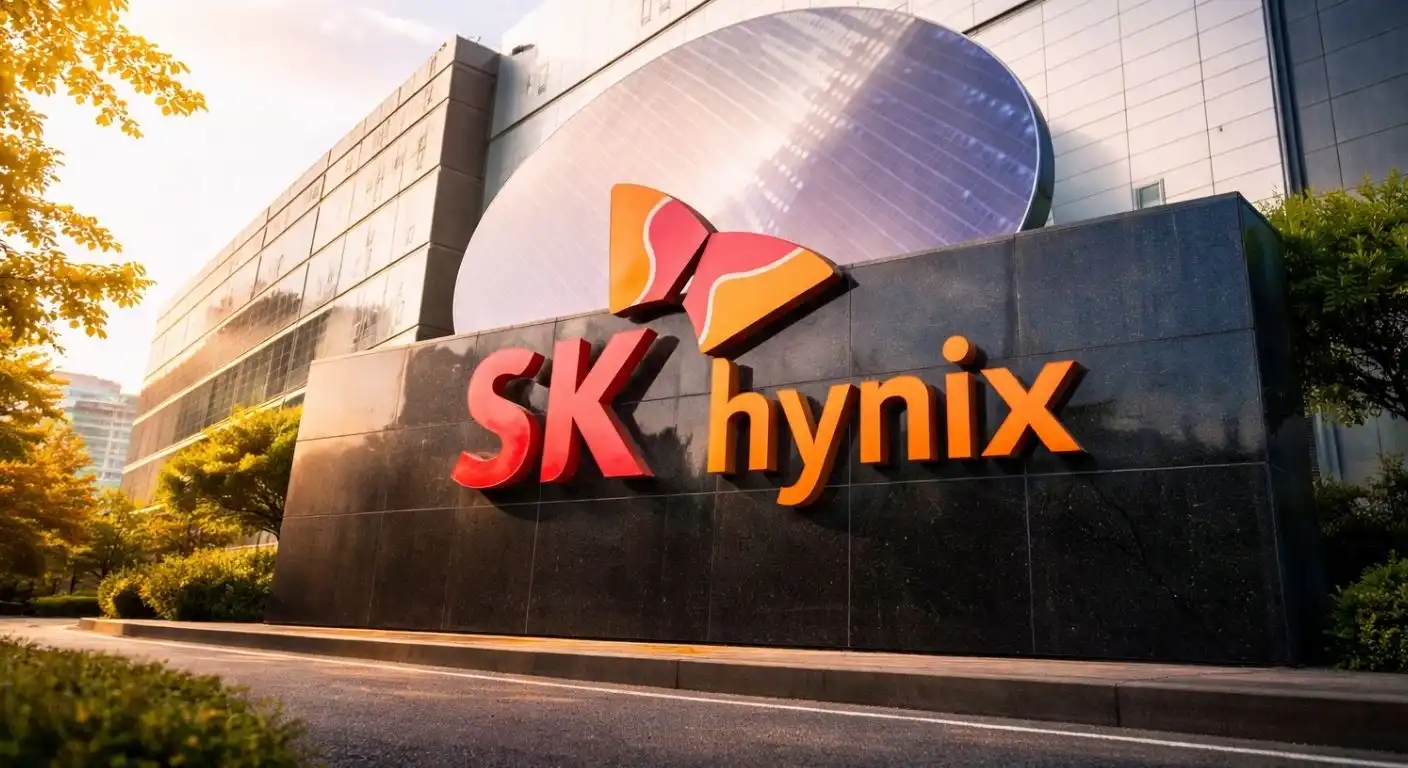
- SK Hynix is launching a record-breaking $28 billion U.S. stock listing to solidify its leadership in the global AI memory market.
- The capital injection will primarily fund the construction of advanced “mega-fab” facilities and R&D centers dedicated to HBM production.
- This listing deepens the company’s integration into the U.S. tech ecosystem, facilitating closer collaboration with major cloud and AI hardware providers.
- Institutional investors are showing record-breaking interest, with the offering already seeing massive oversubscription rates during the initial book-building phase.
South Korean semiconductor giant SK Hynix is preparing for a landmark initial public offering (IPO) on a major U.S. stock exchange, aiming to raise an estimated $28 billion. This strategic move is designed to tap into the massive liquidity of American capital markets while strengthening the firm’s ties with international partners in the artificial intelligence sector. As demand for high-bandwidth memory (HBM)—a critical component for modern AI training chips—continues to break records, an American listing provides the company with the visibility and capital necessary to fuel its next phase of rapid expansion.
The move toward an American listing is not just about raising capital; it is a strategic repositioning in the global tech hierarchy. Memory manufacturers have historically been viewed as cyclical players, subject to the volatile swings of the PC and smartphone markets. However, the rise of generative AI has transformed HBM from a simple commodity into a strategic bottleneck. By listing in the U.S., SK Hynix signals to global investors that it should be valued as an AI infrastructure essential, similar to the major chip designers and foundry giants that currently dominate investor portfolios.
Financial analysts have been bullish on the company’s prospects, with several firms raising their price targets to account for the sustained HBM supply-demand imbalance. With production of advanced memory chips currently sold out well into the future, the company’s revenue visibility is unprecedented. By gaining direct access to U.S. institutional investors, the firm can diversify its funding base and reduce its reliance on traditional domestic credit markets, providing more flexibility for the multi-billion dollar facility upgrades required to maintain its technological lead.
Building a single state-of-the-art memory fabrication plant often costs over $15 billion, and the cost of upgrading to next-generation lithography tools adds billions more. By tapping into U.S. markets, the company can fund these massive infrastructure projects while keeping its balance sheet strong. This financial discipline is crucial for maintaining a leading position in the industry, as rivals are also pouring billions into their own capacity expansion to catch up with the surge in AI demand.
Furthermore, the listing aligns with the company’s goal of creating a more resilient, globally distributed supply chain. As governments push for “friend-shoring” of critical tech components, having a listing in the U.S. makes it easier to navigate regulatory requirements and secure government support for future expansion efforts. It also signals a commitment to global standards of corporate governance, which is vital for attracting top-tier institutional capital in the West.
The competitive landscape for HBM remains fierce, but SK Hynix has successfully defended its territory through aggressive innovation. The company’s ability to pioneer new stacking techniques and integrate its memory directly with GPU architectures has made it an indispensable partner for the world’s leading AI hardware providers. As tech giants spend over $100 billion combined on data center infrastructure annually, being the preferred memory supplier is a high-margin, high-moat business. An American listing allows the company to leverage this competitive advantage to attract a broader base of long-term technology investors.
As the company prepares for this potential milestone, the broader industry is watching closely. If successful, this listing could serve as a template for other major Asian technology firms looking to align themselves more closely with the American AI ecosystem. The integration of capital markets and industrial supply chains is becoming the new standard for the tech industry, and for a market leader like SK Hynix, the timing could not be more ideal. By aligning its financial structure with its technological dominance, the firm is effectively cementing its role as a pillar of the future digital economy.
The success of this $28 billion offering also confirms that the AI hardware “super-cycle” is entering a new, mature phase. Investors are no longer just looking for the next software app; they are looking for the companies that control the physical bottleneck of the AI age. Since memory speed is currently the primary constraint on AI training times, any company that can provide a reliable supply of high-speed memory is guaranteed a seat at the table of the future. This IPO is a clear validation that the market understands that while software creates the intelligence, hardware—and specifically memory—is what makes it possible.
As the shares begin trading, the market will focus on how quickly the company can turn this capital into operational capacity. The management team has already committed to building new R&D centers that will focus on next-generation 3D-stacking technology, a move expected to improve power efficiency by 1.5% to 2% per generation. These improvements are vital for the world’s most demanding AI firms, and by staying ahead of the curve, the company ensures that its products remain the gold standard. For now, the investors are satisfied, the company is well-capitalized, and the path to a high-capacity, AI-fueled future is fully funded.