Key Points:
- President Lee Jae-myung met Silicon Valley tech leaders to open a “new era of AI” through strategic partnerships.
- Samsung and SK Hynix are finalizing multi-billion-dollar long-term memory supply deals with U.S. cloud giants.
- South Korea aims to join the top three global AI powerhouses alongside the United States and China.
- The government pledged over $72 billion in public-private investments to build regional AI data center hubs.
South Korean President Lee Jae-myung has declared his nation ready to usher in a “new era of artificial intelligence” through deep, multi-billion-dollar partnerships with the world’s largest technology corporations. Speaking during an economic technology summit in San Francisco, President Lee urged chief executives from major American cloud and chip companies to view South Korea as an indispensable manufacturing and infrastructure partner. The high-profile diplomatic visit produced landmark long-term memory supply agreements while laying the foundation for massive foreign data center investments across the Korean peninsula.
Addressing a room of Silicon Valley executives and venture capitalists, President Lee outlined a comprehensive strategy to transform South Korea into the premier destination for global artificial intelligence investments. Lee promised that his administration will eliminate administrative bottlenecks, streamline cross-border data transfer regulations, and offer aggressive tax incentives to foreign tech firms building data centers and research labs in South Korea. Furthermore, he assured corporate leaders that the government will guarantee stable, low-carbon electrical power to meet the immense energy demands of next-generation AI computing clusters.
Central to President Lee’s message is South Korea’s ambitious “AI G3” initiative, which aims to elevate the country into the top three artificial intelligence powerhouses globally, alongside the United States and China. To achieve this objective, South Korea is leveraging its world-leading hardware manufacturing ecosystem to build proprietary foundation models, automated robotics networks, and enterprise AI applications. Government officials emphasized that pairing South Korea’s hardware dominance with Silicon Valley’s software platforms creates a mutually beneficial alliance capable of driving the global digital economy.
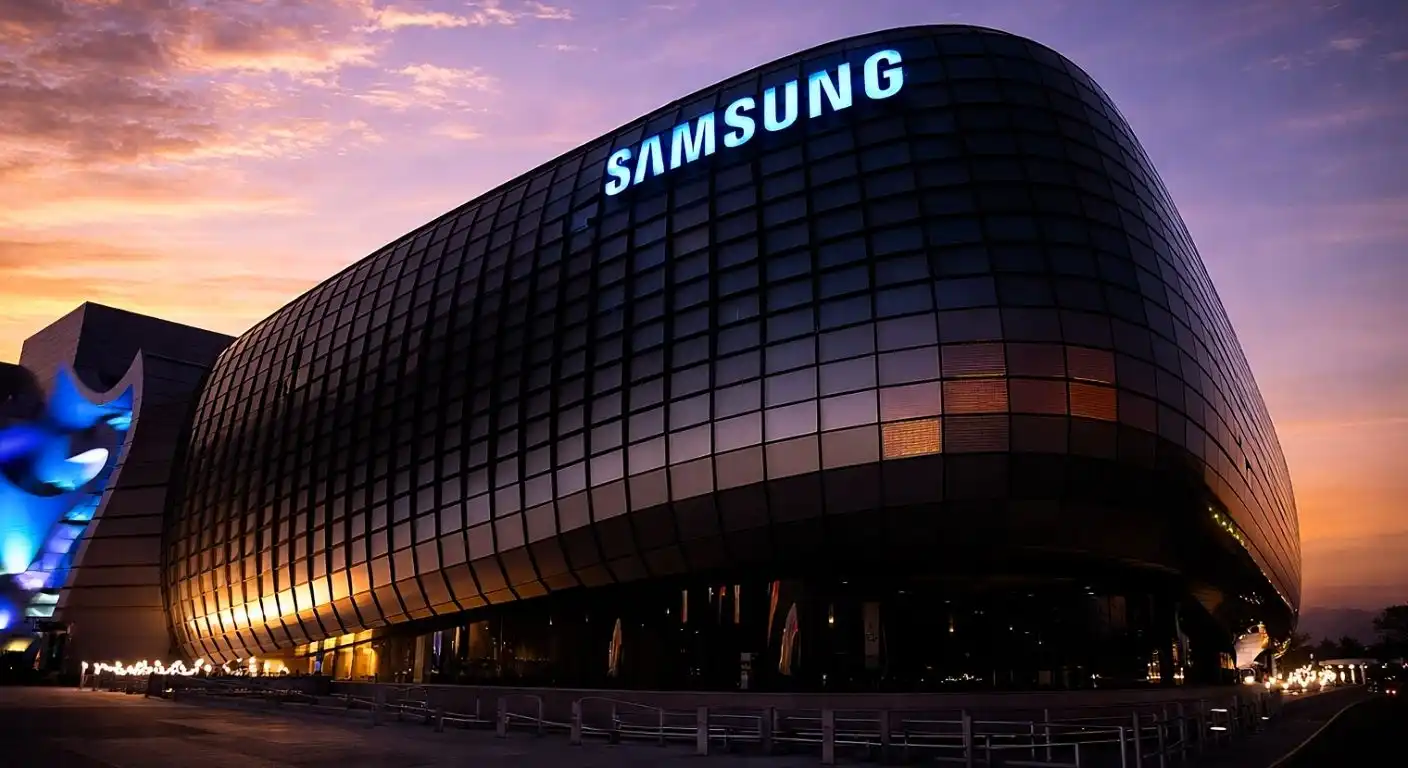
The most concrete commercial outcome of President Lee’s visit involves mega-supply contracts between South Korea’s semiconductor giants and American tech heavyweights. Samsung Electronics and SK Hynix are finalizing multi-billion-dollar long-term supply agreements (LTAs) with U.S. hyperscale data center operators. These multi-year contracts lock in guaranteed allocations of specialized High Bandwidth Memory (HBM3E and HBM4) and high-density server DRAM, ensuring American cloud providers receive the hardware necessary to run massive artificial intelligence models.
The rush to secure long-term memory contracts stems from an acute supply-demand imbalance gripping global hardware supply chains. High-density AI server clusters are projected to consume roughly 70% of total global memory production by the end of 2026. Because manufacturing HBM requires complex vertical chip-stacking techniques that consume significant wafer capacity, memory output across South Korean foundries remains completely sold out through 2026, with clients already committing capital for 2027 deliveries. This extreme supply crunch drove conventional DRAM contract prices up 90% in the first quarter and another 60% in the second quarter.
To support its national technology roadmap, the South Korean government pledged over 100 trillion won ($72 billion) in combined public-private investments toward artificial intelligence infrastructure. A significant portion of this capital will fund the construction of regional “AI Mega Data Centers” outside the greater Seoul metropolitan area. By constructing high-density computing clusters supported by local nuclear power plants and offshore wind farms, South Korea aims to provide global cloud operators with a reliable, energy-efficient alternative to overcrowded data center markets in North America and Western Europe.
Concurrently, South Korea is expanding its domestic semiconductor ecosystem through sweeping financial support. The government extended special tax credits covering up to 25% of capital investments for companies building 2-nanometer process node foundries and advanced 3D packaging lines. By supporting domestic toolmakers and chemical suppliers alongside giant chipmakers like Samsung, South Korea is building a resilient, end-to-end semiconductor supply chain insulated from international trade disruptions and supply chain bottlenecks.
Silicon Valley technology leaders warmly received President Lee’s economic pitch, praising South Korea’s unrivaled hardware manufacturing speed and highly skilled engineering workforce. Chief executives from major chip designers and cloud providers noted that South Korea’s ability to deliver high-yield HBM memory and advanced logic chips makes the nation a critical pillar of the global AI supply chain. Several American tech leaders expressed interest in participating in South Korea’s regional data center projects and establishing joint AI research centers in Seoul.
President Lee Jae-myung’s diplomatic push in Silicon Valley solidifies South Korea’s role as an engine of the global artificial intelligence transformation. By combining state-backed infrastructure funding with market-friendly regulatory reforms, South Korea is ensuring that its domestic technology industry remains essential to international tech giants. As artificial intelligence models expand toward multi-trillion-parameter scale, the technological alliance between South Korea’s hardware powerhouses and Silicon Valley’s software innovators will define the trajectory of global computing for decades to come.