Key Points:
- KeyBanc Capital Markets initiated coverage on SpaceX with a neutral “Sector Weight” rating, noting its long-term growth is already reflected in the valuation.
- The stock plummeted 16.4% on Monday to close at $154.59, wiping out $400 billion in market value amid a broader technology sector sell-off.
- Analysts praised Starlink’s profitability but warned of heavy capital requirements, forecasting negative free cash flow through at least 2028.
- SpaceX trades at a steep premium of 29 times price-to-sales and 71 times EV/EBITDA based on KeyBanc’s 2027 financial estimates.
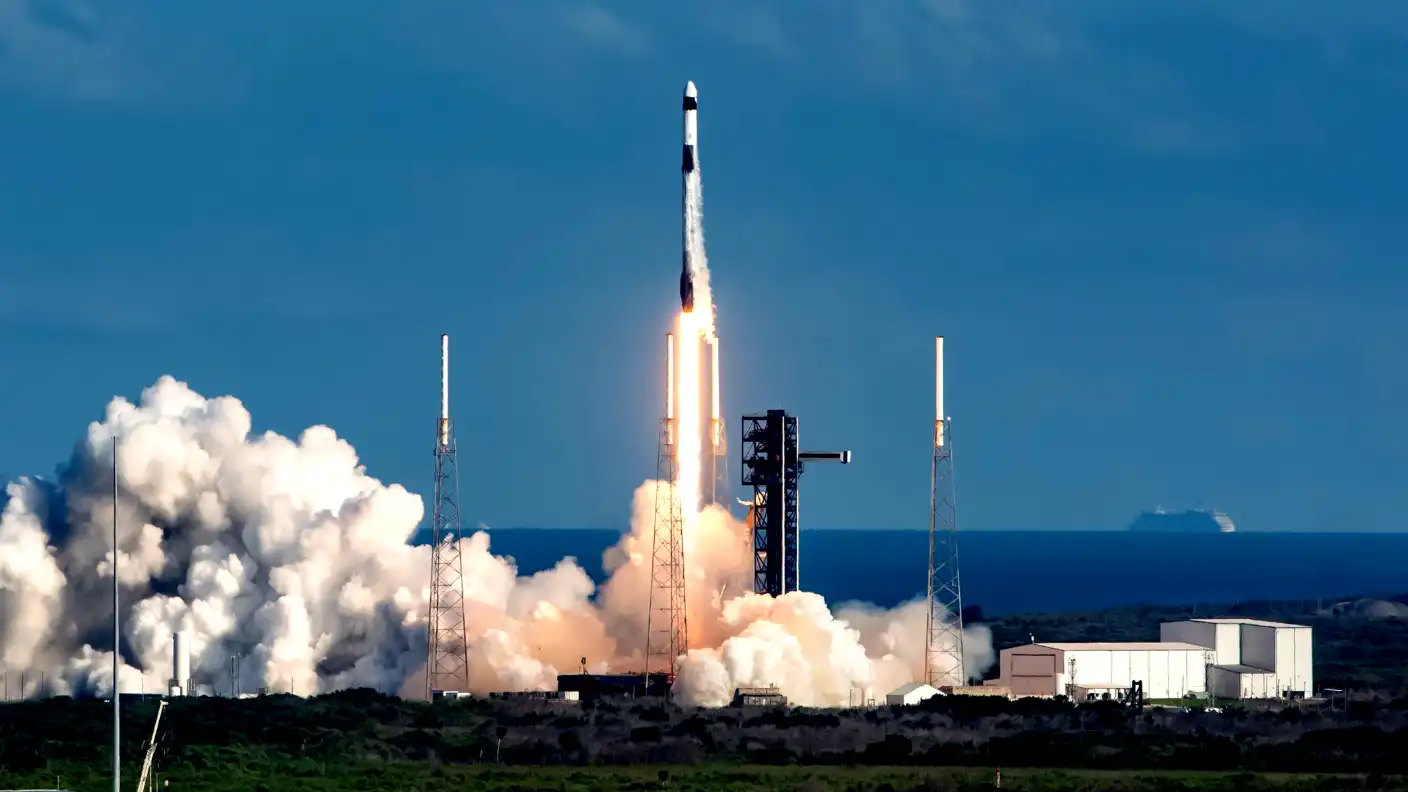
Wall Street’s massive post-IPO rally for Space Exploration Technologies Corp. is facing a stark reality check as major financial researchers flag valuation concerns. Trading under the ticker symbol SPCX on the Nasdaq, shares of the aerospace giant suffered a massive downward shift on Monday, plunging by 16.4% to close at $154.59. This sharp decline wiped out an estimated $400 billion in market capitalization, bringing the stock closer to its initial $135 offering price. The massive [SpaceX Valuation Concerns Rise] as investors weigh whether the company’s long-term growth prospects can justify its elevated market value after a period of strong gains.
KeyBanc analyst Michael Leshock officially initiated coverage of the newly public aerospace pioneer with a “Sector Weight” rating, choosing not to assign a specific 12-month target price. A Sector Weight rating indicates a neutral stance, suggesting that the stock is expected to perform in line with its industry peers over the next six to twelve months. In his detailed research note, Leshock praised SpaceX as the undisputed, dominant leader in the space launch industry and its adjacent verticals. However, he cautioned that the stock’s astronomical run-up since its June 12 listing has created an increasingly stretched valuation, leaving the risk-to-reward ratio highly balanced for new investors.
The sheer scale of the company’s current market valuation has become a primary point of debate among institutional money managers. Under KeyBanc’s financial modeling, SpaceX shares are trading at an exceptionally steep premium compared to its peers across the aerospace, defense, and communications sectors. The stock currently trades at roughly 29 times price-to-sales and 71 times enterprise-value-to-EBITDA based on KeyBanc’s 2027 financial estimates. For investors who missed the initial public offering, the high valuation multiples mean that the entry-level risk-reward profile is significantly less compelling today.
To evaluate the underlying business, KeyBanc analyzed SpaceX’s three primary corporate segments: Connectivity, Space, and Artificial Intelligence. The Connectivity division, which houses the Starlink satellite internet service, remains the company’s undisputed profit engine, accounting for 61% of total revenues in 2025. Starlink generated a massive $11.4 billion in revenue and a stellar 63% adjusted EBITDA margin last year. The analysts noted that at a sufficient scale, Starlink alone is capable of supporting a meaningful portion of the company’s total enterprise value, which effectively limits the downside risk for the overall corporate story.
Despite Starlink’s impressive profitability, the broader corporate entity faces massive, ongoing capital expenditure requirements that will continue to drain cash for years. KeyBanc’s financial models project that SpaceX will generate negative free cash flow through at least 2028 as it continues to invest heavily in its global infrastructure. The analysts estimate that the company’s capital burn will peak in 2027, projecting a massive negative free cash flow of $33.5 billion for that year. This persistent capital burn is a primary reason why some institutional investors are adopting a more cautious stance, especially as interest rates remain elevated.
The company’s newly established AI segment, which was created following the $60 billion all-stock merger with Elon Musk’s xAI startup in February, is also drawing intense scrutiny. While the AI division is currently loss-making, it has recently secured several lucrative, long-term cloud computing contracts. These include a high-volume deal with Anthropic worth approximately $1.25 billion per month and a separate agreement with Google at $920 million per month. KeyBanc estimates that these contracts will drive the AI segment’s annual revenue to an impressive $50.6 billion by 2027, making it the company’s single largest growth driver over the medium term.
However, KeyBanc raised serious concerns about the consumer-facing side of the AI division, specifically pointing out that the Grok chatbot has struggled to gain meaningful commercial traction. According to recent software surveys, Grok holds a mere 3.1% adoption rate among U.S. business enterprises. This performance lags far behind established market leaders, with Anthropic’s Claude holding 41% adoption and OpenAI’s ChatGPT commanding a 39.5% share. The analysts warned that the next twelve to twenty-four months will be a critical “prove-it period” for Grok, as the company must show that its consumer AI products can compete in a highly crowded market.
The long-term investment thesis for the company remains deeply tied to the physical development timeline of Starship, its massive, fully reusable deep-space rocket system. Starship is essential to launch the company’s next-generation Starlink V3 satellites, which will enable faster internet speeds and direct-to-cell mobile connectivity in the second half of the year. Furthermore, the massive rocket is needed to drastically lower launch costs and eventually enable the deployment of orbital data centers. While a critical test flight is scheduled for June 29, KeyBanc’s analysts have chosen to adopt a highly conservative stance regarding Starship’s development timeline, noting that full operational readiness could take longer than expected.
As the initial post-IPO excitement continues to cool, the market is beginning to enter a much more rational, data-driven phase. While some bullish brokerages like Oppenheimer have maintained optimistic outperform ratings with price forecasts as high as $250, others like CFRA hold a much more bearish sell rating with a target of $115, reflecting a deep divide on Wall Street. For now, the combination of a neutral KeyBanc rating, a highly controversial $20 billion corporate bond sale, and a poor environmental rating from major ESG graders has introduced a healthy dose of reality. The ongoing pullback proves that even a revolutionary space company must eventually answer to the basic laws of gravity on Wall Street.