Key Points:
- Wall Street brokerages have issued their first major bullish ratings for SpaceX, signaling growing confidence in its transition from a venture-backed startup to a dominant global industrial player.
- The optimistic outlook is driven by the consistent performance of the Starlink satellite network, which is now a major contributor to the company’s recurring revenue.
- SpaceX’s control over the heavy-lift launch market, supported by the Starship program, creates a “moat” that competitors struggle to challenge.
- Analysts project that the company’s ability to command premium pricing for orbital logistics will drive sustainable profit margins, potentially setting the stage for an eventual public offering.
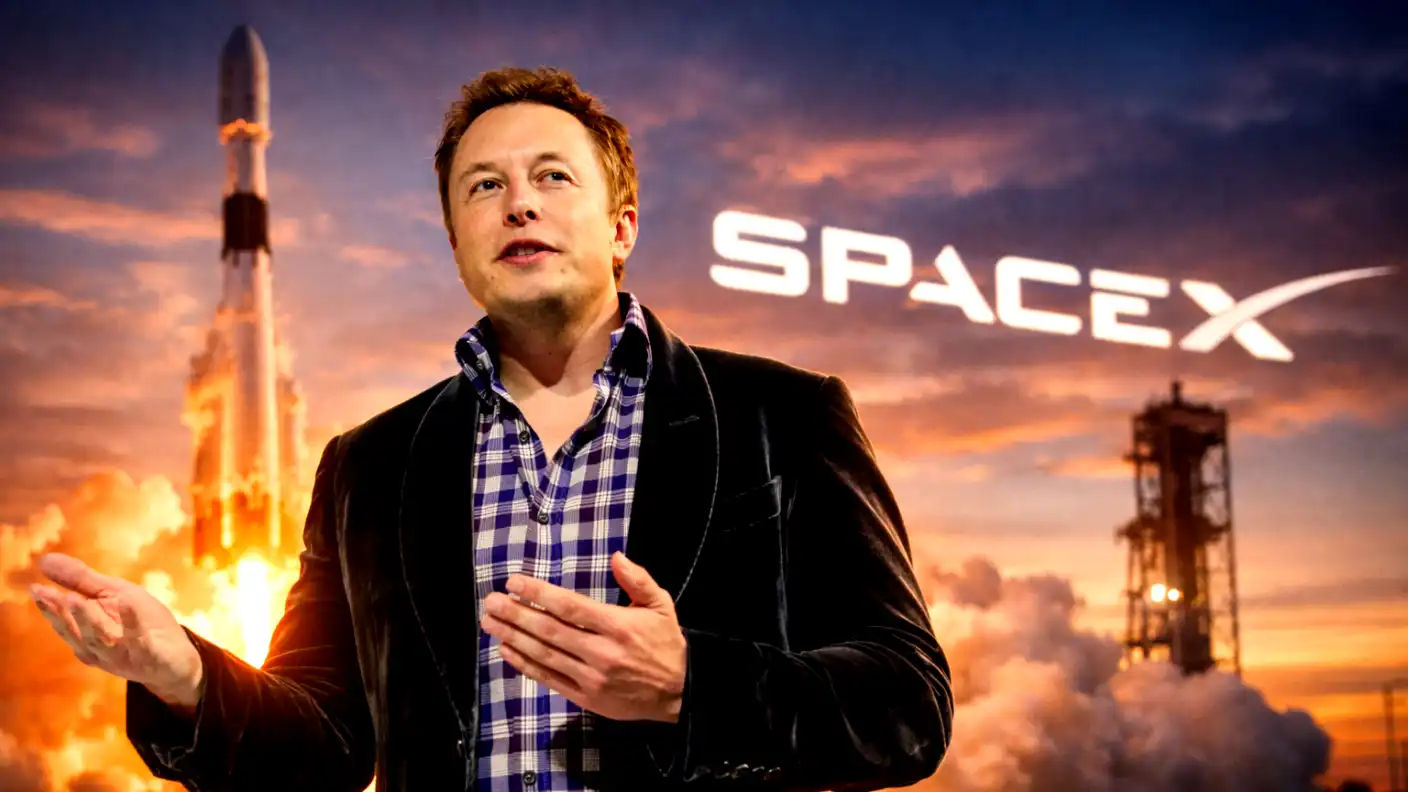
SpaceX is entering a new era of financial prestige as some of Wall Street’s most prominent brokerages have initiated coverage on the aerospace giant with decidedly bullish outlooks. Long shrouded in the mystery of private equity, the company is now being analyzed with the same rigor as established blue-chip tech firms. With its valuation surpassing $200 billion and its influence over global telecommunications and launch markets continuing to expand, analysts are betting that the firm’s trajectory will define the space economy for the next decade.
The initiation of coverage by major financial institutions marks a significant departure from the company’s history of “private-only” scrutiny. For years, investors could only glimpse the company’s health through occasional equity raises and public launch milestones. Now, institutional analysts are dissecting every aspect of its balance sheet, from the manufacturing efficiency of its Raptor engines to the subscriber acquisition costs of the Starlink network. This increased visibility is a clear sign that the market now views SpaceX as a mature enterprise, one that has moved past the experimental phase and into a period of aggressive, large-scale commercialization.
Starlink has emerged as the cornerstone of this bullish thesis. By offering high-speed, low-latency internet to underserved regions and maritime industries, the network has built a global subscription base that provides the firm with stable, predictable revenue. This “utility-like” income stream is exactly what Wall Street loves. It transforms the company from a volatile launch-services provider into a global communications carrier. Analysts estimate that Starlink alone could eventually account for over $1 billion in quarterly revenue, providing a robust financial buffer that allows the firm to take higher risks on its deep-space exploration missions.
The Starship program is the other primary engine driving these optimistic valuations. By engineering a fully reusable, heavy-lift rocket, the company has effectively “broken” the traditional cost model of space access. Previously, putting cargo into orbit cost thousands of dollars per kilogram. With Starship, the company is aiming to reduce that cost to a fraction of the industry standard. This efficiency opens up a massive new market for space-based manufacturing, orbital research, and potentially even human space travel. Investors recognize that whoever controls the lowest cost-to-orbit can essentially set the rules for the rest of the industry.
Financial stability is also benefiting from the company’s vertical integration. By manufacturing the vast majority of its own hardware—from the flight computers to the steel for the rockets—the company avoids the markup costs associated with third-party suppliers. This strategy not only improves the bottom line but also grants the firm full control over its production timeline. In an aerospace industry where projects are notorious for multi-year delays caused by supplier failures, SpaceX’s “do-it-yourself” approach is a massive competitive advantage that analysts are beginning to factor into their long-term growth models.
Despite the bullish sentiment, the market is not ignoring the risks. Space exploration remains an inherently hazardous business, where a single launch failure can result in the loss of hundreds of millions of dollars in hardware. Furthermore, the regulatory landscape regarding space traffic management and environmental impact continues to evolve. However, the prevailing view among the brokerages initiating coverage is that the company’s track record of successful iteration—learning from failures and quickly applying those lessons—is a reliable proxy for its ability to overcome these technical and regulatory hurdles.
The demand for these “first-look” research reports has been intense. Institutional investors are hungry for exposure to the space economy, and SpaceX remains the only player with the scale and technology to provide it. By publishing these reports, brokerages are helping to normalize the company as a mainstream investment opportunity. It is a subtle signal that the traditional gatekeepers of finance believe the company is ready for the rigors of public valuation, even if an official IPO has not been announced.
Ultimately, this move by Wall Street brokerages is a validation of Elon Musk’s long-term vision. It proves that a company can start as a risky, capital-intensive dream and, through sheer technical execution, become one of the most significant assets in the global portfolio. As the firm continues to push the boundaries of what is possible in orbit, its financial story is becoming just as impressive as its engineering achievements. For investors, the message is clear: the space economy is open for business, and the leading firm is ready to be scrutinized.