Key Points:
- Wildfires in Spain have scorched over 50,000 hectares of land, more than doubling the historic seasonal average.
- The largest active blaze in the northeastern Cinco Villas region has burned 16,000 hectares and forced 1,100 evacuations.
- A devastating fire in Almería, Andalusia, recently claimed 13 lives, mostly foreign nationals from the UK, Belgium, and France.
- Severe heatwave conditions exceeding 40 degrees Celsius and shifting winds continue to hamper containment efforts.
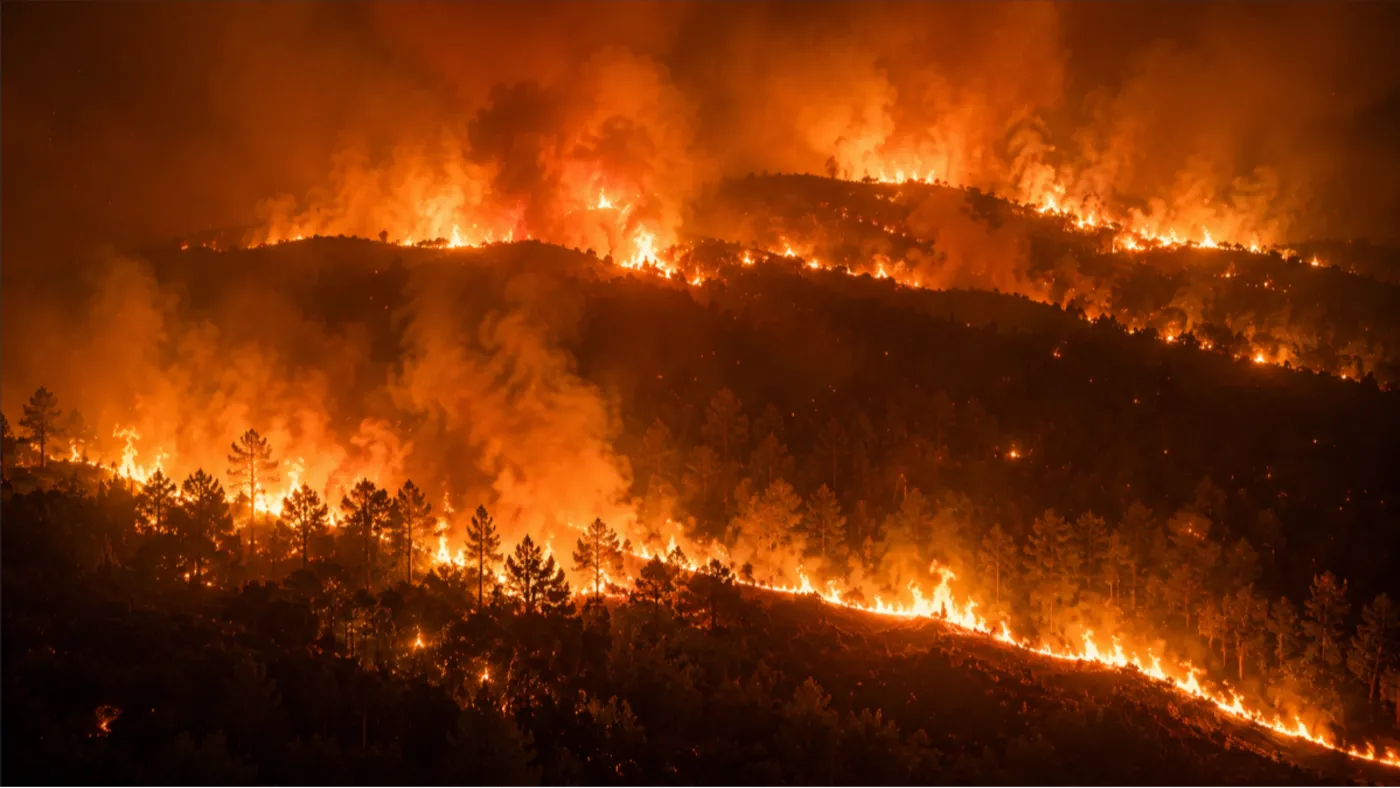
A devastating wave of extreme heat and shifting winds has unleashed a critical wildfire crisis across Western Europe, pushing emergency services to their absolute limits. The ongoing Spain Wildfires 2026 have already scorched more than 50,000 hectares of forest and agricultural land, representing more than double the country’s historic seasonal average. Emergency crews are currently battling two massive, uncontrolled blazes that have forced the evacuation of thousands of residents, destroyed critical infrastructure, and claimed 13 lives, transforming the parched landscapes of the rural countryside into an active disaster zone.
The largest and most destructive active fire of the year is currently tearing through the Cinco Villas region in the northeastern province of Zaragoza. The fast-moving blaze, which broke out mid-week after a period of intense, dry heat, has already consumed approximately 16,000 hectares of dense pine forests and dry crop fields. High-velocity winds and low humidity levels have fueled the fire’s rapid expansion, creating a massive, highly unstable perimeter that stretches across more than 60 kilometers of rugged, parched terrain.
The rapid, unpredictable spread of the Zaragoza fire has forced the immediate, emergency evacuation of five local municipalities in Zaragoza and one in the neighboring province of Navarre. Civil protection teams and local police have successfully evacuated more than 1,100 residents from the path of the flames, setting up emergency shelters in regional community centers. To battle the blaze, the emergency military units deployed 400 ground personnel and 19 water-dropping aircraft, focusing their efforts on creating firebreaks and protecting residential properties in the historic town of Uncastillo.
This northeastern crisis follows the country’s deadliest wildfire disaster in more than four decades, which recently devastated the southeastern province of Almería in Andalusia. Erupting on July 9, the ferocious Almería wildfire quickly scorched 7,000 hectares of semi-arid forest and farmland near the Sierra de Los Filabres mountains. Tragically, the fast-moving flames claimed 13 lives, trapping several residents in their cars and homes as they tried to flee. Among the deceased were 12 foreign nationals, including five British citizens, three Belgian nationals, and one French resident who perished from severe burn injuries.
A relentless sequence of extreme, human-driven heatwaves directly drives the unprecedented severity of this wildfire season. Europe has recently experienced its third major heatwave in six weeks, with temperatures routinely exceeding 40 degrees Celsius in the affected regions. Climatologists warn that Europe is the fastest-warming continent on Earth, with temperatures increasing at double the global average rate since the 1980s. This extreme heat has baked the extensive vegetation that grew during an unusually rainy spring, transforming parched undergrowth and esparto grass into highly flammable kindling.
In addition to extreme temperatures, erratic and highly variable winds have severely complicated firefighting efforts. Wind gusts frequently shift direction without warning, instantly turning previously contained containment lines into new, active fire fronts. These sudden wind shifts trap firefighters on the ground and force water-dropping aircraft to temporarily suspend operations due to dangerous turbulence and thick, choking smoke, highlighting why containment timelines remain highly fluid and unpredictable.
The environmental destruction is not limited to Zaragoza and Almería, as smaller fires continue to ignite across several autonomous communities. In the northeastern Girona region of Catalonia, a significant wildfire recently burned nearly 2,200 hectares of protected land within the Les Gavarres conservation area, establishing a 40-kilometer perimeter. While local firefighters managed to bring that specific blaze under control after a grueling three-day battle, the continuous emergence of new, simultaneous ignition points across Catalonia continues to stretch regional emergency resources.
The economic toll of this environmental destruction has prompted significant international financial intervention. The European Parliament recently approved a special €120.55 million aid package from the European Union Solidarity Fund to assist Spain in recovering from the previous year’s devastating fire season, when nearly 400,000 hectares of land burned. This financial aid represents more than 80% of the EU’s total regional recovery package, but local municipalities warn that the mounting costs of rebuilding infrastructure and restoring destroyed agricultural sectors will far exceed this emergency funding.
The high number of casualties in the Almería fire has triggered an urgent review of national civil protection and evacuation procedures. Most of the victims died after ignoring shelter-in-place instructions and attempting to flee the fire front on foot or in vehicles, only to be overtaken by the fast-moving flames on narrow mountain roads. In response, emergency management agencies are launching comprehensive public awareness campaigns, emphasizing that during high-speed wildfire events, seeking shelter in structurally sound, non-flammable buildings is statistically far safer than attempting to outrun the fire in a vehicle.
Ultimately, the catastrophic scale of the ongoing blazes serves as a stark warning of the mounting cost of climate change. By burning through more than 50,000 hectares before the traditional peak of the summer season, these blazes have proved that historical fire-containment strategies are no longer sufficient against extreme weather events. As firefighters continue to battle the shifting wind fronts in Zaragoza and Almería, the government’s ability to successfully modernize its land management practices, improve emergency alert systems, and secure reliable water resources will decide whether the country can safely navigate an increasingly hostile future.