Key Points:
- Tesla stock plummeted 14%, erasing $140 billion in market value after a second-quarter profit miss.
- SpaceX shares fell below their $135 IPO price to $115.26, yielding $15.5 billion for short sellers.
- Starship Flight 13 suffered launch delays at Starbase, Texas, following an automated engine pad abort.
- Heavy capital spending on AI supercomputers and next-generation hardware compressed cash flows across both firms.
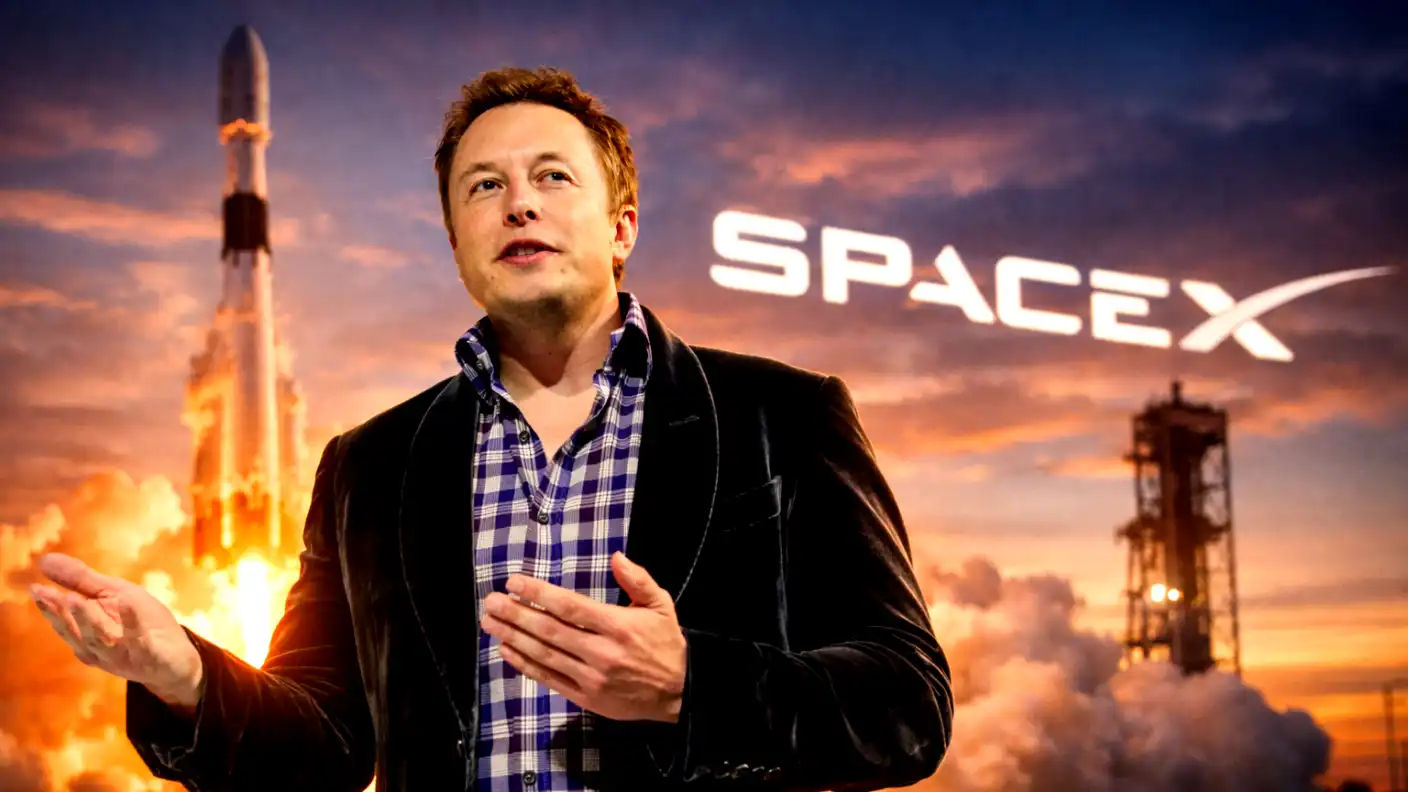
Billionaire entrepreneur Elon Musk encountered one of the most challenging weeks in his corporate career as financial setbacks hit his primary technology ventures simultaneously. Electric vehicle giant Tesla Inc. and space exploration powerhouse SpaceX both suffered severe stock market declines, wiping out over $140 billion in public value in a matter of days. The double-whammy rewarded Wall Street short sellers with billions of dollars in paper profits while technical delays grounded SpaceX’s flagship Starship rocket at Starbase, Texas.
The corporate trouble began when Tesla published its second-quarter 2026 financial results. Although Tesla generated a record $28.24 billion in total revenue—a 26% year-over-year increase—and delivered 480,126 vehicles, bottom-line profitability fell far short of Wall Street estimates. Adjusted earnings per share dropped to $0.33, missing the $0.53 figure expected by financial analysts. Extensive price cuts and promotional customer incentives caused Tesla’s operating margin to collapse to a razor-thin 1.4%, down sharply from 4.1% in the prior year.
Deteriorating operating margins pushed Tesla into negative free cash flow territory for the first time in over two years, recording a cash burn of $1.09 billion. The cash burn resulted from a massive 142% surge in quarterly capital expenditures, which reached $5.79 billion. Tesla is pouring billions of dollars into research and development—spending $2.37 billion during the quarter—to build out its Cortex supercomputing cluster in Texas, procure specialized artificial intelligence hardware, and fund initial production lines for Optimus humanoid robots and Cybercab Robotaxis.
Tesla’s earnings report triggered an immediate stock market selloff, sending shares tumbling 14% in a single trading session and wiping out $140 billion in equity value. The sudden crash handed short sellers an estimated $4 billion in single-day paper profits. During the evening earnings call, Musk attempted to rally investor sentiment by highlighting long-term autonomous driving and humanoid robotics milestones. However, institutional analysts expressed frustration over the lack of concrete commercial timelines, signaling that technological promises can no longer offset short-term financial compression.
As Tesla stock reeled, SpaceX experienced an equally steep valuation decline in public trading. Following its historic $85.7 billion public offering at $135 per share, SpaceX stock broke through key support levels to reach an intraday low of $115.26 per share. The drop placed the stock roughly 49% below its post-IPO peak of $225.64, erasing more than $1 trillion in market capitalization from its record $2.64 trillion valuation. The stock slide caught retail investors off guard, transforming the high-flying aerospace debut into a primary target for bearish traders.
The steep selloff in SpaceX stock provided an immense windfall for institutional short sellers. Market analytics data revealed that short interest in SpaceX exploded to nearly 196 million shares—representing 31% of the company’s publicly tradable float and over $25 billion in short exposure. In total, bearish traders accumulated $15.5 billion in paper profits as the stock fell below $120. Musk publicly warned short sellers on platform X that long-term short bets against SpaceX carry extreme risk, but market price action continued to favor short sellers.
Adding to commercial uncertainty, SpaceX initiated a major operational restructuring by turning away commercial satellite operators seeking dedicated launches on its workhorse Falcon 9 rocket beyond 2028. SpaceX also froze new client enrollments for its popular SmallSat Rideshare program and halted manufacturing lines for Falcon 9’s expendable upper-stage hardware. By phasing out commercial Falcon 9 flights, SpaceX is forcing satellite companies to transition their payloads to Starship, locking the company’s entire commercial launch revenue to Starship’s operational success.
The pressure on SpaceX intensified as launch operations for Starship Flight 13 encountered unexpected pre-flight delays. Standing 400 feet tall at Starbase in South Texas, the massive rocket suffered an automated pad abort during a static engine ignition sequence, followed by adverse weather conditions that forced launch directors to hold the countdown. Flight 13 represents a vital operational milestone, as it carries 20 functional Starlink V3 satellites to test thermal heat shield tile retention under extreme atmospheric reentry conditions.
The simultaneous setbacks across Tesla and SpaceX highlight the extreme financial risks associated with Elon Musk’s aggressive capital deployment strategy. Both companies are attempting to transition from traditional manufacturing models into capital-intensive artificial intelligence, autonomous robotics, and orbital compute platforms. While Tesla maintains over $30 billion in liquid cash reserves and SpaceX retains a near-monopoly on global space launch, Musk must successfully execute upcoming Robotaxi commercial trials and Starship orbital deployments to restore investor confidence and reverse recent stock market losses.