Key Points:
- Tesla unveiled the Cybercab in Tokyo’s Aoyama district, marking the autonomous vehicle’s first public showing in Japan.
- The purpose-built robotaxi features two seats, butterfly doors, and a central screen with no steering wheel or pedals.
- The vehicle will embark on a nationwide exhibition tour, heading to Osaka next week and to Nagoya from September 22.
- Tesla has begun mass production in Texas, aiming for 2 million annual units and commercial pricing below $30,000.
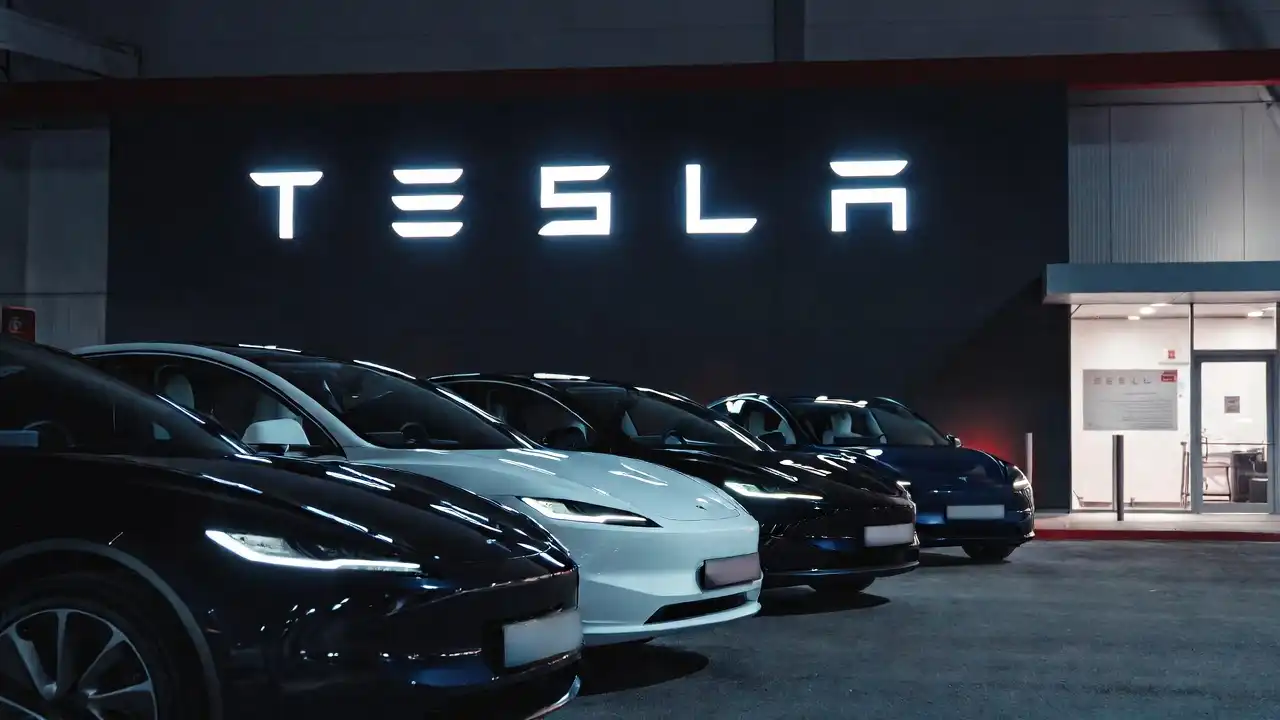
American electric vehicle manufacturer Tesla officially introduced the Cybercab to the Japanese public, unveiling its purpose-built autonomous robotaxi at a flagship showroom in Tokyo’s upscale Aoyama district. The public showcase marks the driverless vehicle’s first appearance in Japan as the automaker builds international consumer excitement for its autonomous mobility ecosystem. The futuristic two-seat coupe features a steering-wheel-free cockpit and upward-opening butterfly doors, showcasing Tesla’s vision for unsupervised commercial transportation.
Following its Tokyo debut, Tesla will take the Cybercab on a nationwide public exhibition tour across major Japanese metropolitan centers. The vehicle will travel to Osaka for a multi-day showcase before moving to Nagoya in central Japan on September 22. By displaying the vehicle in Japan’s primary commercial hubs, Tesla aims to build consumer familiarity with driverless automotive design and generate public support for autonomous transport in one of the world’s most sophisticated transit markets.
The physical design of the Cybercab eliminates all traditional mechanical controls that have defined passenger cars for more than a century. The vehicle features no steering wheel, no accelerator pedal, no brake pedal, and no physical side mirrors. Instead, the minimalist cabin features two premium bucket seats, an expansive central armrest with wireless inductive phone chargers, and a large central touchscreen interface where passengers can select navigation destinations, control climate settings, and stream multimedia entertainment.
Tesla designed the vehicle from the ground up for high-efficiency commercial ride-hailing rather than individual personal ownership. The aerodynamic chassis incorporates inductive wireless charging coils beneath the floorpan, eliminating the need for physical charging cables and allowing automated fleets to recharge autonomously at specialized robotic charging pads. Official testing data verifies an all-electric driving range exceeding 375 miles on a single charge, providing the operational endurance required for full-day commercial taxi duty.
The Tokyo exhibition arrives as Tesla scales up pilot production of the Cybercab at its Gigafactory Texas complex in Austin. The automaker has begun early commercial ride-hailing trials in select United States markets, deploying fleets of Cybercabs alongside camera-equipped Model Y vehicles to transport paying passengers through dense urban corridors. Tesla chief executive Elon Musk outlined aggressive manufacturing targets for the program, aiming to ramp up annual production toward 2 million units while targeting a commercial retail price below $30,000.
Unlike competing autonomous vehicle platforms that rely on expensive lidar arrays, rotating radar units, and detailed high-definition maps, the Cybercab navigates exclusively using Tesla’s vision-only Full Self-Driving software. The vehicle processes real-time video feeds from high-resolution external cameras through an end-to-end neural network that mimics human visual cognition. By eliminating expensive laser sensors, Tesla aims to manufacture autonomous vehicles at a fraction of the hardware cost incurred by rival robotaxi operators like Waymo and Cruise.
Japan represents a highly strategic testing ground for autonomous ride-hailing technology due to severe structural demographic pressures. With approximately 30% of Japan’s population aged 65 or older, the country faces an acute shortage of certified taxi drivers, commercial bus operators, and regional delivery couriers. In rural prefectures and suburban transit dead zones, local municipalities struggle to maintain regular public bus routes, creating urgent demand for automated, on-demand micro-transit solutions.
Japanese transportation regulators and municipal governments are gradually modernizing legal frameworks to accommodate Level 4 automated driving systems on public roads. The national Road Traffic Act permits autonomous passenger vehicles to operate in designated zones under specific safety supervision rules. Showcasing the Cybercab in Tokyo, Osaka, and Nagoya allows Tesla to initiate dialogue with Japanese road safety officials, prefectural transportation boards, and regional fleet operators regarding future commercial deployment permits.
The Asian tour also intensifies global competition across the autonomous vehicle sector. Domestic Japanese automotive giants, including Toyota and Honda, are accelerating their own driverless mobility partnerships to launch automated passenger shuttles and autonomous ride-hailing services in major cities before 2028. Meanwhile, Chinese autonomous driving developers like WeRide and Baidu are expanding international commercial permits across Europe, the Middle East, and Southeast Asia.
As crowds gather in Tokyo to view the steering-wheel-free electric coupe, the Cybercab’s Japanese debut marks a tangible step toward the global commercialization of autonomous transportation. By combining sleek minimalist styling, wireless charging, and camera-based neural network navigation, Tesla is demonstrating that the transition from human-operated cars to intelligent autonomous fleets is moving from theoretical software prototypes to showroom floors worldwide.