Key Points:
- Tim Cook steps down as Apple CEO after nearly 15 years, having expanded the company’s valuation from $350 billion to over $4 trillion.
- Major product triumphs include the Apple Watch, AirPods, Apple Silicon M-series chips, and a $100 billion annual services empire.
- Stumbles and high-profile misses include the canceled $10 billion Apple Car project, the butterfly keyboard debacle, and sluggish AI adoption.
- Hardware chief John Ternus prepares to take the helm as Cook transitions to executive chairman of the board.
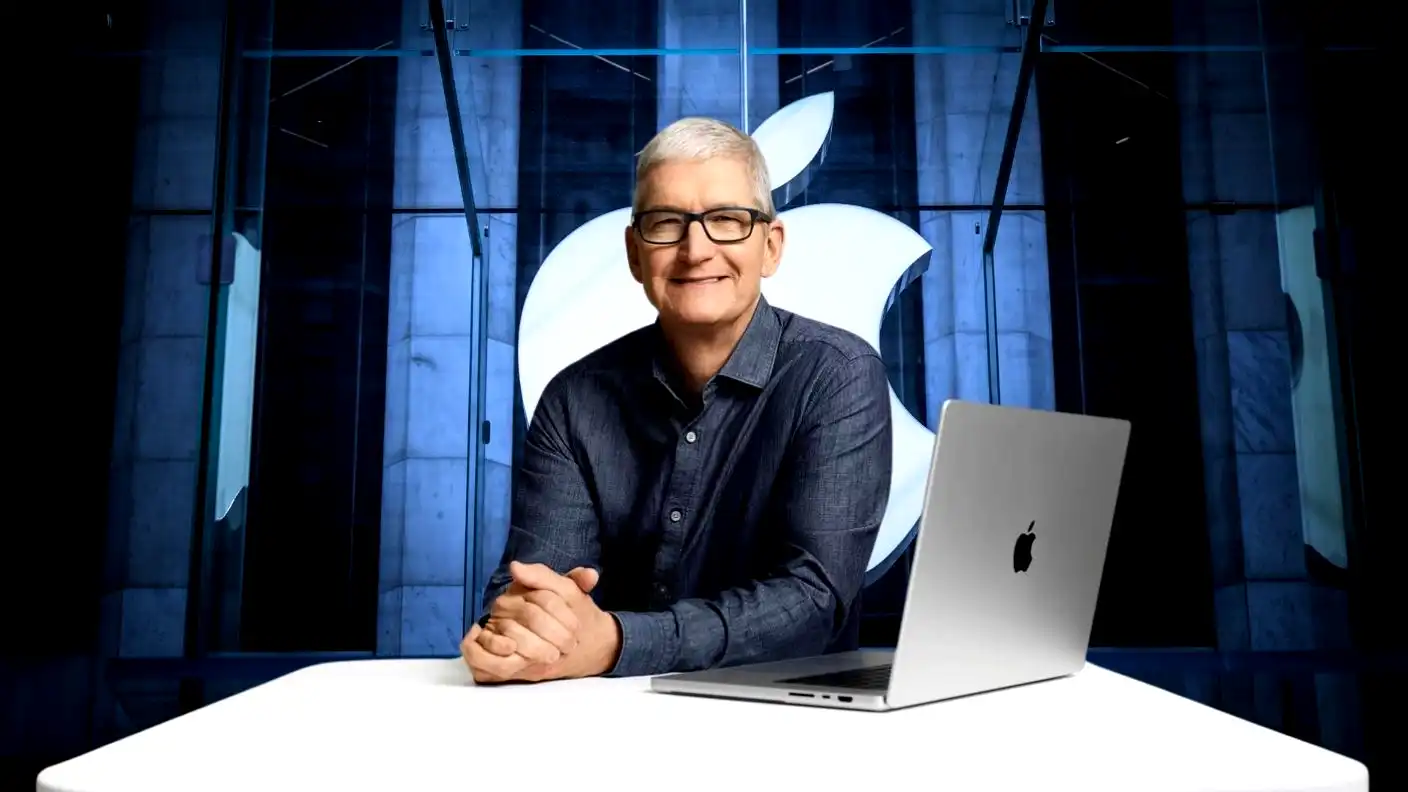
The era of Tim Cook as chief executive officer of Apple is drawing to a close, marking the end of one of the most commercially successful corporate tenures in modern business history. Taking the helm in August 2011 following the resignation of legendary co-founder Steve Jobs, Cook led the Cupertino-based company through nearly fifteen years of extraordinary financial growth, transforming a $350 billion hardware maker into a global technological empire valued at over $4 trillion. As hardware engineering chief John Ternus prepares to assume leadership on September 1, industry observers and investors are weighing Cook’s greatest product hits against his most expensive misses.
By every conventional financial metric, Cook’s leadership delivered unprecedented shareholder wealth. When Cook became CEO, Apple generated $108 billion in annual revenue in 2011; by 2025, annual sales reached $416 billion, generating more revenue in a single recent quarter than the company made in the entire year he took over. Annual net profits surged by 699% to surpass $112 billion, while the active installed device base expanded from under 1 billion to more than 2.5 billion active devices globally. Cook established Apple as the first company to reach $1 trillion, $2 trillion, and $3 trillion market valuations, briefly touching $5 trillion during recent market peaks.
Beyond financial growth, Cook proved that Apple could create brand-new product categories that dominate consumer culture. Launched in 2015, the Apple Watch overcame early skepticism to become the best-selling watch in the world, evolving from a luxury fashion accessory into a vital digital health and heart-monitoring tool. In 2016, Cook introduced AirPods, turning what began as a controversial decision to remove the traditional headphone jack into a global cultural phenomenon. The wearables, home, and accessories division grew into a business generating tens of billions of dollars annually, eclipsing the revenue of most Fortune 500 companies.
Cook’s most decisive engineering triumph was the creation of Apple Silicon. In 2020, Apple announced it would sever its long-standing partnership with Intel to design custom, ARM-based M-series processors in-house. The transition transformed the Mac from a stagnant product line into an industry leader in performance and energy efficiency. Custom silicon delivered staggering battery life, silent operation, and seamless software integration across macOS and iPadOS, proving that Apple could out-engineer traditional semiconductor giants.
Recognizing that smartphone unit growth would eventually mature, Cook executed a masterclass in ecosystem monetization. He expanded Apple Services—spanning the App Store, Apple Pay, Apple Music, iCloud, and Apple TV+—from a $9.4 billion support division in 2011 into a recurring revenue powerhouse generating over $100 billion annually. With more than 1 billion paid subscriptions across its ecosystem, high-margin services provided consistent cash flows that protected corporate profitability during volatile macroeconomic cycles.
Despite unprecedented financial triumphs, Cook’s tenure included notable strategic stumbles. The most expensive misstep was Project Titan, Apple’s secretive effort to build an autonomous electric vehicle. After spending an estimated $10 billion over a decade, hiring and cycling through hundreds of automotive engineers, and repeatedly shifting design roadmaps between manual electric cars and fully driverless pods, Cook canceled the initiative in early 2024 without ever bringing a commercial vehicle to market.
Hardware design under Cook also faced embarrassing quality miscalculations. In 2015, Apple introduced the ultra-thin butterfly keyboard mechanism on MacBooks, prioritizing aesthetic thinness over reliability. The fragile mechanism failed constantly when exposed to minor dust particles, frustrating millions of professional users and forcing Apple to launch expensive repair programs, pay multi-million-dollar class-action settlements, and eventually abandon the design completely in 2019. Similar stumbles included the flawed rollout of Apple Maps in 2012, which forced Cook to issue a rare public apology.
In the software and intelligence domain, Cook struggled to keep pace with rapid technological shifts. Despite pioneering mobile virtual assistants by launching Siri in 2011, the voice assistant suffered from years of architectural neglect, remaining rigid and prone to errors. When the generative artificial intelligence boom erupted, Apple was widely perceived as lagging behind agile rivals like OpenAI, Anthropic, and Alphabet, forcing the company to rush software updates and rely on third-party model partnerships.
Cook’s final major hardware bet, the Vision Pro mixed-reality headset, remains an unfinished commercial chapter. Launched at a steep price tag of $3,499, the spatial computer showcased breathtaking optical technology but struggled with heavy weight, short battery life, and a sparse consumer software library. Sluggish initial sales led the company to scale back production, restructure internal immersive video teams, and delay next-generation headset models in favor of lighter smart glasses.
As Tim Cook transitions to executive chairman, his legacy is firmly established as that of a master operator who transformed Apple into the most profitable commercial enterprise in history. While he may not have possessed Steve Jobs’s bohemian visionary flair, Cook built an operational machine, an unbreakable customer ecosystem, and unprecedented shareholder value. Passing the leadership baton to hardware engineer John Ternus sets the stage for Apple’s next era, where technical innovation in artificial intelligence, silicon, and ambient computing will define the company’s future.