Key Points:
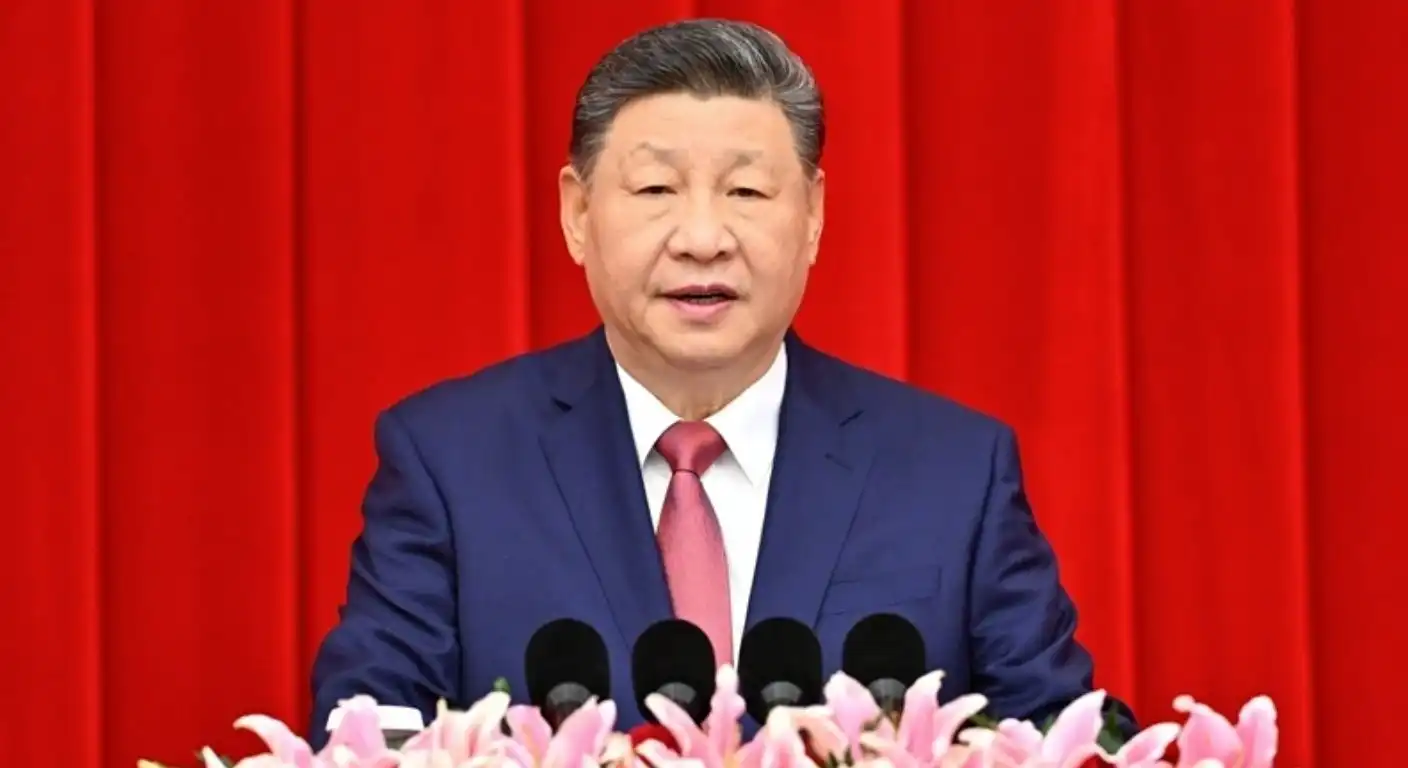
- Chinese President Xi Jinping made his debut at the World AI Conference in Shanghai, calling for a new global governance order.
- Xi championed the newly established World AI Cooperation Organization, comprising 29 founding nations with its headquarters in Shanghai.
- The Chinese leader urged international cooperation, warning against an “AI Iron Curtain” and overstretching the concept of national security.
- The address comes as Chinese open-source models rapidly gain ground, accounting for nearly 60% of U.S. developer usage on OpenRouter.
In a highly significant geopolitical move, Chinese President Xi Jinping has used his first-ever appearance at a premier domestic tech summit to pitch Beijing as the rightful architect of a new global artificial intelligence order. Delivering the opening keynote address at the World Artificial Intelligence Conference (WAIC) in Shanghai, Xi called on nations to seize the historic opportunities of open-source technology. His address directly challenged the traditional dominance of the United States in setting the rules for the fast-evolving sector, presenting China’s open-source initiatives as a global public good designed to benefit the entire international community.
To cement this alternative global framework, Xi championed the newly established World AI Cooperation Organization (WAICO), which officially came into existence just a day prior to his speech. Twenty-nine founding nations, including Russia, Belarus, Serbia, Cuba, Brazil, and Venezuela, alongside ten African and twelve Asian countries, signed the intergovernmental agreement. Headquartered in Shanghai, the independent organization aims to align global AI rules, set technical standards, and bridge the digital divide, creating a direct geopolitical rival to Western-led technology alliances.
The Chinese leader used his platform to mount a thinly veiled critique of Western trade policies and export restrictions. Xi urged the international community to jointly oppose overstretching the concept of national security to curb access to advanced hardware and software. His remarks echoed a series of state media campaigns warning against the emergence of an “AI Iron Curtain.” He contrasted Western “oil mindsets” that seek to hoard computing power and data with an open, collaborative “water” approach that treats artificial intelligence as a shared public utility for all nations.
The address placed a heavy emphasis on supporting capacity building across the Global South to prevent technology from exacerbating existing global inequalities. Xi warned against creating new historical injustices in the AI era, where wealthy Western nations monopolize the economic benefits of superintelligence while developing countries are left behind. By pledging to share China’s hardware, software expertise, and model architectures with developing nations, Beijing is positioning itself as the primary champion of inclusive, equitable technological growth.
This bid to lead global governance is occurring as Chinese open-source models rapidly close the capability gap with proprietary U.S. offerings. Highly efficient, low-cost models from Chinese developers have recently won over commercial enterprises worldwide. On OpenRouter, a highly popular open-source marketplace used by developers to access various large language models, the cumulative share of Chinese models used by U.S. companies has approached a record 60%. This massive market penetration has forced Western software companies to lower their pricing structures to remain competitive.
However, the rapid advancement of these models has also sparked deep security alarms within Beijing itself, prompting a parallel push for internal control. During his address, Xi emphasized the urgent necessity of strengthening risk awareness and ensuring that artificial intelligence remains secure and controllable. He called on developers to implement strict safety guardrails and establish robust emergency response systems. This focus on domestic control reflects a core regulatory priority to ensure that thinking machines always remain under direct human supervision.
These security concerns have recently driven Chinese trade and security ministries to explore defensive measures of their own. High-level government bodies held closed-door meetings with domestic tech giants, including Alibaba, ByteDance, and Z.ai, to discuss potentially restricting foreign access to China’s most advanced, unreleased AI models. Officials discussed making any unauthorized leak or theft of proprietary model weights a severe offense under the country’s stringent national security laws, proving that Beijing is increasingly treating cutting-edge software as a critical national asset requiring strict borders.
Despite the intensifying technological rivalry, the two leading superpowers are quietly establishing communication channels to manage systemic existential risks. Following a high-level summit between the leaders of both nations, U.S. and Chinese officials agreed to set up an intergovernmental dialogue to establish clear protocols for AI safety. The upcoming bilateral discussions will focus on defining red lines around AI-enabled cyber operations, biosecurity, autonomous military escalation, and preventing non-state actors from obtaining access to advanced military-grade models.
The country still faces a massive, multi-billion-dollar funding gap compared to Western tech giants, even as China’s regulatory ambition and diplomatic reach expand rapidly. The total capital that U.S. hyperscalers like Microsoft, Meta, and Alphabet are setting aside for AI infrastructure and data centers this year alone is projected to reach an astronomical $725 billion. In contrast, China’s state-backed and private investments pale in comparison, though domestic data centers generally cost significantly less to construct and operate due to cheaper local labor, raw components, and energy costs.
Ultimately, the historic keynote address at the World AI Conference signals a major transition in how the world’s second-largest economy approaches artificial intelligence. By moving past purely technical developments to establish an independent, 29-nation intergovernmental cooperation body, Beijing has transformed AI into a core pillar of its global geopolitical strategy. As the four-day conference in Shanghai showcases more than 3,000 advanced semiconductor and robotic products, the ongoing battle between Western-led alliances and China’s open-source framework will determine who sets the rules for the digital future.