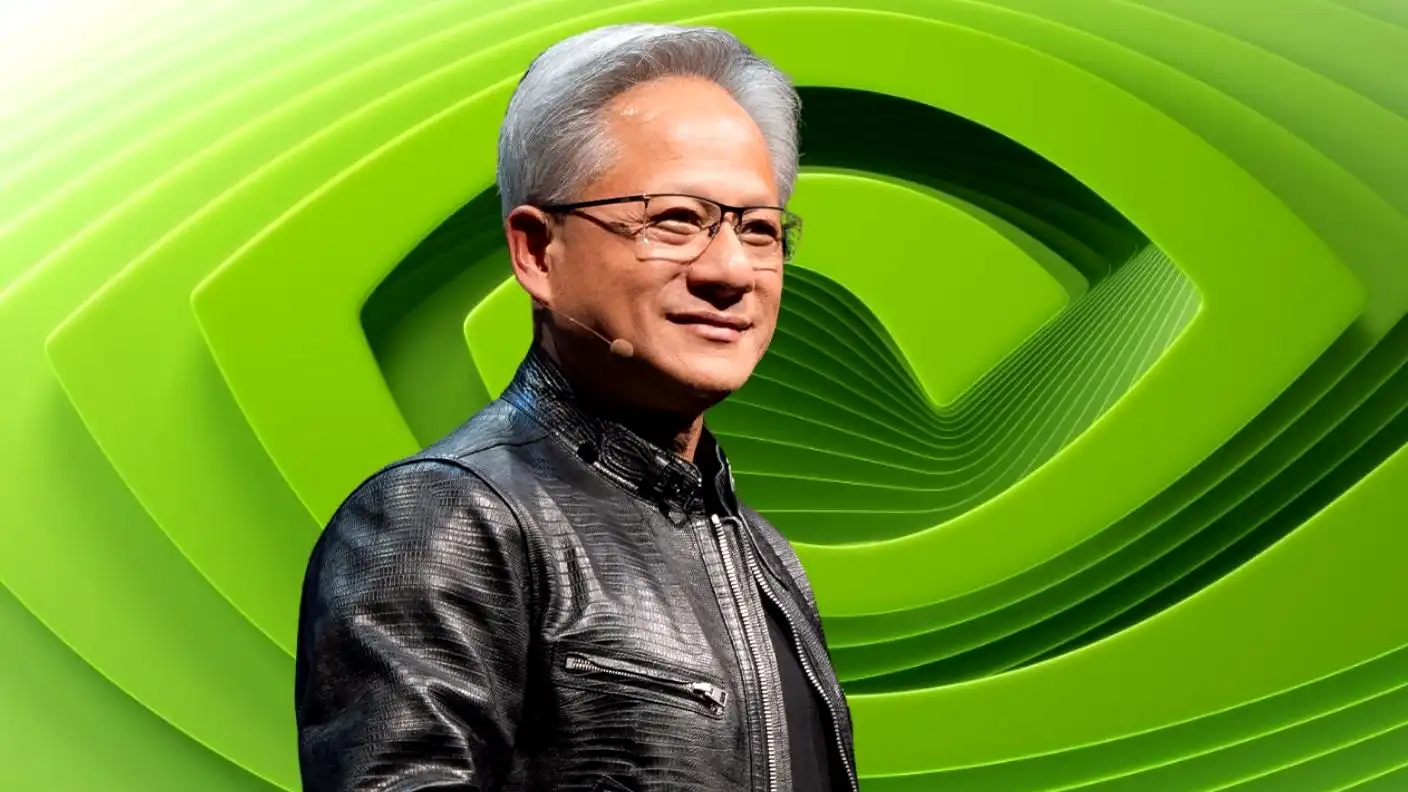
A dramatic transformation is taking place at the intersection of technology and global corporate finance. Nvidia Corporation, long celebrated as the undisputed hardware king of the artificial intelligence boom, has quietly evolved into something far more powerful: a massive, global financial institution. Online and in the boardrooms of Wall Street, analysts have dubbed this phenomenon “The Bank of Nvidia.” By cutting checks, issuing debt, and offering multi-billion-dollar credit guarantees to its own customers, the semiconductor giant is building an unbreakable financing moat.
This strategic evolution represents a major transition in how the physical assets of the digital age are financed, built, and deployed. The capital requirements of the artificial intelligence buildout have outgrown the traditional purchasing models of the tech industry, forcing Nvidia to actively participate in the financing of its own customer ecosystem. By providing its clients with direct access to massive pools of low-cost private credit, the company wants to ensure that its customers can afford to purchase its high-end processors, locking in long-term demand for its hardware.
However, this aggressive financing campaign has also triggered an intense, highly complex debate among credit analysts regarding the systemic risks of the technology boom. Critics warn that this highly concentrated, circular funding model could create a dangerous feedback loop, where the perceived demand for hardware is driven by financial engineering rather than genuine, organic consumer revenues. As the company continues to manage its massive financial commitments, the success of “The Bank of Nvidia” will determine the future of global AI infrastructure for decades to come.
The Rise of the “Bank of Nvidia”: Building an Unbreakable Financing Moat
The transformation of Nvidia from a hardware merchant into a capital-mobilization engine is a highly calculated, strategic response to a sustained surge in transaction volumes and client inquiries across the technology sector.
Shifting from Hardware Merchant to Capital Mobilization Engine
In the early stages of the artificial intelligence boom, Nvidia operated primarily as a highly successful hardware merchant, designing and selling graphics processors to cloud hyperscalers and research laboratories. Today, however, the capital requirements of the AI buildout have outgrown these traditional funding models.
The industry has entered a massive, debt-fueled infrastructure phase, where constructing gigawatt-scale data center campuses and securing massive power allocations requires a level of financing that even the largest technology companies struggle to fund on their own.
By establishing these independent compute financing platforms, Nvidia is successfully bridging this capital gap, providing its customers with direct access to massive pools of low-cost private credit so they can scale their operations quickly.
Creating a Protective Competitive Moat
The primary business objective of the bank program is to build what economists call a hardware flywheel. If a small group of proprietary software giants successfully monopolizes the artificial intelligence market through closed-source APIs, they will control the entire platform.
These closed-source providers could eventually use their platform lock-in to dictate hardware pricing, or even bypass Nvidia completely by designing their own custom, in-house silicon.
By giving its customers direct access to massive pools of low-cost private credit, Nvidia is successfully commoditizing the software layer of the industry. If any enterprise can download a free, trillion-parameter model that matches the capabilities of closed-source alternatives, the software itself loses its premium pricing power.
To run these massive, downloaded models, however, enterprises must still purchase, configure, and maintain high-performance GPU hardware.
By making the software free, Nvidia is driving a massive wave of localized and private-cloud hardware deployment, ensuring that companies must continue to purchase billions of dollars in Nvidia GPUs to host their own custom systems.
The Five-Hundred-Billion-Dollar Wall Street Alliance
The most significant and high-profile development in the expansion of “The Bank of Nvidia” is a historic partnership with six of the world’s most powerful financial institutions.
Partnering with Six Private Capital Heavyweights
On August 10, 2026, Nvidia announced that it had signed Memorandums of Understanding with six major financial institutions—Apollo Global Management, BlackRock, Blackstone, Brookfield, Goldman Sachs, and KKR—to establish the first-of-their-kind compute financing platforms.
The primary objective of these platforms is to mobilize over $500 billion in private third-party capital for AI infrastructure over time, providing a massive, highly secure funding pipeline to support the global data center buildout.
This historic alliance represents a major milestone for the technology and finance sectors. By bringing in Wall Street’s largest private market firms to independently underwrite the risk, Nvidia is transforming AI data centers into a standardized, investable asset class.
The financial institutions will independently evaluate each opportunity based on the customer, demand, utilization, and residual value of the hardware, helping to dispel “AI bubble” fears and ensuring that the capital is deployed efficiently.
Treating AI Compute as a New Asset Class
The partnership has drawn significant comparisons to previous historical structural transformations in the credit markets. BlackRock CEO Larry Fink compared the new compute financing platforms to the historic creation of the mortgage-backed securities market in the 1970s.
Fink noted that the alliance is effectively treating AI compute as a brand-new, investable asset class for global institutional investors, allowing pension funds and insurance companies to invest in the physical infrastructure of the digital age with the same confidence and liquidity they bring to traditional real estate and infrastructure bonds.
To further reassure these institutional lenders, Nvidia has built a valuable safety valve into the agreements. The chipmaker has secured the option to backstop up to $125 billion, or 25% of the potential deals, protecting lenders and boosting private credit confidence.
This multi-layered security structure ensures that even during periods of broader market volatility, the flow of private capital into the AI buildout remains highly secure, providing the industry with a stable, long-term financing pipeline.
The Circular Financing Dilemma: Halving the OpenAI Ohio Guarantee
While the $500 billion alliance represents a major corporate victory on paper, the sheer scale of the financing has also triggered an intense, highly complex debate among credit analysts regarding the systemic risks of the technology boom.
Underwriting the World’s Largest Ten-Gigawatt Data Center
The high-stakes relationship between Nvidia and OpenAI has become a primary focus of this circular financing debate. OpenAI wants to lease a massive 10-gigawatt data center campus in southern Ohio developed by SB Energy, the renewable energy subsidiary of Japanese investment giant SoftBank Group.
Because OpenAI operates as a private company and lacks an investment-grade credit rating, traditional commercial banks are reluctant to lend billions of dollars to construct custom data centers on its behalf.
To resolve this credit rating bottleneck, Nvidia had initially discussed providing an unprecedented $250 billion financial guarantee—or credit wrap—to cover OpenAI’s long-term lease payments and construction debts.
This massive commitment would have allowed the project to secure financing from traditional commercial banks and private credit funds at significantly lower interest rates, demonstrating how a creditworthy partner can bolster the financial standing of a less creditworthy party.
Cutting the Ohio Guarantee to Under $120 Billion
However, the proposed $250 billion guarantee triggered significant concern among Nvidia’s own shareholders, who worried that the chipmaker was taking on an unacceptable level of credit risk to support a single, unprofitable startup.
In response to these investor concerns, Nvidia and OpenAI revised their agreement on August 14, 2026, halving the financial guarantee to less than $120 billion.
Under the new, downsized agreement, Nvidia will initially guarantee only the first phase of the project—representing an 800-megawatt facility scheduled for completion in 2028.
This strategic reduction in financial leverage successfully protects Nvidia’s balance sheet from extreme credit concentration risks, while still providing OpenAI with the necessary backing to secure its initial construction loans.
By scaling back the guarantee, Nvidia is proving that its business is built on a foundation of independent, market-validated demand rather than internal corporate subsidies, helping to distance itself from circular financing criticisms.
The Neocloud Connection: CoreWeave’s $2.6 Billion Loan
In addition to its partnerships with Wall Street and OpenAI, Nvidia is also utilizing its financial power to support specialized “neocloud” providers, which offer dedicated, GPU-intensive cloud infrastructure to corporate developers.
Securing the GPU Supply Chain with Shorter-Dated Contracts
The primary example of this neocloud strategy is Nvidia’s close relationship with CoreWeave, an emerging cloud provider in which the chipmaker holds a significant equity stake.
On August 11, 2026, CoreWeave announced that it had closed a massive $2.6 billion delayed draw term loan facility to fund the continued expansion of its AI cloud platform.
The loan facility incorporates an innovative, highly unusual structure designed to expand the scope of customer contracts eligible for public syndicated infrastructure financing.
Unlike traditional project-finance loans, which require customer contracts to extend through the full maturity of the debt, the new facility carries an approximate five-year maturity while its underlying customer contracts average only three years in length.
This means that the lending syndicate is willing to underwrite the “renewal risk” of the hardware, betting that even if a specific customer contract expires after three years, the demand for Nvidia’s GPUs will remain strong enough for CoreWeave to easily find a new tenant to lease the capacity.
Lenders Show High Confidence in Nvidia’s Hardware Value
The willingness of major financial institutions to underwrite this renewal risk represents an extraordinary vote of confidence in the long-term, residual value of Nvidia’s hardware.
In traditional corporate lending, banks are highly hesitant to finance assets that suffer from rapid technological obsolescence, typically demanding that the underlying customer contracts cover the entire life of the loan.
By extending a five-year loan against three-year customer contracts, the lenders are proving that they view Nvidia’s graphics processors as durable, high-value industrial assets—comparable to aircraft fleets, commercial real estate, or regional power plants—that will continue to generate steady, reliable cash flows for years to come.
This structural validation significantly lowers the cost of capital for neocloud providers, allowing them to scale their high-density data center networks rapidly and secure their position as key players in the global technology ecosystem.
Mitigating Systemic Volatility and Ensuring Long-Term Stability
As “The Bank of Nvidia” continues to expand its financial footprint, the company must navigate a highly volatile macroeconomic environment that is beginning to weigh on corporate credit markets.
The global financial markets are currently dealing with persistent inflationary pressures, fluctuating central bank policies, and major geopolitical disruptions in the Middle East.
The ongoing standoff in the Strait of Hormuz has driven global energy costs to near-record heights, fanning concerns that the Federal Reserve will have to keep interest rates elevated for longer to prevent a fresh inflation spike, representing a minor 1.5% margin of error in national GDP models.
For capital-intensive sectors like technology, high interest rates increase the ongoing cost of servicing debt, making investors increasingly sensitive to any rise in corporate leverage.
However, because Nvidia has maintained an exceptionally strong, investment-grade credit rating, and because its interest coverage ratios remain among the healthiest on Wall Street, the company’s bonds are treated as a premium “safe haven” asset.
This high credit standing ensures that even if broader credit markets experience tightening, Nvidia can continue to borrow money on highly favorable terms, utilizing its financial strength to out-navigate its competitors.
By strategically deploying its massive capital reserves to finance the physical data centers that will house its chips, Nvidia is ensuring that its hardware remains the preferred choice for developers worldwide, securing its technological and economic leadership for decades to come.
Reforming the Capital Structure for the Machine Age
The rapid expansion of “The Bank of Nvidia” represents a historic milestone in the corporate history of the technology sector. By partnering with Wall Street’s premier investment giants to mobilize $500 billion in private capital and strategically restructuring its financial guarantees for OpenAI’s massive Ohio data center, the company has successfully optimized its capital structure while protecting its long-term growth.
While the massive scale of the financing has triggered a complex debate over the risks of high corporate leverage and circular funding, the strategic benefits of the alliance are immense.
The $500 billion envelope secures a reliable, long-term financing pipeline to build the data centers, power grids, and silicon processors required to support the next generation of computing, ensuring that the United States remains the undisputed capital of the global digital economy.
As the technology sector navigates a highly volatile macroeconomic environment and rising geopolitical tensions, this aggressive, private-sector-led infrastructure offensive will determine the leaders, the standards, and the capabilities of the automated world of the future.