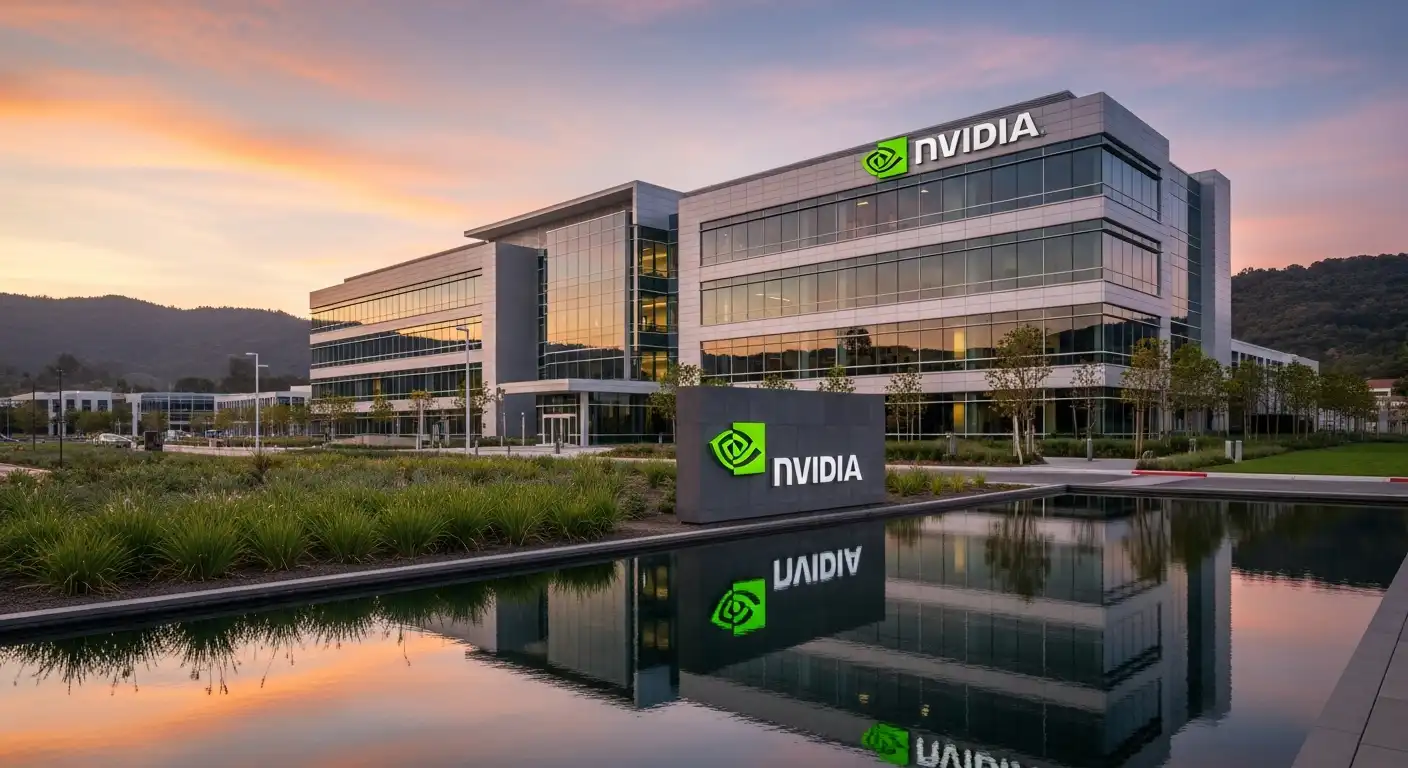
Nvidia has donated an advanced artificial intelligence supercomputer powered by its flagship hardware to the Naval Postgraduate School Foundation in Monterey, California. The installation places a state-of-the-art DGX GB300 system directly into a U.S. military academic institution, establishing a milestone for defense technology research. Built around the Grace Blackwell architecture, the supercomputer provides military researchers with high-throughput compute capacity to model complex naval operations, design autonomous systems, and run advanced cyber simulations.
The donation highlights a growing convergence between commercial technology leaders and national defense infrastructure. Operating as a specialized postgraduate university, the Naval Postgraduate School delivers advanced master’s and doctoral degrees in computer science, aerospace engineering, defense management, and operational analysis to military officers. Placing cutting-edge artificial intelligence hardware directly on campus grants student officers and faculty immediate access to computing capabilities typically reserved for commercial research labs and national energy facilities.
Defense analysts view this deployment as a pivotal moment in modern military modernization. As global military powers race to integrate artificial intelligence across land, sea, air, space, and cyber domains, access to hardware acceleration has become a decisive strategic asset. By donating this high-performance system, Nvidia provides the military research community with a functional testing ground to evaluate frontier-scale algorithms before deploying them across active operational fleets.
TechGolly provides a detailed analysis of this supercomputer donation, examining its technical capabilities, strategic defense implications, operational applications, and broader impact on military higher education. As national security increasingly depends on artificial intelligence processing power, this public-private collaboration demonstrates how commercial silicon innovation directly shapes future warfare strategies.
Unpacking the Grace Blackwell GB300 Military Installation
The newly installed supercomputer centers on Nvidia’s DGX GB300 platform, a specialized system engineered for heavy artificial intelligence training, high-performance simulation, and complex data inference. The Grace Blackwell architecture combines high-speed Grace CPUs with Blackwell GPUs using custom interconnect fabrics, enabling seamless data transfer across massive memory pools. While exact cluster configurations for the Monterey installation remain classified, the underlying platform offers exaflop-scale performance capable of processing trillions of calculations per second.
The Naval Postgraduate School has a long history of adopting groundbreaking computing systems to support national defense. In 1960, the university installed a landmark CDC 1604 system, which served as one of the world’s first solid-state scientific supercomputers. Installing the Grace Blackwell system continues this six-decade tradition, upgrading the campus infrastructure to handle high-density neural networks, real-time telemetry processing, and physics-informed machine learning models.
Traditional supercomputing systems relied heavily on general-purpose central processors, which struggle to handle the parallel mathematical workloads required by modern deep learning models. In contrast, the GB300 architecture utilizes specialized tensor cores and liquid-cooled rack configurations to handle massive matrix multiplication tasks efficiently. This hardware setup allows researchers to train sophisticated foundation models in days rather than months, accelerating the iteration cycle for novel military software applications.
By hosting the supercomputer locally in Monterey, military researchers avoid latency bottlenecks associated with remote cloud connections. Local hardware execution ensures that sensitive naval research data remains isolated within secure campus networks. Furthermore, dedicated hardware access allows students and faculty to experiment with custom software drivers, low-level kernel optimizations, and specialized cryptographic routines without competing for shared commercial cloud resources.
Accelerating Autonomous Fleet Operations and Unmanned Systems
Unmanned surface vessels, autonomous underwater vehicles, and aerial drone swarms represent a major priority for modern naval strategy. Operating autonomous platforms in unpredictable maritime environments requires sophisticated machine learning algorithms capable of processing multi-sensor data feeds in real time. The GB300 supercomputer provides the computational backbone required to train and refine these autonomous control systems.
Military researchers are leveraging the system’s parallel processing capabilities to simulate complex oceanographic environments, including turbulent wave dynamics, variable thermoclines, and acoustic underwater propagation. By training autonomous navigation algorithms within hyper-realistic synthetic environments, engineers can expose autonomous vessels to millions of edge-case scenarios before conducting physical sea trials. This simulation capability significantly reduces field testing risks and accelerates operational deployment timelines.
Additionally, the supercomputer supports real-time computer vision and acoustic signal processing research. Modern naval warfare relies heavily on passive sonar arrays and radar telemetry to detect stealthy threats. Using high-density neural networks trained on the GB300 system, researchers can automate acoustic classification, distinguishing benign marine noise from submarine acoustic signatures with high precision.
These autonomous control systems integrate directly with broader defense manufacturing initiatives. During recent fleet exercises like RIMPAC 2026, military teams demonstrated containerized 3D printing systems aboard active aircraft carriers to manufacture replacement components at sea. Combining AI-driven design tools running on supercomputers with mobile 3D printing hardware creates a self-sustaining logistics loop that enhances fleet readiness during long deployments.
Deepening the Silicon Valley and Pentagon Defense Alliance
The donation of a Grace Blackwell supercomputer reflects a broader realignment between Silicon Valley hardware creators and the U.S. Department of Defense. For decades, defense technology development relied almost exclusively on specialized government contractors operating under lengthy procurement timelines. Today, the rapid pace of commercial artificial intelligence innovation has forced defense leadership to adopt commercial off-the-shelf hardware solutions to maintain technological superiority.
Nvidia has expanded its engagement across multiple federal defense and scientific agencies. The chipmaker is currently collaborating with national research facilities on landmark installations, including the Solstice system at Argonne National Laboratory, which incorporates 100,000 Blackwell GPUs delivering 2,200 exaflops of artificial intelligence performance. Expanding hardware deployments into military and academic institutions ensures that active-duty personnel develop technical proficiency on the same hardware standards used across federal research laboratories.
Direct corporate donations help bypass traditional military procurement cycles, which often take three to five years to evaluate, fund, and deliver hardware. In the fast-moving artificial intelligence landscape, three-year procurement delays risk delivering obsolete hardware to military units. By partnering directly with nonprofit organizations like the Naval Postgraduate School Foundation, commercial technology leaders can deliver cutting-edge hardware directly into research labs within weeks.
This collaboration also creates a valuable feedback loop for commercial hardware designers. Active-duty military officers bringing real-world operational experience to the classroom can test software systems against unique tactical challenges. Their insights help hardware and software engineers refine software development kits, edge computing hardware, and ruggedized server designs for harsh operational environments.
Cybersecurity, Threat Intelligence, and Cryptographic Warfare
Cybersecurity represents a critical operational domain where supercomputing power yields immediate tactical advantages. Military communications, satellite networks, and automated command structures face constant intrusion attempts from sophisticated cyber adversaries. The Grace Blackwell system provides the processing speed necessary to analyze massive streams of network traffic and identify zero-day vulnerabilities in real time.
Researchers at the Naval Postgraduate School are developing machine learning models that monitor military network traffic patterns to detect subtle behavioral anomalies indicative of state-sponsored intrusions. By processing gigabytes of log data per second, these automated cyber defense tools can isolate compromised network segments and deploy automated countermeasures before attackers exfiltrate classified data.
Furthermore, supercomputing hardware plays a central role in advanced cryptographic research. As quantum computing capabilities advance, legacy military encryption algorithms risk becoming vulnerable to rapid decryption. Military mathematicians are utilizing the GB300 cluster to stress-test post-quantum cryptographic algorithms, ensuring that naval command channels remain secure against future computational threats.
The supercomputer also supports automated software vulnerability discovery. By executing parallel fuzzing routines—where automated programs inject millions of random data inputs into software code to trigger crashes—researchers can identify and patch software security flaws in naval combat systems before operational deployment.
Geopolitical Competition and the Race for National AI Dominance
The supercomputer installation occurs against the backdrop of an intense global race for artificial intelligence dominance. National security strategists view leadership in accelerated computing as essential to maintaining global deterrence. Consequently, federal policies have focused heavily on securing domestic supply chains for high-end semiconductors while restricting foreign access to advanced processing units.
The competition extends beyond physical hardware to encompass algorithmic capabilities and technical talent. While international competitors actively seek access to advanced processing chips through third-party leasing arrangements and secondary markets, domestic military institutions benefit from direct physical access to top-tier hardware. Physical hardware ownership allows researchers to run unconstrained training runs on classified datasets that cannot be uploaded to public cloud infrastructure.
Maintaining sovereign computing capacity inside domestic military facilities ensures that operational modeling remains secure from external intelligence gathering. By controlling the entire technology stack—from custom silicon and liquid cooling systems to proprietary software frameworks—the U.S. Navy reduces supply chain vulnerabilities and guards against hardware-level backdoors.
Moreover, the economic scale of commercial artificial intelligence investments reinforces national defense capabilities. Commercial technology companies are investing hundreds of billions of dollars into domestic chip fabrication plants, advanced packaging facilities, and clean energy infrastructure. This commercial scale creates an industrial ecosystem that directly feeds national defense needs without requiring full government funding for underlying silicon manufacturing.
Advanced Simulation, Predictive Maintenance, and Material Science
Beyond tactical warfare and cyber defense, supercomputing infrastructure transforms routine military logistics, fleet maintenance, and material science research. Operating a global naval fleet requires managing complex supply chains, schedule optimizations, and maintenance routines for hundreds of surface ships, submarines, and aircraft.
Predictive maintenance models powered by artificial intelligence allow naval engineers to forecast component failures before they occur during missions. By processing historical sensor data from aircraft engines, hull structures, and propulsion systems, the GB300 supercomputer can identify subtle vibration or temperature anomalies that precede mechanical breakdowns. Implementing AI-driven predictive maintenance across fleet assets reduces unscheduled dockyard repairs and extends operational availability.
In material science, military researchers utilize the supercomputer to simulate molecular structures and chemical reactions at atomistic scales. Developing novel heat-resistant alloys, anti-corrosion coatings, and radar-absorbing materials requires processing complex quantum mechanical equations. Accelerated computing reduces the time required to evaluate candidate material compositions, speeding up the development of next-generation armor plating and hypersonic vehicle skins.
Fluid dynamics simulations represent another computationally intensive application benefiting from the GB300 platform. Designing hydrodynamic ship hulls and aerodynamic missile casings requires solving complex Navier-Stokes equations across millions of grid points. High-density GPU acceleration enables researchers to run high-resolution turbulence simulations that match physical wind tunnel and towing tank results with extreme fidelity.
Modernizing Military Higher Education for the AI Era
Integrating frontier artificial intelligence hardware into military universities represents a structural shift in officer education. Future military leaders must understand how machine learning systems function, where their operational limitations lie, and how to command hybrid forces comprising human personnel and autonomous AI agents.
The Naval Postgraduate School is embedding artificial intelligence coursework across all academic disciplines, including defense management, systems engineering, national security affairs, and operational research. Access to an on-campus Grace Blackwell supercomputer allows graduate students to complete hands-on research projects involving real-world military datasets rather than relying solely on theoretical textbooks.
This educational focus creates a technical talent pipeline within the armed services. Officers graduating with advanced degrees in computer science and artificial intelligence return to operational units capable of evaluating commercial technology offerings, managing defense software acquisitions, and leading technical development teams. This internal technical expertise reduces reliance on external consultants and accelerates technology adoption across active military units.
Furthermore, hosting advanced research computing on campus attracts top-tier academic faculty and civilian researchers to military institutions. Collaborative research projects between civilian computer scientists and active-duty military officers bridge the gap between academic innovation and operational defense needs, fostering a culture of continuous technological innovation.
Key Takeaways for Defense Executives and Technology Strategists
The deployment of Nvidia’s Grace Blackwell supercomputer at the Naval Postgraduate School delivers several strategic insights for technology executives, defense contractors, and policymakers.
First, physical compute capacity has become a foundational component of modern defense readiness. Military organizations that secure direct access to high-density accelerated computing hardware will develop, test, and deploy operational software tools faster than rivals relying on legacy infrastructure.
Second, public-private partnerships offer a viable mechanism to bypass slow procurement cycles. Direct collaborations between commercial technology leaders, academic institutions, and nonprofit defense foundations accelerate technology transfer, placing state-of-the-art hardware in the hands of end users within minimal timeframes.
Third, domain-specific training on private hardware is essential for sensitive defense applications. While public cloud infrastructure serves commercial software needs effectively, military applications require secure, isolated hardware environments capable of processing classified operational data without security risks.
Finally, hardware acceleration and human talent development must proceed in tandem. Donating cutting-edge supercomputers provides immediate processing capacity, but building educational programs that train military officers to utilize these tools ensures long-term strategic advantage in an AI-driven security environment.