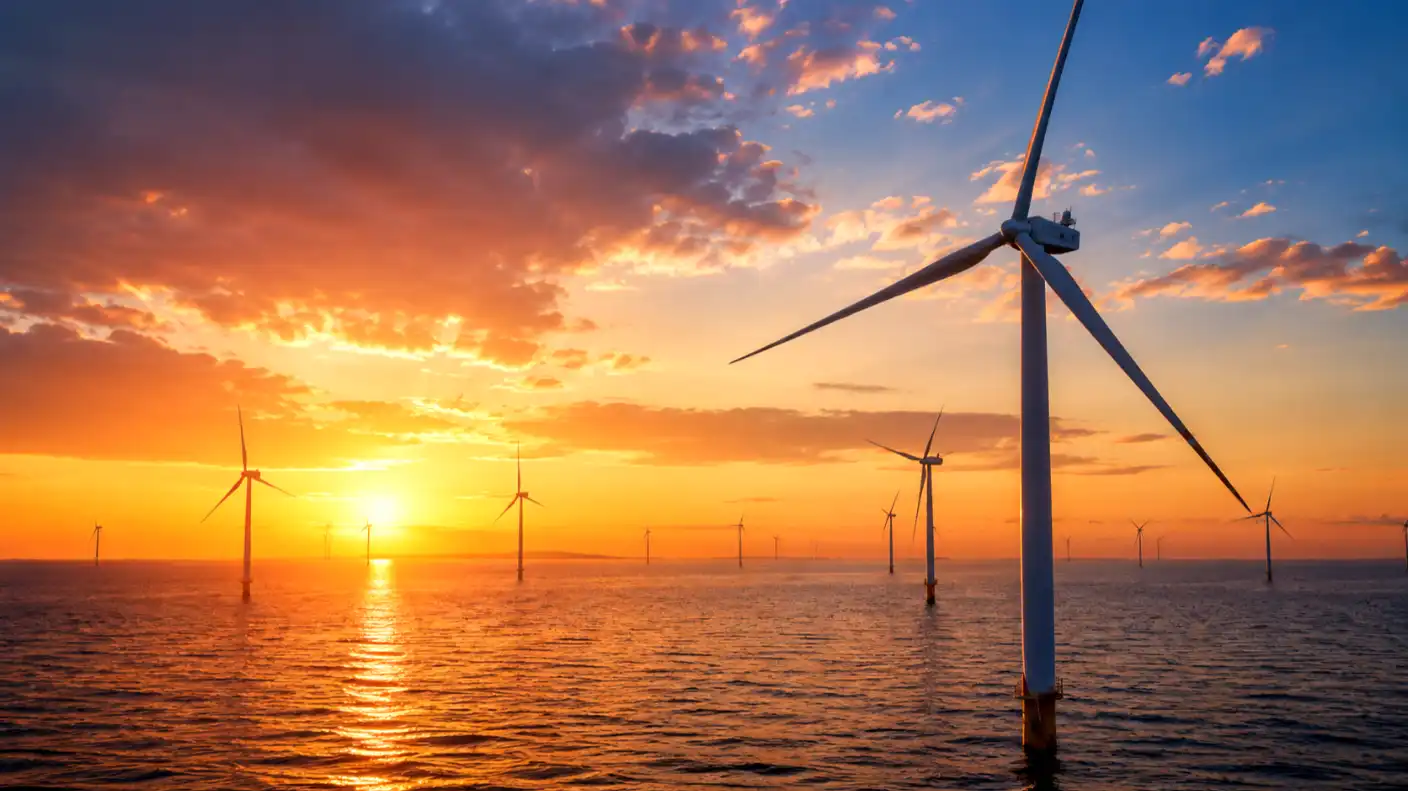
The ongoing volatility in the Middle East has transitioned clean energy from a long-term environmental target into an immediate national security issue. For island nations like Great Britain and Japan, which rely heavily on vulnerable maritime trade routes to import fossil fuels, securing energy independence is now a matter of national survival.
To address this strategic vulnerability, Tokyo and London are preparing to establish a massive, highly integrated clean energy alliance. Government sources in Tokyo revealed that Japanese Prime Minister Sanae Takaichi and her British counterpart Keir Starmer are scheduled to meet in London.
The two leaders are expected to exchange a sweeping memorandum of cooperation. This agreement will promote extensive offshore wind collaboration, deployment of next-generation nuclear power plants, and commercial-scale nuclear fusion development.
This historic partnership represents a fundamental restructuring of the global green technology landscape. By combining the United Kingdom’s advanced operational experience in deep-water wind farms with Japan’s world-class heavy manufacturing and engineering capabilities, the two nations are building a highly secure, sovereign energy supply chain to protect their economies from global geopolitical shocks.
The Geopolitical Urgency: Why Energy Security is a National Priority
The arrival of this bilateral energy agreement is a direct response to a highly unstable global environment. Traditional fuel supplies have faced continuous disruption, driving retail utility prices to record highs and threatening industrial operations in major manufacturing economies.
Because both Great Britain and Japan are island nations, they cannot easily import electricity from neighboring grids during a domestic shortage. They must generate their own power locally.
To secure their economic sovereignty, both governments have realized that they must rapidly phase out their reliance on imported natural gas and coal. By pooling their financial resources, technological patents, and industrial capacity, Japan and the United Kingdom are building a highly resilient clean-energy alliance insulated from external supply-chain shocks.
Key Components of the UK-Japan Clean Energy Partnership
The multi-layered energy alliance relies on several critical technological, financial, and regulatory components:
- Floating Offshore Wind Platforms: Transitioning away from shallow coastal turbines toward deep-water floating platforms to capture stronger, more consistent ocean winds.
- Exclusive Economic Zone (EEZ) Expansion: Developing updated maritime leasing frameworks to permit energy projects in deep-water zones far beyond the traditional coastline.
- Small Modular Fission Reactors: Engineering standardized, low-cost nuclear reactors that can be built in factories and deployed rapidly to provide a secure base-load power supply.
- High-Temperature Superconducting Magnets: Manufacturing advanced magnetic confinement hardware in Japan to control ultra-hot fusion plasmas inside British fusion reactors.
- Sovereign Supply-Chain Solidification: Aligning heavy steel producers, fabricators, and shipyards to avoid dependency on Chinese industrial exports.
The Floating Offshore Wind Revolution: Unlocking Deep-Water Potential
While traditional, fixed-bottom offshore wind turbines have successfully brought clean power to coastal communities, they suffer from a major geographic limitation. These massive structures must be anchored directly to the seabed, limiting their deployment to shallow coastal shelves where water depth is less than 50 meters.
For many regions, particularly the mountainous coastlines of Japan, this shallow-water restriction represents a massive barrier to renewable energy expansion.
Japan’s Rapid Deep-Water Expansion
The physical geography of the Japanese archipelago drops off rapidly into deep ocean water, leaving very little shallow coastal shelf available for traditional wind farms. Analysts estimate that roughly 80% of Japan’s total offshore wind potential lies in deeper waters where only floating wind turbines are technically viable.
To unlock this massive, untouched resource, Japan took a major policy step. The national government passed legislation that officially expanded marine leasing rights into its Exclusive Economic Zone (EEZ)—the world’s sixth-largest maritime territory—to allow floating wind development.
By opening these deep-water zones, the Japanese government aims to deploy a massive 45 gigawatts of deep-water offshore wind capacity by the year 2040, transforming its coastal waters into a primary engine of domestic electricity generation.
The UK’s Operational Leadership
While Japan possesses the physical maritime territory, the United Kingdom holds the global crown in actual operational experience. The UK is currently home to the world’s largest pipeline of commercial-scale floating offshore wind projects, including the massive 3,600-megawatt Ossian project, as well as the combined 1,900-megawatt Green Volt and Cenos initiatives in the North Sea.
By partnering directly with the UK, Japan’s energy developers can study how British engineering teams navigate the complex logistics of deep-water mooring, subsea transmission cabling, and floating platform stabilization, allowing Japan to compress its development timelines by several years.
The Multi-Billion Dollar Industrial Investment Wave
Developing deep-water floating wind farms requires an extraordinary, upfront commitment of capital. Setting up heavy-duty mooring lines, massive concrete floating foundations, and high-voltage subsea cables is far more expensive than building traditional onshore wind farms.
To overcome this financial barrier, the bilateral agreement is unleashing a massive wave of industrial investment between the two nations.
Sumitomo’s £7.5 Billion UK Clean Energy Pledge
A major pillar of this financial cooperation is the landmark comprehensive investment memorandum signed between the UK government and Japan’s Sumitomo Corporation. Under this agreement, Sumitomo has committed to invest a massive £7.5 billion (approximately $9.5 billion) directly into the UK’s clean energy infrastructure and offshore wind projects.
This multi-billion-dollar commitment will help fund the expansion of major offshore wind farms in the North Sea, securing clean, home-grown power for millions of British households while creating high-value manufacturing and engineering jobs in both countries.
Joint Tech Standardization (FLOWRA and OREC)
The partnership also focuses heavily on driving down the commercial cost of deep-water wind technology. To achieve this, Japan’s Floating Offshore Wind Technology Research Association (FLOWRA) is collaborating directly with the UK’s leading research body, the Offshore Renewable Energy Catapult (OREC).
The two organizations are working in tandem to standardize floating wind components, turbine designs, and mooring systems. By establishing shared technical standards, the two nations aim to build a highly efficient, global supply chain that can drive down the cost of floating wind electricity to their targeted commercial baseline of ten yen per kilowatt-hour, making clean energy highly competitive with traditional fossil fuels.
Next-Generation Nuclear Power: Small Modular Reactors
While wind power is highly effective, the wind does not blow consistently twenty-four hours a day. To prevent rolling blackouts, modern electricity grids must have access to a reliable, always-on source of base-load power.
As part of the comprehensive “Hiroshima Accord” strategic partnership, the UK and Japan are actively expanding their cooperation in next-generation nuclear fission.
The SMR Architectural Shift
Traditional nuclear power plants are massive, highly complex engineering projects that routinely cost over $20 billion and take more than a decade to build. These high costs and long construction timelines present an unacceptable financial risk for most private utility companies.
To solve this problem, the UK-Japan alliance is betting heavily on Small Modular Fission Reactors (SMRs). SMRs are much smaller, standardized nuclear reactors that can be manufactured entirely in a factory, shipped via rail or ship, and assembled on-site in a fraction of the time.
By standardizing the reactor design, SMRs dramatically lower upfront construction costs, making it much easier for private utilities to build clean, reliable base-load nuclear power plants near industrial hubs.
Shared Research and Decommissioning Expertise
The nuclear partnership also covers advanced fuel development, security, and joint decommissioning technologies. Both nations have faced major, complex nuclear challenges in their histories—including the cleanup operations at Sellafield in the UK and Fukushima in Japan.
By sharing their robotic technologies, waste management research, and radiation safety standards, the two countries are developing advanced, highly secure decommissioning protocols that can be exported to other nations looking to retire their legacy nuclear fleets safely.
The Ultimate Frontier: Commercializing Nuclear Fusion
While wind and fission are essential to meeting near-term climate targets, the ultimate goal of the UK-Japan partnership is to commercialize nuclear fusion. Often described as the holy grail of clean energy, nuclear fusion is the physical process that powers the Sun, fusing hydrogen atoms to release limitless, clean, and completely carbon-free power with zero long-lived radioactive waste.
The Bilateral Memorandum of Cooperation
In June 2025, the two countries signed a landmark Memorandum of Cooperation on fusion energy, backed by a record £410 million UK government funding program for international scientific collaboration. The agreement established a formal framework for researchers, regulatory officials, and private-sector companies to share intellectual property, standardize safety regulations, and accelerate the development of a global fusion energy ecosystem.
Tokamak Energy and Furukawa Electric’s HTS Alliance
This scientific cooperation is already delivering major private-sector breakthroughs. The UK’s leading fusion developer, Tokamak Energy, partnered with Japan’s Furukawa Electric Group to build an advanced manufacturing base in Japan.
The joint facility manufactures state-of-the-art High-Temperature Superconducting (HTS) magnet technology. These powerful magnets are critical components that generate the ultra-strong magnetic fields that confine and control hydrogen plasma hotter than the Sun inside a magnetic tokamak reactor.
Additionally, Japan’s Kyoto Fusioneering relocated its UK headquarters to the UK Atomic Energy Authority’s (UKAEA) Culham Campus near Oxford, creating a highly integrated, bilateral research hub where British and Japanese scientists can work side by side to bring commercial fusion closer to reality.
Conclusion
The sweeping clean energy partnership between Japan and the United Kingdom represents a major milestone in the global battle for energy security. By combining the United Kingdom’s world-class operational experience in deep-water floating wind with Japan’s massive heavy manufacturing capabilities and advanced materials science, the two nations are building a highly resilient, sovereign energy supply chain. From Sumitomo’s massive £7.5 billion UK investment commitment to the joint development of factory-built Small Modular Fission Reactors and advanced High-Temperature Superconducting magnets for fusion energy, this alliance is delivering concrete technological solutions to survive the ongoing global energy crisis. As the two prime ministers meet in London to sign this historic memorandum, they are proving that international collaboration is the key to unlocking a secure, clean, and fully sovereign energy future.