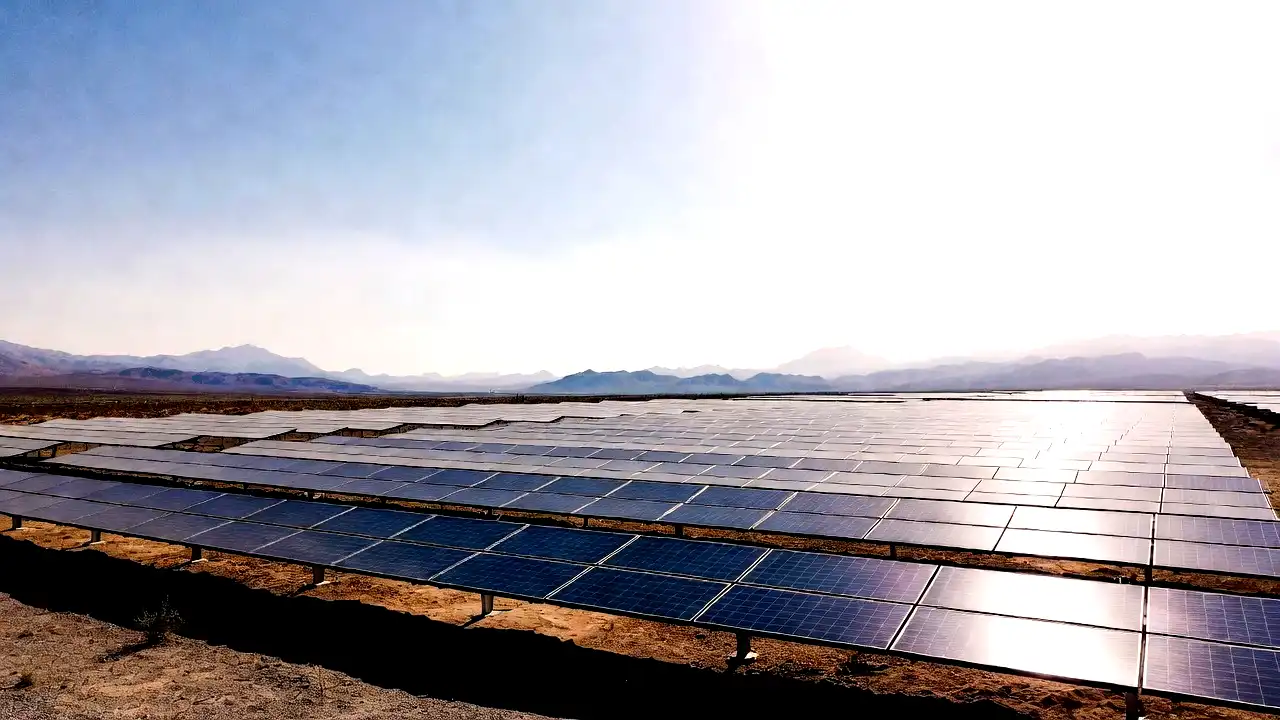
The global clean energy landscape is experiencing a massive, highly consequential structural realignment. For years, the international solar industry relied on a fragile, hyper-efficient global supply chain where China dominated the primary manufacturing stages—specifically the production of high-purity polysilicon, the essential raw material for every solar panel manufactured today. That era of low-cost, frictionless trade has officially collapsed. In a move that signals a hardening of American industrial policy, the U.S. government is actively evaluating the implementation of a national price floor on imported polysilicon, combined with aggressive new tariff barriers designed to stop the flow of low-cost, state-subsidized Chinese solar hardware.
This regulatory pivot represents a major milestone in Washington’s ongoing effort to rebuild the domestic American clean energy manufacturing base. Policymakers argue that the current global market for solar components is fundamentally broken, distorted by decades of massive, non-market subsidies from Beijing that allow Chinese companies to sell solar modules at prices significantly below the cost of raw material production. To prevent the domestic solar industry from being wiped out by this flood of cheap hardware, the administration is considering a price-floor mechanism that would require all imported solar components to meet a minimum financial valuation, effectively neutralizing the cost advantage of Chinese state-backed manufacturing.
The implications for the energy sector are staggering. Implementing a nationwide price floor would instantly raise the cost of solar deployment, impacting utility-scale projects, residential rooftop installations, and massive multi-billion-dollar green energy infrastructure programs. However, supporters of the plan insist that this short-term inflation is a necessary price to pay for long-term industrial independence. By forcing the market to price in the true cost of production, Washington aims to create a viable, self-sustaining manufacturing ecosystem on American soil, one that is fully immune to the threat of foreign export manipulation and supply chain blockades.
The Physical Foundation: Polysilicon as the Semiconductor of Green Energy
To understand why Washington is targeting polysilicon, you must analyze the core physics of the solar industry. High-purity polysilicon is the foundational, non-negotiable building block of every silicon-based solar cell. The production process involves taking raw metallurgical-grade silicon and refining it through highly intensive, multi-stage chemical vapor deposition cycles. This level of extreme purity is required because even the smallest chemical impurity can destroy the electrical efficiency of a finished solar cell, rendering it useless for commercial power generation.
For over a decade, China systematically captured approximately 85 percent of the global polysilicon refining capacity. The country achieved this dominance by utilizing cheap, coal-fired industrial power in remote, northwestern provinces and benefiting from billions of dollars in state-backed financial aid. This massive scale allowed Chinese firms to crush international competitors, forcing dozens of Western refining plants to file for bankruptcy. Today, the world relies almost entirely on this concentrated supply chain to power its climate goals. When Beijing adjusts its export quotas, or when trade sanctions disrupt the flow of this material, the entire global solar industry faces immediate, catastrophic supply shortages and violent price swings.
The Strategy of the Price Floor and Import Surcharges
The administration’s proposed price-floor mechanism is designed to act as a highly effective, market-based filter for international trade. Rather than relying on simple, flat-rate tariffs—which can be easily evaded through creative accounting, transshipment through third-party nations, or small product modifications—a price floor establishes an absolute, legal minimum at which imported solar products can be sold in the United States.
If a manufacturer attempts to export solar modules to the American market at a price point below the government-mandated minimum, the system automatically applies an import surcharge, raising the final cost to the domestic market price. This strategy ensures that Chinese manufacturers can no longer utilize their state subsidies to undercut American-made equipment. The mechanism effectively forces them to raise their export prices to a sustainable level, creating a competitive “breathing room” that allows domestic factories to scale their production, hire thousands of high-skilled workers, and eventually achieve the cost-effective scale that currently remains out of reach.
Neutralizing State-Subsidized Overcapacity
The core problem facing the domestic solar industry is the phenomenon of industrial overcapacity. Chinese manufacturers currently possess enough production capacity to satisfy the entire global demand for solar panels two times over. This massive, state-sponsored overbuild ensures that the global market remains permanently saturated with cheap inventory, which prevents any new player from achieving the necessary scale to become profitable.
By implementing the price floor, Washington is attempting to drain the profit incentive from this overcapacity strategy. When Beijing can no longer use its massive production base to dump low-cost goods into the American market, the financial pressure to sustain those inefficient, high-cost factories will mount. The government hopes this will force a global market correction, leading to the bankruptcy of the least efficient producers and a return to a more stable, market-based equilibrium where manufacturing capacity is tied to genuine, sustainable consumer demand.
Protecting the Multi-Billion-Dollar Domestic Manufacturing Rebound
The United States has spent over $1.5 billion in direct federal subsidies and loan guarantees to jump-start domestic solar manufacturing over the past few years. From high-capacity module assembly plants in Georgia to next-generation cell fabrication facilities in Ohio, the private sector is pouring billions more into these efforts. However, all of these massive, capital-intensive projects face a common, existential threat: they simply cannot compete on price with imported Chinese hardware.
If the government spends taxpayer money to build a solar factory, but then allows Chinese manufacturers to flood the local market with panels that cost 30 to 40 percent less, the domestic factory will inevitably fail. The price floor is an essential, highly integrated part of the broader industrial policy. It prevents the state-funded domestic manufacturing rebound from being cannibalized by foreign competitors, ensuring that the federal investment in clean energy infrastructure actually delivers long-term, self-sustaining industrial growth rather than becoming a series of stranded, multi-billion-dollar assets.
The Geopolitical Collision: How Tariffs Reshape International Trade
The trade dispute is not occurring in a vacuum; it is part of a much broader, high-stakes geopolitical conflict over the future of the global energy and technology supply chains. As the United States pushes to secure its domestic industrial base, China is reacting with defensive trade maneuvers, including its own export controls on critical minerals like gallium, germanium, and antimony.
This tit-for-tat dynamic is creating a permanently fractured global energy market. We are rapidly moving toward a world where technology and energy resources are no longer traded freely on the open market, but are allocated based on political alliances and national security requirements. For global technology companies and renewable energy developers, this reality creates massive, highly complex logistical challenges, as they must reorganize their supply chains to ensure they remain in compliance with both Washington and Beijing’s competing, and often contradictory, regulatory frameworks.
The Response from Beijing: Controlling the Raw Mineral Pipeline
Beijing is not standing idle while the United States raises its tariff walls. The Chinese government is responding by tightening its grip on the critical minerals required to manufacture and refine the very hardware the U.S. is trying to protect. By enforcing strict export licenses for the raw materials used in next-generation high-efficiency solar cells, China is signaling that it possesses the power to choke off the supply of essential raw inputs to any nation that attempts to exclude its finished goods.
This escalation underscores the reality that the solar industry is now inextricably linked to mining, chemistry, and advanced materials engineering. The U.S. tariff strategy must be broad enough to address not just the finished modules, but the entire, multi-layered vertical supply chain.
Washington must work to secure independent access to lithium, cobalt, nickel, and refined rare earth elements, effectively rebuilding the entire materials processing pipeline from the mine to the panel, which is an incredibly difficult, multi-year industrial mission that requires absolute political and financial discipline.
The Impact on Global Energy Deployment Costs
The ultimate, long-term challenge for the administration is balancing the desire for industrial independence with the absolute, non-negotiable need for cheap, rapid climate action. The global community has established a goal of achieving net-zero carbon emissions by 2050, an objective that requires the installation of tens of thousands of gigawatts of new wind and solar power globally.
If the United States and Europe use tariffs to artificially inflate the price of solar technology, they risk significantly slowing down the pace of their own energy transitions.
This creates a painful, highly visible political dilemma.
Voters demand the construction of clean energy grids to fight climate change, but they also demand affordable electricity rates and the protection of domestic manufacturing jobs.
The administration’s trade policy is a high-wire act, attempting to reconcile these two, often contradictory objectives while navigating the volatile, unpredictable currents of global commodity prices and industrial trade policy.
The Future of the Green Manufacturing Sector
The move toward price floors and tariff walls is a definitive signal that the clean energy market has moved into a new, defensive phase. The era of cheap, globalized sourcing has been replaced by a new era of regional self-reliance and national-security-led industrial development. This transition is incredibly expensive and logistically complicated, but it is also the only way to ensure that the physical foundation of the national energy grid is not held hostage by foreign supply chain disruptions.
As the administration continues to refine its trade policy, the focus must remain on the long-term goal of achieving true, high-speed industrial scale. Protectionist walls will only succeed if they are paired with massive, long-term federal funding for innovation, workforce training, and research into next-generation, high-efficiency manufacturing techniques that can eventually bring the cost of American-made hardware down to levels that are truly competitive on the global stage.
The energy sector is learning that national security and industrial economic sovereignty are the ultimate prerequisites for climate success. By choosing to prioritize the building of domestic industrial strength, Washington is laying the groundwork for a secure, resilient, and highly autonomous energy future. The transition will be difficult, and the near-term costs will be high, but the result will be a stable, sovereign industrial base that can weather any geopolitical storm, ensuring that the United States remains the primary, indispensable architect of the global green energy revolution.