

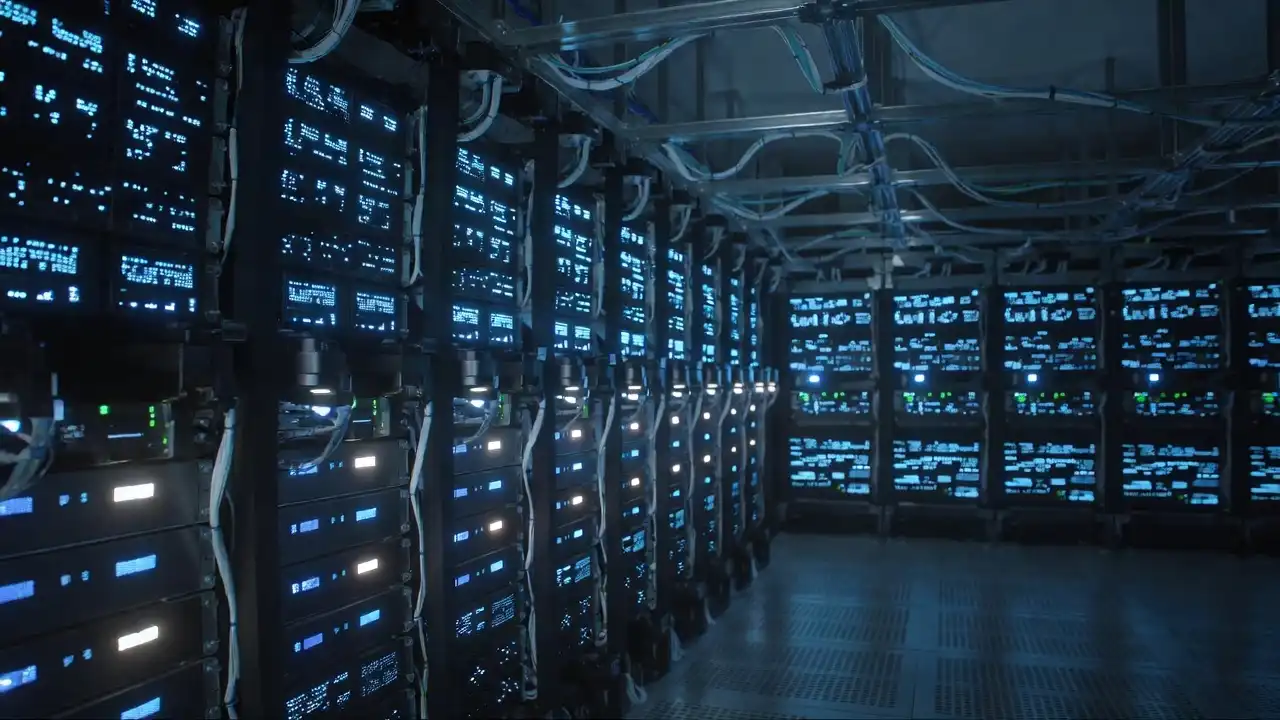
The global artificial intelligence boom is running head-on into a wall of intense public resistance across the United States. While Wall Street analysts and Silicon Valley executives celebrate the spectacular rise of generative intelligence and pour hundreds of billions of dollars into high-performance computing, the physical infrastructure required to run these advanced models has triggered a massive, bipartisan backlash on Main Street. This quiet, grassroots rebellion is rapidly reshaping local zoning laws, threatening state-level energy grids, and forcing politicians to rethink their relationship with the technology sector.
The depth of this public anger is clearly documented in recent polling data. A national survey conducted by Reuters and Ipsos revealed that only one-third of Americans approve of the current, rapid pace of data-center construction. Even more strikingly, a minuscule 14 percent of respondents stated they would support a data center being built inside their own local community. This overwhelming opposition represents a rare point of absolute consensus in an otherwise deeply polarized country, uniting progressive environmentalists, conservative farmers, and suburban families under a single, highly vocal banner.
As this public backlash spreads from rural town halls to high-stakes national campaigns, the political calculation for lawmakers has changed dramatically. For years, politicians of all political affiliations eagerly offered massive tax breaks, cheap land, and utility discounts to attract data center developers, viewing them as symbols of modern economic progress. Today, those same development projects have transformed into major political liabilities, leaving candidates scrambling to balance the economic promise of technological investment with the fierce, protective anger of the voters who control their political futures.
The Battle of Saline: Protesting “The Barn” and the Stargate Project
The absolute epicenter of this modern industrial battle is Saline Township, Michigan. Located just a short drive from the historic manufacturing hubs of Detroit, Saline Township looks like any other traditional American farming community. The landscape is dominated by vast, rolling fields of corn and soybeans, towering silver silos, and legacy grain elevators that have supported local families for generations.
Today, this quiet, rural landscape is being dramatically redefined by the construction of one of the largest computing facilities in the world. Just down the road from the township’s historic farms, massive construction cranes reach above towering, heavily guarded security fences, working around the clock to construct a sprawling, 250-acre computing complex. Officially dubbed the Stargate project, but referred to by local residents simply as “The Barn,” this massive infrastructure development has turned the town of 2,400 people into the nation’s latest flashpoint over artificial intelligence.
Local residents, led by community organizers like Tammie Bruneau, have mobilized an aggressive, highly organized campaign to halt the project. They argue that the massive industrial facility represents an existential threat to the very character of their town, destroying prime agricultural land, creating constant construction noise, and threatening to deplete the local water table. Bruneau expressed the community’s frustration, stating flatly that the vast majority of local families have absolutely no interest in hosting a massive industrial development in their backyards, choosing instead to prioritize the preservation of their historic farmland and rural lifestyle.
The Massive Sixteen-Billion-Dollar Consortium
The economic scale of the Stargate project is truly staggering. The development is being built by a highly powerful, private-sector consortium that includes some of the most valuable corporations in the world: Oracle, OpenAI, Related Digital, Blackstone, and Walbridge. Together, these entities plan to spend an estimated $16 billion to build and outfit the 250-acre campus, equipping it with the next generation of liquid-cooled servers, advanced fiber-optic networks, and high-performance computing infrastructure.
This massive scale is required because next-generation artificial intelligence models, such as OpenAI’s upcoming frontier architectures, require unprecedented amounts of raw computational power. To train these models, supercomputers must run millions of complex mathematical operations simultaneously, requiring a continuous, massive supply of electricity and water that exceeds the consumption of entire cities.
For the developers, Saline Township offered the perfect combination of cheap land, proximity to major transmission grids, and favorable tax incentives. However, the consortium underestimated the depth of local community opposition, which has transformed their highly anticipated flagship project into a primary symbol of corporate overreach.
The Threat to Saline’s Water and Power Infrastructure
The primary technical concerns raised by local residents are fully grounded in the physical realities of data center operations. Advanced computing clusters generate extraordinary amounts of heat, requiring continuous cooling to prevent the delicate silicon processors from melting under heavy operational loads.
To cool these facilities, developers traditionally rely on massive evaporative cooling systems that consume millions of gallons of water daily from local underground aquifers.
For a farming community like Saline, which relies entirely on these same aquifers to irrigate its crops and supply drinking water to residential homes, the threat of groundwater depletion is a terrifying prospect. Local farmers worry that the data center’s massive, continuous draw will lower the water table, drying up their private wells and destroying their crop yields during dry summer seasons.
Additionally, residents are highly concerned about the stability of the local electrical grid. The Stargate project is projected to consume more electricity than the surrounding county, raising fears that local households will face rising utility bills and a higher risk of brownouts during peak summer heatwaves.
The Regulatory Firestorm: From Town Councils to Senate Campaigns
The rebellion in Saline is not an isolated local event; it is part of a massive, state-wide regulatory firestorm that has paralyzed developers across Michigan. At least 13 separate data center projects are currently in various stages of planning and construction across the state, and almost every single one is facing intense, organized community opposition.
The strategic pushback has already achieved several major victories, proving that local citizens can successfully disrupt the plans of multi-billion-dollar technology conglomerates. In Washington Township, developers were forced to completely withdraw their plans for a major data center campus after local residents mobilized a massive petition drive and flooded town council meetings to protest the development.
Similarly, in Augusta, local petitioners successfully stalled a major development project, forcing a public, township-wide rezoning vote that has placed the future of the facility in serious legal jeopardy.
Michigan Democrats Grapple with AI Anger Ahead of the August Primaries
The growing public anger over data centers has quickly escalated into a major political crisis for the state’s Democratic Party. With Michigan’s high-stakes primary election for the U.S. Senate scheduled for August 4, 2026—a critical race that will help determine which political party controls the balance of power in Washington—candidates are finding themselves caught in a difficult, highly uncomfortable political bind.
Democratic candidates must navigate a delicate path, balancing the demands of labor unions and business groups, who support data center development for the high-paying construction jobs and tax revenues they generate, with the fierce opposition of local voters.
If a candidate embraces the tech industry’s expansion plans too enthusiastically, they risk alienating the highly motivated, bipartisan base of voters who are prepared to punish any politician they perceive as favoring corporate interests over local community protection. This political tension has forced candidates to modify their platforms, with many now calling for strict, state-level environmental reviews and the elimination of the lucrative tax exemptions that historically attracted data center developers to the state.
The Danger of Utility Bill Surges for Regional Communities
The political debate is also being driven by a growing public awareness of the direct financial costs that data centers impose on everyday utility ratepayers. When a utility company must build new high-voltage transmission lines, expand its power plants, or upgrade its substations to connect a massive new data center, those capital costs are traditionally added to the utility’s broader rate base.
This means that regular residential households and small businesses are forced to subsidize the infrastructure upgrades requested by a single, highly profitable technology giant.
A recent energy market analysis warned that in some states with high data center concentration, these infrastructure upgrade costs could cause retail electricity bills for local households to spike by up to 50 percent by 2030.
This regressive tax on consumer income is fueling a massive wave of public anger. Voters are demanding that state regulators implement new, strict tariff structures that force tech companies to pay the full, real cost of their own power grid upgrades, protecting regular citizens from paying the price for Silicon Valley’s artificial intelligence ambitions.
The Environmental and Physical Strain of the AI Buildout
The public backlash against data centers is also being fueled by a growing awareness of the broader environmental and social costs associated with these massive computing facilities. As these complexes expand, they are placing unprecedented, highly visible strain on the air, water, and communities that host them, leading to a profound reassessment of the technology’s true cost.
The physical footprint of these data centers is no longer invisible. They are massive, heavily guarded industrial fortresses that completely alter the visual character of the rural communities they occupy.
Furthermore, the constant, high-frequency hum generated by the massive cooling fans and cooling towers can be heard for miles, creating a persistent source of noise pollution that disrupts the peace of once-quiet residential neighborhoods and rural farming communities.
The Cryogenic Cooling and Water Table Depletion Threat
The thermodynamic reality of running high-performance graphics processing units requires a constant, highly reliable cooling system. While some advanced data centers are beginning to transition to closed-loop liquid cooling, many older and mid-tier facilities continue to rely on open-loop evaporative cooling systems, which lose millions of gallons of water daily to evaporation.
In states like Arizona, Utah, and Oregon, which are already struggling with historic, long-term droughts, allowing a data center to consume billions of gallons of water is increasingly viewed as an ecological disaster.
Local agricultural groups have formed powerful alliances with environmentalists, arguing that the government must prioritize the preservation of water for human consumption and food production over the computational needs of artificial intelligence models, turning the water table into a major geopolitical battleground.
The Air Quality and Unpermitted Power Generation Crises
The environmental controversy reached a boiling point following a recent investigation into Elon Musk’s xAI data center complex in Southaven, Mississippi, and Memphis, Tennessee. The investigation revealed that the company had installed 59 unpermitted natural gas turbines to generate its own off-grid, continuous electricity, bypassing federal Clean Air Act permitting laws.
The physical consequences of this unpermitted power generation are devastating for the local, predominantly Black communities living near the facility.
At full capacity, the 59 turbines have the potential to release more than 5,300 tons of smog-forming nitrogen oxides, carbon monoxide, and cancer-causing formaldehyde into the local atmosphere every year.
This unpermitted pollution has triggered massive federal lawsuits from the NAACP and local advocacy groups, reinforcing the public perception that technology companies treat marginalized communities as lawless “sacrifice zones” to bypass environmental regulations in the name of rapid innovation.
Strategic Outlook: The Walled Cities of Compute
As the public backlash against data centers continues to accelerate across the United States, the technology industry must adapt its expansion strategies rapidly to survive. The era of securing cheap land, booking easy grid connections, and enjoying voluntary tax exemptions is over.
To continue building the physical infrastructure required for the artificial intelligence era, technology companies must transition away from their traditional, unilateral approach.
They can no longer simply announce a massive project and expect local communities to welcome them.
Instead, they must actively work to build community trust, invest heavily in independent, self-contained green energy grids, and prove that their physical presence delivers real-world, tangible benefits to the local towns they occupy.
This strategic shift will likely lead to the rise of what industry experts call “walled cities of compute.” Technology companies will increasingly avoid building their data centers in progressive, highly regulated, or resource-constrained states like New York and California, choosing instead to focus their capital investments in highly favorable, low-regulation states like Texas, Alabama, and North Dakota.
These states are actively marketing themselves as safe havens for digital infrastructure, offering streamlined permitting processes and access to vast, independent energy grids.
However, even in these business-friendly regions, the physical limits of power and water will eventually require developers to innovate, pushing them to develop advanced, water-free cooling systems, invest in localized nuclear power networks, and build more efficient software models that reduce the overall computing power required to train the next generation of global intelligence.
The ongoing battle over the American data center is far more than a simple dispute over local zoning or utility bills. It is a defining conflict over the physical and environmental boundaries of the digital age, exposing the deep, structural tensions between local community preservation and national technological ambition.
To navigate this transition successfully, the nation’s political and technology leaders must find a way to balance the absolute necessity of protecting local resources, water tables, and ratepayers with the strategic, geopolitical requirement of maintaining global leadership in the artificial intelligence era, ensuring that the country’s digital future remains secure, sustainable, and prosperous for generations to come.






