Key Points:
- Qualcomm secured a landmark agreement with TikTok’s parent company, ByteDance, to supply custom ASICs for AI data centers.
- ByteDance will purchase millions of Qualcomm’s specialized processors to support its autonomous AI agent software.
- The partnership also includes manufacturing services to help ByteDance bring its own finished chip designs to production.
- The deal marks a major milestone for Qualcomm as it expands beyond mobile processors to compete with Nvidia and AMD.
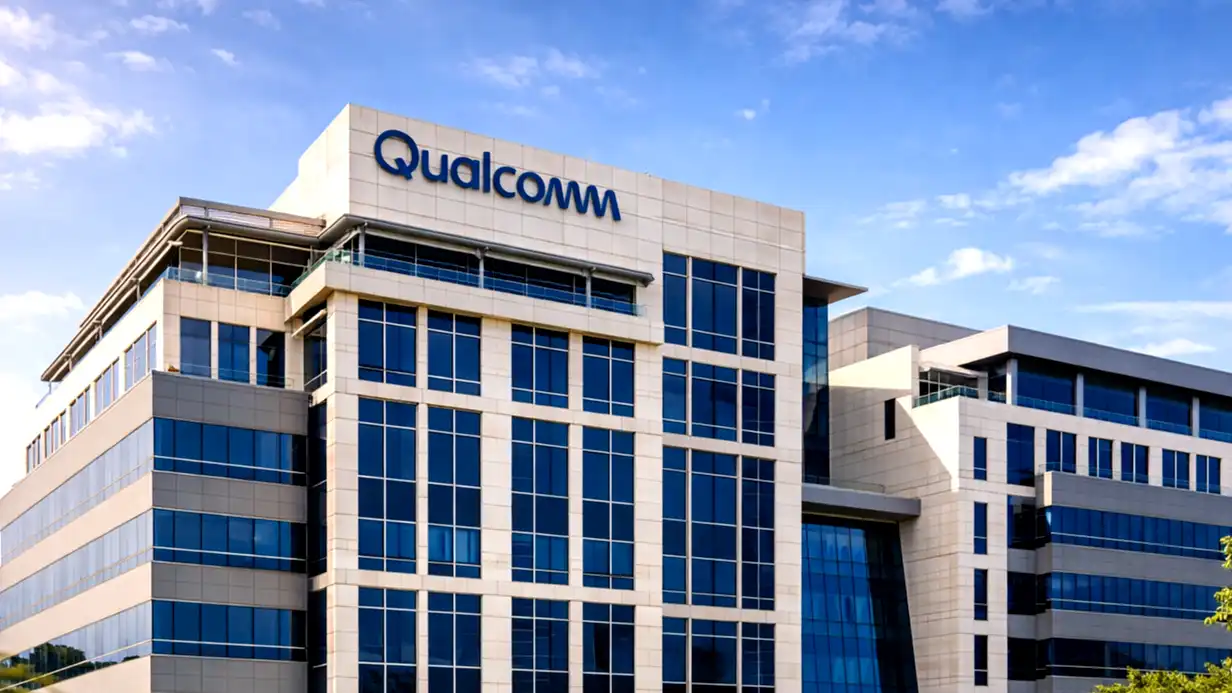
American chipmaking giant Qualcomm has secured a major foothold in the highly lucrative artificial intelligence infrastructure market. On Tuesday, May 26, 2026, Bloomberg News reported that the San Diego-based tech firm reached a significant agreement to supply custom AI-focused semiconductors to ByteDance, the Chinese technology conglomerate behind the massively popular social media platform TikTok. This high-profile partnership represents a key milestone for Qualcomm as it actively works to expand its business operations beyond smartphone processors and into the core of the global data center ecosystem.
The scale of the newly negotiated agreement is immense, with ByteDance poised to become one of Qualcomm’s earliest and most valuable high-volume customers in the data center space. Under the terms of the deal, the TikTok owner will procure millions of specialized Qualcomm processors known as application-specific integrated circuits, or ASICs. Unlike general-purpose graphics processing units (GPUs) that handle a wide variety of computing tasks, engineers design ASICs to execute a single, highly specific workload with maximum electrical efficiency. ByteDance will utilize these custom chips to run and support its rapidly expanding portfolio of autonomous AI agent software.
In addition to purchasing ready-made silicon, the partnership will also extend to advanced chip manufacturing services. Sources close to the negotiations revealed that Qualcomm has agreed to help ByteDance navigate the highly complex semiconductor fabrication process. Specifically, the American chip designer will assist the Chinese tech giant in translating an already completed, in-house custom chip design into a finished physical semiconductor, ready for mass production. This collaborative engineering effort will allow ByteDance to accelerate its proprietary hardware timeline while utilizing Qualcomm’s deep industry relationships with global silicon foundries.
This major hardware acquisition comes as ByteDance aggressively scales up its investments in artificial intelligence. The Beijing-headquartered firm recently raised its annual AI infrastructure budget by a massive 25% to reach 200 billion yuan (approximately $29.4 billion). A significant portion of this multi-billion-dollar fund will go toward expanding Doubao’s computational capacity, which established itself as China’s most popular and most downloaded AI chatbot last year. By deploying millions of Qualcomm’s power-efficient ASICs, ByteDance can dramatically reduce its data center electricity bills while accelerating its autonomous software capabilities.
For Qualcomm, the ByteDance win validates the ambitious product roadmap laid out by Chief Executive Officer Cristiano Amon. During Qualcomm’s Q2 2026 earnings call last month, Amon outlined a three-part data center strategy comprising central processing units, dedicated inference accelerators, and custom ASICs. While Amon vaguely referenced active “engagement” with several major cloud customers during that call, the formalization of the ByteDance agreement proves that those high-level discussions are translating into real-world commercial orders.
The landmark deal has also ignited intense investor enthusiasm on Wall Street. Following the initial Bloomberg report on Tuesday, Qualcomm’s shares jumped as much as 8.3% in morning trading, hitting a record intraday high. The stock eventually closed the session up approximately 5%, reflecting strong market confidence in Qualcomm’s ability to capture a slice of the booming AI computing market. As corporate capital spending on data center hardware continues to climb, investors are increasingly betting that Qualcomm can establish itself as a highly profitable alternative to market leaders.
Furthermore, the strategic partnership successfully navigates the increasingly tight U.S. export controls on advanced technology. Over the past two years, Washington has implemented strict regulations to prevent Chinese firms from obtaining high-end AI processors, such as Nvidia’s flagship H100 and Blackwell chips. However, because Qualcomm’s custom ASICs do not exceed the legally permitted computing performance limits under existing U.S. export rules, the transaction remains completely compliant. This allows major manufacturing partners such as Taiwan Semiconductor Manufacturing Company (TSMC) to fabricate chips without incurring regulatory exposure.
By using custom ASICs rather than general-purpose GPUs, ByteDance is also taking advantage of superior efficiency-per-watt ratios. While training complex frontier models still requires massive clusters of advanced GPUs, running completed models—a process known as inference—is far more efficient on tailored ASICs. This technological shift is opening up a highly contested layer of the semiconductor industry. As Qualcomm enters the fray with its new product lines, it joins a crowded competitive landscape that includes established silicon suppliers like Broadcom, as well as in-house custom chip designs from Amazon, Google, and Meta.
Ultimately, the successful partnership between Qualcomm and ByteDance highlights a profound structural shift in the global technology industry. As the demand for localized AI agents and real-time computing continues to expand, hardware providers must find creative ways to supply compliant, low-cost, and energy-efficient silicon. By delivering its first major batch of custom data center chips to one of the world’s most data-intensive platforms, Qualcomm has proven it can compete outside the smartphone market, securing a vital position in the next generation of global AI infrastructure.