The global technology sector is standing on the brink of a major computational revolution. For several decades, quantum computing carried a persistent reputation as a highly complex, theoretical field that was always five years away from practical use. That narrative is changing rapidly.
In June 2026, researchers, corporate leaders, and national security officials acknowledged that we have entered a new era of quantum capability, where early-stage hardware is beginning to solve real-world problems that remain far beyond the reach of traditional supercomputers.
This transition is not just a scientific curiosity; it is a critical geopolitical priority. The race to achieve quantum supremacy has evolved into a high-stakes competition between the world’s major economic powers.
Earlier this week, the United States government made a historic move by signing executive orders to accelerate national quantum research, aiming to build a commercially viable quantum computer by 2028.
As the public and private sectors pour billions of dollars into the industry, the technology is moving out of physics laboratories and into corporate boardrooms, forcing businesses across multiple sectors to prepare for a permanent shift in how they process information.
The Fundamental Physics of Quantum Computing
To understand why quantum computing represents such a massive leap in processing power, one must look closely at how these machines manipulate data. Traditional computers, from standard smartphones to the world’s fastest supercomputers, operate on a binary system.
They store and process information using classical bits, which can exist in only one of two states: a 0 or a 1. Every application, video, and spreadsheet we use today is built on billions of these simple binary choices.
The Shift from Binary Bits to Superposition Qubits
Quantum computers do not use classical bits. Instead, they operate on quantum bits, commonly referred to as qubits. Thanks to the counterintuitive laws of quantum mechanics, qubits can exist in a state of superposition. This means a qubit can represent a 0, a 1, or both states simultaneously.
A simple analogy helps to illustrate this difference. A classical bit is like a coin lying flat on a table; it can only show heads or tails, 0 or 1. A qubit in superposition is like a spinning coin.
While the coin is spinning, it exists in a blur of possibilities, representing both heads and tails at the same time until it is measured and stops spinning.
This superposition of states allows a quantum computer to evaluate millions of potential pathways at the same time, offering an exponential leap in processing power for specific classes of problems.
Entanglement and the Phenomenon of Instantly Correlated States
The computational power of superposition is multiplied by another strange quantum phenomenon known as entanglement. When qubits become entangled, they develop a deep, physical link that connects their properties, regardless of how far apart they are.
Measuring the state of one entangled qubit instantly reveals the state of its partner, even if they are placed on opposite sides of a laboratory.
For a quantum computer, entanglement allows the processors to share information and perform coordinated operations across the entire system instantaneously.
When you add a single qubit to a classical computer, you get a small, linear increase in processing power.
When you add a single qubit to an entangled quantum system, you double the machine’s computational capacity.
A quantum computer running on just 300 fully entangled logical qubits can theoretically represent more mathematical states simultaneously than there are atoms in the observable universe, enabling calculations that are simply impossible for traditional silicon chips.
Using Quantum Interference to Amplify Correct Answers
The third core principle of quantum computing is interference. When a quantum computer runs an algorithm, it explores multiple potential pathways at the same time.
To find the correct answer, the machine uses quantum interference to alter the probabilities of these states.
This process works much like noise-canceling headphones. The quantum algorithm creates “destructive interference” to cancel out the waves representing incorrect answers, while simultaneously creating “constructive interference” to amplify the wave representing the correct solution.
By systematically drowning out the wrong answers and boosting the right one, the quantum computer can converge on the correct solution with incredible speed, turning weeks of supercomputing calculations into minutes of local processing.
What Quantum Computers Can Actually Do: High-Value Use Cases
It is important to clarify that quantum computers are not built to replace standard laptops or smartphones. They will not make video streaming faster or improve the performance of basic database software.
Instead, they are highly specialized machines designed to solve specific, highly complex mathematical problems where the number of possible outcomes is simply too large for classical computers to handle.
Molecular Modeling and Next-Generation Drug Discovery
One of the most promising and immediate applications of quantum computing is in molecular modeling and drug discovery.
In traditional pharmaceutical research, developing a new medicine requires years of trial and error, as researchers chemically synthesize and test millions of different molecules to see if they can bind to specific disease-linked proteins.
This process is slow because classical supercomputers struggle to simulate the behavior of molecules.
Even a relatively simple molecule with just a few hundred atoms contains a complex web of interacting electrons.
Simulating these atomic bonds requires representing more quantum states than any classical supercomputer can handle, forcing researchers to rely on approximations.
A quantum computer can model these chemical bonds natively because it operates on the same quantum-mechanical laws that govern the molecules themselves.
By simulating atomic interactions with absolute precision, quantum computers can help researchers quickly identify promising pharmaceutical compounds, slashing the time and cost required to develop life-saving treatments for aggressive cancers, dementia, and genetic disorders.
Accelerating the Battery Revolution and Clean Energy Materials
The material science sector is experiencing a similar wave of interest in quantum technology. To build a sustainable global economy, we must develop better battery chemistries, more efficient solar cells, and modern carbon-capture materials.
Currently, lithium-ion batteries are reaching their physical limits in terms of energy density and charge times.
Developing next-generation solid-state batteries or hydrogen fuel cells requires a deep understanding of molecular chemistry on a microscopic scale.
By modeling chemical reactions at the atomic level, quantum computers can help materials scientists discover new alloys, catalysts, and electrolyte compounds, accelerating the green energy transition and reducing the world’s dependence on scarce raw materials.
Optimizing Global Logistics and Financial Risk Models
In the corporate world, quantum computing promises to revolutionize logistics and financial modeling. Large multinational corporations must constantly solve complex optimization problems, such as routing thousands of delivery trucks, scheduling commercial airline fleets, or managing global supply chain networks.
These optimization problems, commonly known as the “traveling salesperson problem,” quickly become too large for classical computers.
As you add more destinations, warehouses, and variables like weather and traffic, the number of potential routes grows exponentially.
Quantum computers can evaluate all these pathways simultaneously, finding the most efficient, cost-effective routes in seconds, saving shipping companies billions of dollars in fuel and operational costs.
The financial sector is also investing heavily in technology. High-end investment firms and banks rely on complex Monte Carlo simulations to calculate financial risk, price exotic derivatives, and manage multi-billion-dollar portfolios.
By running these simulations on quantum processors, financial analysts can analyze market risk in real-time, helping to prevent catastrophic losses and improve the returns on retirement funds and corporate assets.
The Looming Cryptographic Threat and Post-Quantum Migration
While quantum computing promises to solve massive scientific and industrial challenges, it also poses an unprecedented threat to global digital security.
Most modern encryption systems, which protect online banking transactions, corporate emails, and highly classified military communications, rely on public-key cryptography.
These encryption systems work because they are built on mathematical problems that are incredibly easy to verify but take classical supercomputers billions of years to solve, such as factoring massive prime numbers.
A sufficiently advanced quantum computer running Shor’s algorithm could solve these prime-number problems in minutes, effectively rendering modern digital security obsolete.
This vulnerability has forced governments to act. Under the latest federal security guidelines, United States government agencies must fully migrate their high-value digital assets to post-quantum cryptography by 2031 at the latest.
This massive IT modernization effort requires transitioning thousands of secure networks to new, quantum-resistant mathematical algorithms, ensuring that state secrets and personal financial data remain secure before quantum hacking tools become commercially available.
The High-Stakes Global Quantum Race: US, China, and Europe
As the strategic importance of quantum technology becomes clearer, the race for dominance has escalated into a major geopolitical conflict. The global quantum computing market has already exceeded $10 billion in 2026, with major investments coming from both national governments and private venture capital.
The US Government’s $2 Billion Corporate Equity Stakes
The United States government is taking an increasingly active role in funding the domestic quantum ecosystem.
Earlier this week, the Trump administration took a bold, venture-style step by investing $2 billion to acquire direct equity stakes in nine domestic quantum computing companies.
The largest recipient of this federal funding was IBM, which operates as a primary leader in superconducting quantum hardware.
Rather than relying on traditional academic research grants, this direct investment model represents an attempt by Washington to bypass bureaucratic bottlenecks and accelerate the commercialization of quantum processors.
By acting as a direct venture investor, the US government aims to ensure that the intellectual property and manufacturing capabilities of the next quantum revolution remain firmly within American borders.
The Geopolitical Battle with China’s State-Funded Model
The US investment is a direct response to China’s aggressive, state-directed quantum development program.
Beijing has poured billions of dollars into constructing massive research facilities, such as the National Laboratory for Quantum Information Sciences in Hefei.
Unlike the American system, which relies on a mix of private venture capital and public grants, China’s state-directed model allows the government to rapidly channel immense resources into specific technology areas, such as satellite-based quantum communications and advanced quantum sensors.
U.S. intelligence and defense officials have warned that falling behind in this race could have devastating consequences, potentially allowing China to neutralize Western encryption systems while securing its own communications against foreign surveillance.
Europe’s Sovereignty Push and Venture Capital Influx
While the US and China dominate the headlines, Europe is also working to protect its technological sovereignty.
According to the newly released “State of Quantum 2026” study, European startups are raising record amounts of venture capital, with firms like IQM Quantum Computers and Riverlane securing major funding rounds to build localized quantum hardware and software.
European leaders are increasingly concerned about relying on American or Chinese cloud providers to run their sensitive computing workloads.
By supporting a domestic quantum ecosystem and hosting localized data centers, Europe aims to ensure that its businesses, healthcare systems, and defense agencies can access quantum processing power without compromising their strict data privacy regulations, maintaining European independence in a rapidly changing technological landscape.
Technical Roadblocks: The Long Road to Fault Tolerance
Despite the massive financial and political momentum, the physical challenges standing in the way of a commercial quantum computer remain immense. Qubits are incredibly fragile and sensitive to their surrounding environment, making the engineering of these systems one of the most difficult challenges in modern science.
The primary obstacle is environmental noise. Even the slightest physical vibration, electromagnetic interference, or temperature change can cause qubits to lose their quantum state, a destructive process known as decoherence.
When decoherence occurs, the system loses its data, and the calculation fails.
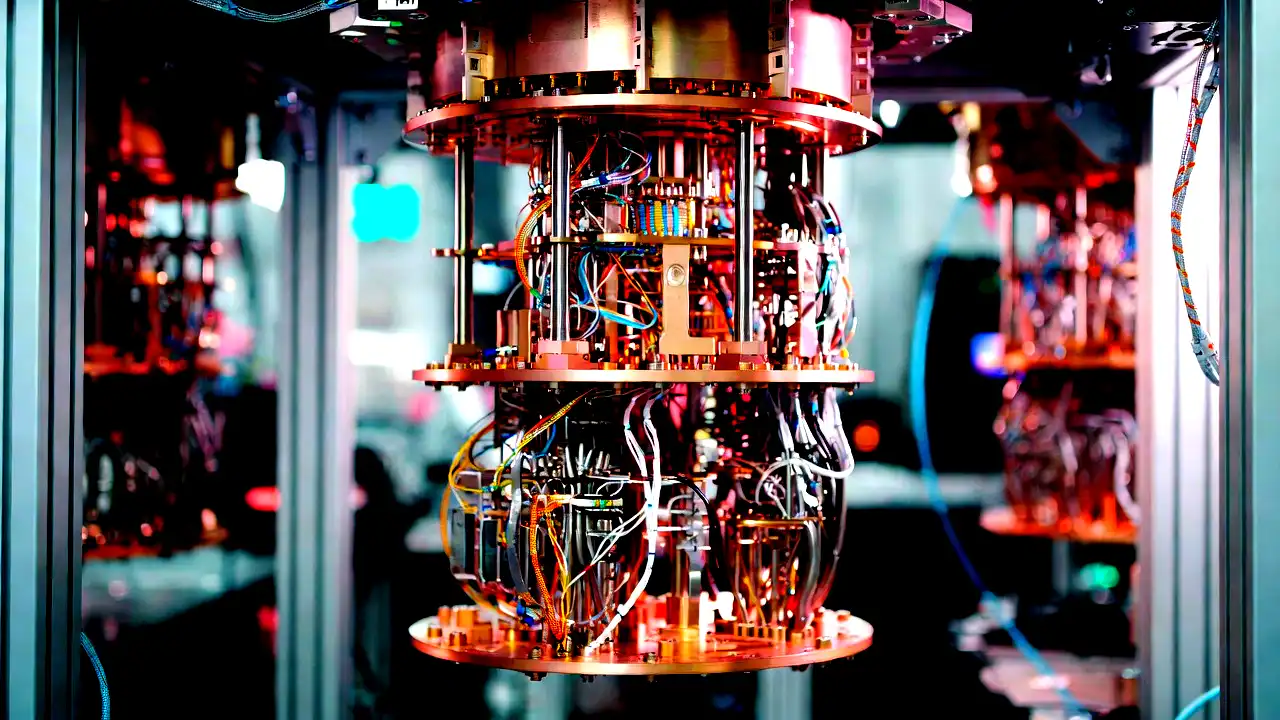
To prevent decoherence, most current quantum computers must be housed in highly specialized dilution refrigerators that cool the processors to near absolute zero—approximately -459 degrees Fahrenheit, which is actually colder than deep space.
These massive, expensive cooling systems make current quantum computers highly delicate and limit their deployment to specialized data centers.
Furthermore, scientists must solve the problem of quantum error correction. Because physical qubits are so prone to errors, researchers cannot rely on them alone to perform complex calculations.
Instead, they must bundle thousands of “physical” qubits together to create a single, highly stable “logical” qubit.
Most experts agree that a commercially relevant quantum computer will require thousands of stable logical qubits to perform useful tasks like molecular modeling or cryptographic decryption.
To achieve this, engineers must build systems containing millions of physical qubits, a massive jump from today’s systems that contain only a few hundred physical qubits.
Scaling these systems while maintaining low error rates is an engineering challenge of epic proportions, and the timeline for achieving full fault tolerance will likely extend into the next decade.
The Path Forward for Quantum Technology
The global push for quantum dominance is officially entering a new phase. By committing billions of dollars in federal funding and establishing aggressive timelines for research and deployment, national governments have signaled that quantum computing is no longer a distant theoretical dream, but an imminent geopolitical reality.
While the technical hurdles are immense, the potential rewards are far too large to ignore. From transforming pharmaceutical research and clean energy materials to redefining global logistics and cybersecurity, quantum computers are set to reshape the modern world.
As the countdown to 2028 begins, the race to build the world’s most powerful computer is officially on, and the nations and companies that successfully navigate these physical and financial challenges will lead the global technology landscape for decades to come.