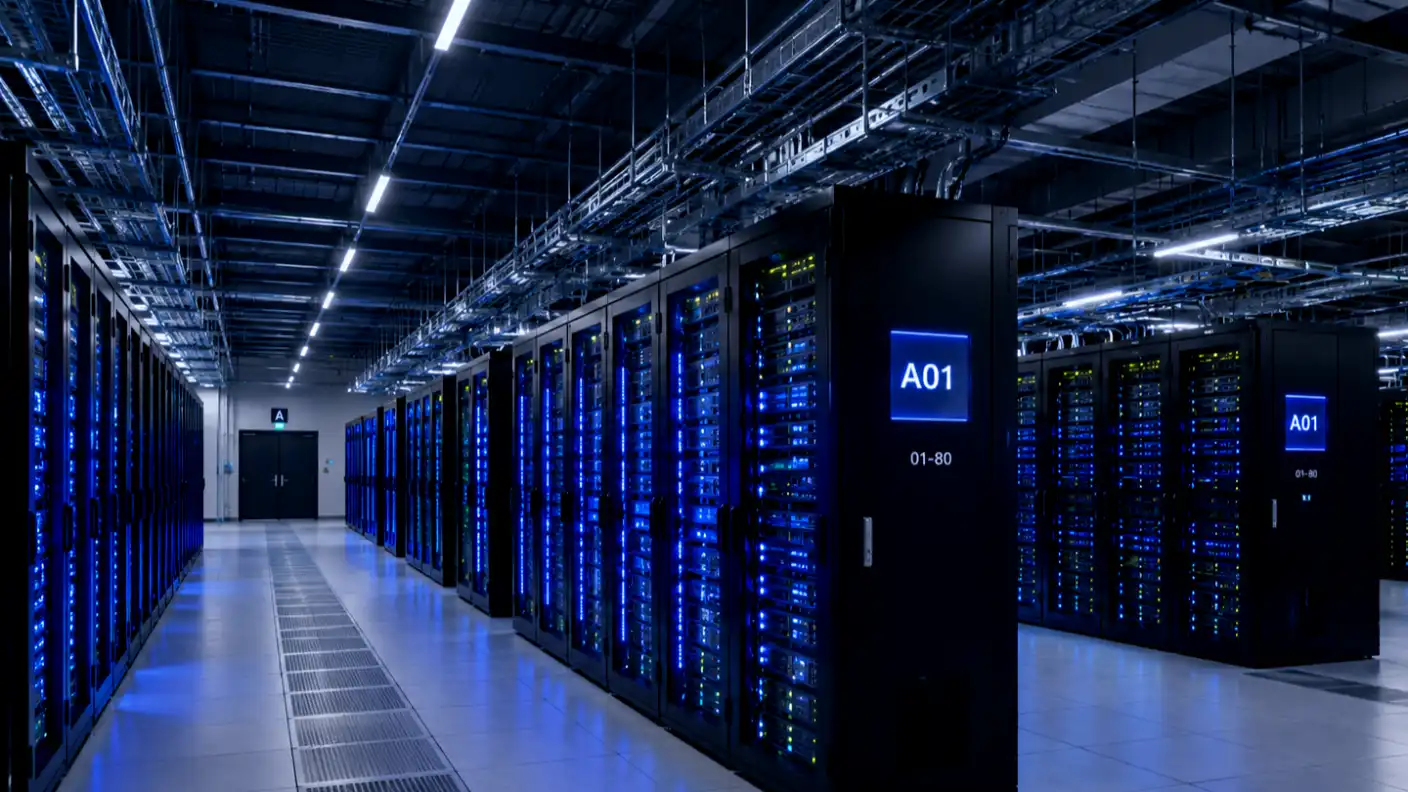
A massive wave of hyperscale artificial intelligence data center construction across the Asia-Pacific region is sparking intense public backlash as local communities, environmental advocates, and municipal utilities confront the immense resource demands of modern computing infrastructure. From the southern tip of Malaysia and the industrial outskirts of Tokyo to the dense metropolitan suburbs of Seoul and Mumbai, the rapid influx of high-density server campuses is straining electrical power grids, depleting municipal drinking water reserves, and driving up living costs for everyday citizens.
The regional infrastructure boom was initially welcomed by federal governments eager to capture a share of the global artificial intelligence economy. Technology conglomerates, including Microsoft, Google, Amazon Web Services, ByteDance, and Nvidia, committed tens of billions of dollars to build massive server hubs across Southeast Asia and East Asia. However, the sheer scale of these projects has overwhelmed local utility networks. In premier computing corridors like Johor, Malaysia, projected data center power demand has surged toward 5.0 gigawatts, an amount of electricity exceeding the entire domestic residential consumption of the state.
The growing public resistance is forcing national governments and municipal planning boards to reconsider unconstrained digital expansion. Host communities are questioning the fundamental economic bargain of data centers: facilities that absorb millions of liters of treated freshwater daily and consume vast quantities of subsidized electricity while creating very few permanent local jobs once construction ends. As governments enact strict Power Usage Effectiveness standards, impose mandatory water-conservation rules, and halt new utility connections, the data center industry in Asia is encountering a structural roadblock that threatens the expansion timelines of global cloud platforms.
An Infrastructure Gold Rush Collides with Local Communities
The explosion of data center investments across Asia is the direct result of geographic realignments and surging demand for artificial intelligence compute capacity. For years, Singapore functioned as the undisputed data center capital of Southeast Asia, leveraging its political stability, robust subsea fiber connectivity, and business-friendly legal frameworks to host more than 60% of the region’s total computing capacity.
However, in 2019, Singapore enacted a formal moratorium on new data center construction after computing facilities grew to consume roughly 7% of the island nation’s total electricity supply.
Although Singapore later lifted the restriction under strict green standards that cap new capacity allocations near 300 megawatts, the initial moratorium forced global cloud operators and colocation developers to search for alternative hubs across neighboring nations.
This capital wave flooded into regional neighbors across Southeast and East Asia. Commercial real estate developers acquired thousands of acres of industrial land, building high-density server halls to satisfy the computational appetite of regional enterprise applications, e-commerce networks, and generative artificial intelligence training runs.
Yet, this rapid influx of capital occurred without comprehensive regional infrastructure planning. In many emerging computing hubs, local electrical grids and water distribution systems were designed to support light manufacturing and residential neighborhoods, not gigawatt-scale server campuses that operate at 100% capacity around the clock.
Unpacking the Multibillion-Dollar Shift from Singapore to Johor and Southeast Asia
The primary beneficiary of Singapore’s capacity constraints was the neighboring Malaysian state of Johor, situated directly across the narrow Johor Strait. International developers rushed to acquire land in industrial corridors like Iskandar Puteri, Nusajaya Tech Park, and Sedenak Tech Park, marketing the region as an ideal low-cost overflow hub for Singaporean data traffic.
The financial scale of the resulting investment boom transformed the regional economy:
- Global technology giants and colocation operators, including ByteDance, Princeton Digital Group, Bridge Data Centres, GDS Holdings, and YTL Power, committed more than $15 billion to construct hyperscale campuses in southern Malaysia.
- Microsoft acquired massive land parcels in Kulai to build a dedicated cloud data center region.
- Total planned and under-construction data center capacity in Johor has expanded past 3.0 gigawatts, with long-term developer pipelines tracking toward 5.0 gigawatts before the end of the decade.
- Digital infrastructure investments accounted for more than 50% of all foreign direct investment approved in Johor over a two-year span.
However, this concentrated development created severe local imbalances, as multiple mega-campuses broke ground simultaneously within a 30-kilometer radius of the urban center of Johor Bahru.
Why Local Populations Are Protesting Power Surges and Rising Tariffs
The transition from a quiet manufacturing corridor into a global computing capital has generated widespread frustration among local residents and business owners. Community groups, consumer rights associations, and local politicians are voicing alarm over the compounding pressures placed on public resources.
The primary grievances voiced by local populations span three core areas:
- Utility Tariff Pressures: Residents worry that the state electricity utility Tenaga Nasional Berhad will pass the multi-billion-dollar cost of constructing new high-voltage substations and transmission lines onto everyday residential consumers through higher power tariffs.
- Water Resource Scarcity: Traditional evaporative cooling systems deployed inside data centers consume millions of liters of treated municipal water daily, creating fears of residential water rationing during seasonal dry spells.
- Urban Heat Islands and Noise: Massive industrial cooling towers and continuous emergency diesel generator testing generate low-frequency acoustic noise and localized heat emissions that impact surrounding residential neighborhoods.
- Lack of Community Dialogue: Municipal authorities approved mega-projects with minimal public consultation, leaving residents feeling that multinational technology corporations were given priority over local community welfare.
These local concerns have galvanized public opposition, forcing municipal councils to reject new rezoning applications and demanding transparent impact assessments.
Regional Flashpoints: From Malaysia’s Water Squeeze to Japan’s Data Center Cities
The backlash against unconstrained data center development is not isolated to a single country; it has emerged as a synchronized regional crisis across Asia’s primary economic centers. Each national market exhibits distinct localized vulnerabilities where computing growth conflicts directly with domestic resource constraints.
In Japan, high electrical power costs and municipal noise pollution have triggered civic protests in suburban Tokyo. In South Korea, severe transmission grid saturation and electromagnetic radiation fears have mobilized suburban homeowner associations against local utility projects.
Examining these distinct regional flashpoints illustrates how the global artificial intelligence boom is creating localized infrastructure crises across diverse Asian economies.
Johor’s 5-Gigawatt Capacity Wave and Drinking Water Strain
In southern Malaysia, the most explosive environmental conflict centers on municipal freshwater management. Johor has historically struggled with seasonal water supply vulnerabilities, with urban reservoirs and treatment plants periodically dropping to critical levels during extended dry weather periods.
The massive water consumption required to cool high-density server halls has alarmed local water management authorities:
- A standard 100-megawatt hyperscale data center utilizing evaporative cooling towers can consume between 3.0 million and 5.0 million liters of potable water daily, equivalent to the daily water consumption of roughly 15,000 local households.
- Local water operator Ranhill SAJ warned that supplying dozens of planned data center campuses will require an additional 300 million to 500 million liters of treated water daily by 2030.
- State environmental agencies expressed concern that prioritizing industrial data center cooling during drought emergencies could force municipal water rationing across residential neighborhoods in Johor Bahru.
- The state government of Johor established a specialized Data Center Development Committee to draft mandatory water conservation guidelines, requiring new facilities to adopt closed-loop liquid cooling or recycle industrial wastewater.
The water crisis in Johor has become a primary case study of how unmanaged digital infrastructure growth can directly threaten basic municipal public utilities.
Noise Complaints and Electrical Grid Congestion in Inzai City, Japan
In Japan, the epicenter of data center development is Inzai City, located in Chiba Prefecture, roughly 40 kilometers east of central Tokyo. Celebrating itself as Japan’s “Data Center City,” Inzai attracted dozens of international operators, including Colt Technology Services, AirTrunk, Equinix, and NTT, due to its stable geological bedrock, low earthquake risk, and proximity to trans-Pacific subsea cable landing stations.
However, the concentration of computing infrastructure has triggered fierce neighborhood opposition:
- Inzai City currently hosts more than 20 operational hyperscale facilities, with total regional power demand exceeding 1.2 gigawatts, creating severe congestion on regional transmission lines managed by Tokyo Electric Power Company.
- Local residents living adjacent to data center compounds filed formal noise complaints with municipal authorities, citing a continuous, low-frequency hum generated by hundreds of massive rooftop ventilation fans and cooling chillers running 24 hours a day.
- Property owners expressed anger that multi-story windowless concrete server blocks were constructed directly across the street from quiet suburban residential homes and public elementary schools, blocking natural sunlight and altering neighborhood character.
- The municipal government of Inzai responded by drafting strict environmental ordinances that establish mandatory acoustic noise limits, enforce minimum physical setback distances from residential zones, and require developers to plant green sound-absorbing buffer forests around facility perimeters.
The experience of Inzai City demonstrates that even in technologically advanced economies, local quality-of-life concerns can quickly halt industrial technology expansion.
Grid Saturation and Suburban Resistance in South Korea’s Gyeonggi Province
In South Korea, data center expansion has encountered intense resistance across the greater Seoul metropolitan area and surrounding Gyeonggi Province. South Korea’s advanced digital economy, nationwide 5G telecommunications coverage, and booming artificial intelligence research sector have driven an explosion in domestic computing demand.
Over 70% of South Korea’s operational data centers are concentrated within the capital region, creating acute electrical grid saturation:
- State power monopoly Korea Electric Power Corporation (KEPCO) announced that transmission lines in the Seoul metropolitan area have reached 100% capacity, forcing the utility to reject more than 40 large-scale data center grid connection applications.
- Suburban homeowner associations in cities like Goyang, Yongin, and Anyang organized massive public demonstrations, blocking the construction of underground high-voltage 154-kilovolt power lines feeding newly planned data centers over concerns regarding electromagnetic radiation.
- Local municipal governments passed ordinances requiring data center developers to secure explicit consent from surrounding neighborhood residents before receiving municipal building permits.
- The South Korean Ministry of Trade, Industry and Energy introduced a national grid decentralization policy, enacting special electricity tariff discounts to incentivize developers to construct data centers in remote provincial regions where excess power generation exists.
This suburban resistance has brought new construction in the Seoul metropolitan basin to a virtual standstill, forcing developers to look at secondary regional markets.
The Resource Imbalance: Massive Electrical Drain Versus Minimal Local Employment
The underlying driver fueling public hostility toward data centers across Asia is the stark economic mismatch between the resources these facilities consume and the tangible economic benefits they deliver to local host communities.
When a traditional manufacturing enterprise—such as an automotive assembly plant, an electronics factory, or a textile mill—invests $1 billion in a region, the investment creates thousands of direct, high-wage jobs, stimulates local retail commerce, and supports extensive local supply chains.
In contrast, a modern hyperscale data center is a capital-intensive, highly automated industrial asset that requires massive physical resources while employing very few people.
Once the initial 18-to-24-month civil construction and mechanical fit-out phase concludes, a $1 billion computing campus housing tens of thousands of servers typically employs only 30 to 60 permanent personnel, mostly security guards, facility maintenance technicians, and network administrators.
High-Density AI Racks Consuming Millions of Liters of Evaporative Water
The transition toward high-density artificial intelligence computing has dramatically amplified resource consumption. Legacy enterprise server racks historically consumed 5 to 10 kilowatts of electrical power per cabinet, allowing facilities to utilize standard air cooling systems with modest water requirements.
Modern artificial intelligence compute racks, powered by advanced graphics processors like Nvidia Blackwell and Hopper platforms, consume between 40 kilowatts and 100 kilowatts per cabinet, generating immense thermal energy:
- High-density server cabinets generate localized heat that air-cooling fans cannot dissipate, forcing operators to deploy direct-to-chip liquid cooling or massive evaporative cooling chillers.
- In tropical Asian climates where ambient temperatures and humidity remain elevated year-round, evaporative cooling systems must operate continuously at maximum throughput.
- Evaporating millions of liters of municipal water daily into the atmosphere permanently removes clean freshwater from local hydrological cycles, increasing regional drought vulnerability.
- Host communities increasingly view the consumption of scarce drinking water to cool foreign-owned cloud servers as an unacceptable environmental sacrifice.
Environmental research groups across Southeast Asia are demanding that national regulators legally mandate closed-loop, zero-water cooling architectures for all newly approved computing developments.
The Economic Disconnect: Heavy Capital Inflows with Few Permanent Local Jobs
The lack of local employment generation has become a primary political vulnerability for data center developers. In municipal council chambers across Asia, community leaders are openly questioning why local taxpayers should provide subsidized infrastructure for facilities that do not hire local workers.
The employment reality of modern digital infrastructure reveals significant limitations:
- High-Paying Technical Roles: Core artificial intelligence research, algorithm design, and senior cloud systems architecture are managed remotely by corporate engineering teams based in Silicon Valley, Beijing, Singapore, or Tokyo.
- Low Local Job Density: A multi-hundred-million-dollar computing campus generates less than 0.05 permanent jobs per million dollars invested, compared to 5 to 10 permanent jobs per million dollars in light industrial manufacturing.
- Minimal Local Economic Spillovers: Data centers do not purchase significant raw materials from local suppliers or stimulate surrounding retail businesses, operating as self-contained, high-security industrial islands.
- Tax Abatement Resentment: Public anger intensifies when technology conglomerates receive multi-year municipal property tax abatements and sales tax exemptions while generating minimal local public revenue.
This economic imbalance has eroded public support, turning local communities against projects that deliver massive corporate revenues to foreign tech platforms while leaving host cities with higher utility bills and environmental degradation.
Threatening National Decarbonization Pledges Across Coal-Heavy Grids
The massive power consumption of hyperscale data centers is also threatening national climate and carbon-reduction commitments across Asia. Many emerging Asian computing hubs, including Malaysia, Indonesia, Vietnam, and India, rely heavily on fossil fuels—primarily coal and natural gas—for 60% to 80% of their national electricity generation.
When power demand surges by gigawatts in a matter of years, public utilities cannot construct solar or wind farms quickly enough to keep pace with demand:
- Utilities are forced to keep older, carbon-intensive coal-fired power stations operating at maximum output to supply flat, continuous baseload power to server halls.
- Plans to retire polluting thermal power stations are delayed, locking emerging economies into prolonged fossil fuel dependency.
- The surge in coal-fired electricity generation drives national carbon emissions higher, directly conflicting with national net-zero greenhouse gas targets.
- Multinational technology corporations that market ambitious global sustainability pledges face accusations of greenwashing by contracting carbon-intensive grid power in developing Asian markets.
Energy policy analysts warn that unless data center development is strictly coupled with dedicated, new renewable energy additions, the artificial intelligence boom will derail Asia’s clean energy transition.
Emerging Policy Responses: Stricter PUE Standards and Mandatory Clean Power
Confronted with mounting public protests, grid saturation, and environmental strain, national governments across Asia are enacting strict regulatory frameworks to regain control over the computing sector. The era of unconditional government tax incentives and unregulated data center approvals has ended.
Governments are establishing stringent operational baselines, requiring developers to demonstrate energy efficiency, water conservation, and tangible community economic contributions before receiving zoning and utility permits.
These emerging policy responses aim to transform data centers from resource-draining burdens into responsible, sustainable industrial citizens.
Enforcing Power Usage Effectiveness Caps of 1.3 and Water Usage Baselines
A central regulatory tool deployed by Asian governments is the enforcement of mandatory efficiency metrics. Power Usage Effectiveness, commonly abbreviated as PUE, measures the ratio of total energy consumed by a data center facility to the energy delivered directly to computing servers, with a score of 1.0 representing theoretical perfection.
Asian regulatory authorities are implementing aggressive efficiency mandates:
- Singapore established the regional benchmark by requiring all new data centers to achieve a certified PUE of 1.3 or lower, alongside strict carbon-emission caps.
- The Malaysian Ministry of Investment, Trade and Industry, in collaboration with the Malaysian Investment Development Authority, is finalizing a national Corporate Data Center Framework that mandates strict PUE ceilings of 1.35 and establishes binding Water Usage Effectiveness (WUE) metrics.
- China’s National Development and Reform Commission enacted national standards requiring newly constructed mega-data centers to achieve a PUE below 1.25, while phasing out facilities with PUE scores above 1.5.
- Vietnam and Thailand are drafting national technical regulations that require data center operators to deploy high-efficiency liquid cooling and smart temperature sensors to maintain certification.
Enforcing these strict efficiency thresholds prevents operators from installing outdated, inefficient cooling equipment, forcing the entire industry to invest in cutting-edge thermal engineering.
Mandating Direct Power Purchase Agreements and Renewable Energy Additionality
To protect public utility grids and support national decarbonization targets, governments are transitioning toward a strict “user-pays” and “additionality” regulatory model. Under these progressive policies, data center operators are legally barred from simply drawing power from the public grid or purchasing existing renewable energy credits.
Instead, developers must directly finance and construct new clean energy generation:
- Direct Power Purchase Agreements (DPPAs): Malaysia, Thailand, and the Philippines have launched direct power purchase frameworks that allow technology companies to contract for clean electricity directly from private solar and wind developers.
- Renewable Additionality Rules: Requiring data center operators to fund the construction of brand-new utility-scale solar arrays, wind corridors, and battery storage projects equivalent to 100% of their peak power demand.
- Dedicated Industrial Large-Load Tariffs: Implementing specialized utility pricing tiers that require data centers to pay the full capital cost of dedicated high-voltage substation and transmission line upgrades upfront.
- Mandatory Demand-Response Integration: Requiring computing facilities to integrate automated load-shedding software capable of curtailing non-essential artificial intelligence training workloads during peak municipal grid emergencies.
These regulatory requirements ensure that the artificial intelligence infrastructure boom accelerates the broader deployment of clean energy across Asia rather than depleting public power reserves.
Strategic Implications for the Global Cloud and AI Industry
The growing public backlash and tightening regulatory landscape across Asia carry profound strategic implications for global technology giants. In corporate boardrooms in Silicon Valley, Seattle, and Beijing, technology executives are discovering that computing expansion cannot be treated as a pure software challenge.
Access to physical land, high-voltage electrical power, cooling water, and local community consent has become the primary strategic constraint capping the growth of the artificial intelligence economy.
How cloud providers adapt to these social, environmental, and political realities will determine which technology platforms maintain dominance in the fast-growing Asian digital market.
Big Tech Re-Evaluating Site Selection Across Indonesia, Thailand, and Vietnam
The regulatory tightening in established hubs like Singapore, Johor, and Tokyo is driving a geographic diversification of computing capital across secondary and tertiary Asian markets. Technology conglomerates are looking beyond saturated metropolitan corridors, seeking regional destinations that offer abundant land, excess power capacity, and welcoming regulatory environments.
International technology corporations are recalibrating their Southeast Asian investment roadmaps:
- Indonesia (Batam and Jakarta): Technology companies are investing billions of dollars to construct computing hubs on the island of Batam, located just 20 kilometers south of Singapore, leveraging special economic zone tax incentives and direct subsea cable connections.
- Thailand: Alphabet, Amazon Web Services, and Microsoft have committed over $7.7 billion in combined cloud investments, partnering with state utility EGAT to deploy green data centers powered by hydro-floating solar arrays on regional dam reservoirs.
- Vietnam: The Vietnamese government enacted streamlined foreign investment and direct power purchase regulations, attracting multi-hundred-million-dollar data center proposals to industrial parks surrounding Hanoi and Ho Chi Minh City.
- India (Secondary Hubs): Data center developers are expanding beyond saturated coastal hubs in Mumbai and Chennai, constructing mega-campuses in tier-two cities like Visakhapatnam, Kolkata, and Hyderabad.
However, industry analysts caution that unless developers engage in proactive community consultation and invest in local infrastructure, public backlash will inevitably spread to these secondary markets as computing density scales.
The Long-Term Horizon for Sustainable, Community-Aligned Asian Data Infrastructure
The ultimate legacy of the current public backlash will be the creation of a more sustainable, transparent, and community-centered data center industry across Asia. The era of building windowless, resource-draining concrete monoliths with zero regard for local communities is over.
The next decade of digital infrastructure development will be defined by transformative engineering and social innovations:
- Spatial Decentralization: Relocating large-scale, non-latency-sensitive artificial intelligence model training supercomputers to remote rural regions with abundant, stranded renewable energy resources.
- Zero-Water Closed-Loop Cooling: Universal adoption of direct-to-chip liquid cooling and advanced dry heat-rejection systems that eliminate continuous evaporative water consumption.
- Circular Waste Heat Integration: Routing warm data center cooling return fluid into municipal district heating networks, commercial fish farming tanks, and agricultural greenhouses to provide community economic benefits.
- Shared Infrastructure Investments: Technology corporations directly fund local public schools, vocational technical institutes, and municipal water purification plants to ensure host communities share in the prosperity of the digital revolution.
By aligning digital infrastructure investments with local community welfare, environmental sustainability, and clean energy development, the technology industry can build an enduring foundation that powers the artificial intelligence revolution while earning the lasting support of the people of Asia.
The widespread public backlash against the red-hot data center boom across Asia marks an essential and necessary moment of reckoning for the global technology industry. By exposing the severe physical strains that high-density computing clusters inflict on local electrical grids, municipal water reserves, and household living costs, host communities from Johor to Tokyo have proven that digital progress cannot occur at the expense of human welfare. As governments enforce strict Power Usage Effectiveness standards, mandate closed-loop liquid cooling, and require 100% renewable energy additionality, the data center sector is being forced to mature. The future of artificial intelligence in Asia belongs not to unconstrained, resource-draining mega-campuses, but to sustainable, efficient, and community-aligned infrastructure that respects local resources, strengthens public utilities, and powers a prosperous digital future for all.