

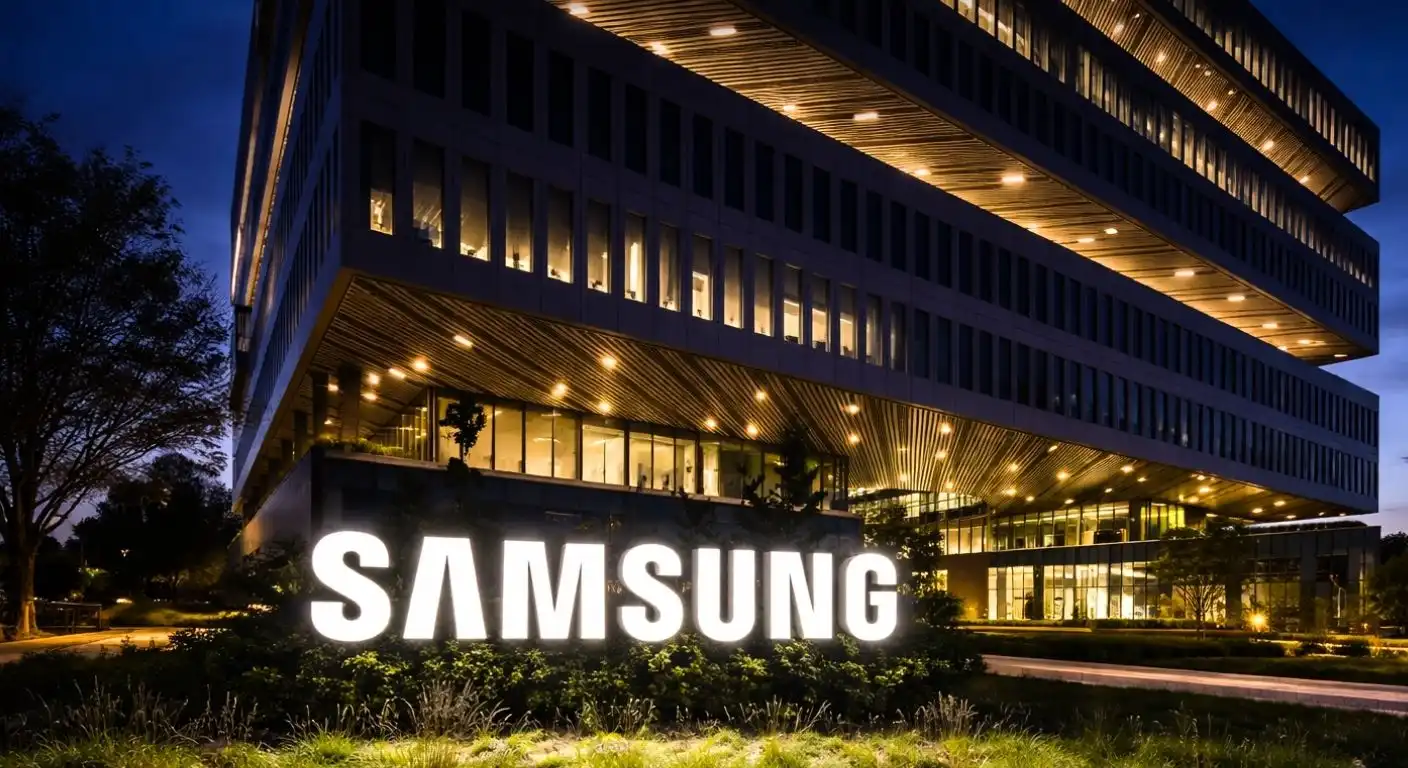
The global semiconductor industry has reached an unprecedented peak of profitability, and the epicenter of this financial shift is in South Korea. In a major announcement released in early July 2026, Samsung Electronics disclosed its preliminary earnings guidance for the second quarter of the year. The figures represent a historic milestone for the technology giant, proving that the global artificial intelligence boom is delivering a massive wave of revenue to the world’s leading memory manufacturers.
According to the central bank and corporate disclosures, Samsung’s preliminary operating profit for the April-to-June quarter reached a record-breaking 89.4 trillion won, which translates to approximately $58.43 billion.
This staggering figure represents an 1,810.26% increase—a more than 19-fold jump—compared to the 4.68 trillion won in operating profit the company recorded during the same period in the prior year.
This performance did not just exceed internal targets; it also completely bypassed market expectations, beating Bloomberg’s consensus analyst estimate of 84.2 trillion won.
The revenue figures were equally spectacular. Samsung’s preliminary revenue for the second quarter surged by 129.31% year-on-year to hit a record of 171 trillion won, equivalent to roughly $111.9 billion.
With this blockbuster performance, Samsung has officially surpassed Silicon Valley legends like Nvidia, Apple, Microsoft, and Alphabet to claim the crown for the highest quarterly operating profit of any technology company in the world.
Yet, in a bizarre twist of investor psychology, the announcement triggered a massive selloff in South Korean equities, with Samsung shares tumbling by 7% in early trading.
This deep-dive analysis explores the technical and economic forces driving Samsung’s 19-fold profit surge, the labor negotiations that influenced the final numbers, the company’s triumph over its global tech rivals, and the underlying market dynamics that explain the unexpected stock decline.
The Silicon Super-Cycle: Behind the 19-Fold Profit Surge
To understand how Samsung managed to expand its operating profit 19-fold in a single year, we must examine the specific mechanics of the global memory chip market. For most of 2023 and early 2024, the semiconductor industry suffered from a severe post-pandemic supply glut, as consumers pulled back on purchases of smartphones, laptops, and personal computers, leaving warehouses overflowing with unsold chips.
However, the rapid deployment of generative artificial intelligence by global cloud service providers completely reversed this trend.
As tech giants built out massive, liquid-cooled data centers to train and run complex artificial intelligence models, the demand for high-performance memory chips skyrocketed, triggering a severe supply shortage that has persisted into 2026.
Skyrocketing Average Selling Prices for DRAM and NAND
While high-bandwidth memory (HBM) has dominated media headlines, the primary engine driving Samsung’s profit explosion is a broad, structural recovery across the entire commodity memory market.
AI servers do not rely solely on HBM; they also require massive amounts of conventional enterprise double-data-rate 5 (DDR5) DRAM for temporary data storage and high-capacity solid-state drives (SSDs) powered by NAND flash memory to house training databases.
Citi Research and industry tracking data show that memory prices experienced dramatic increases during the second quarter.
The average selling price (ASP) of DRAM rose by approximately 44% quarter-on-quarter, while NAND ASPs surged by 53%.
Because the cost of running a semiconductor fabrication plant is largely fixed, any increase in the selling price of finished chips flows directly to the bottom line as pure operating profit, resulting in the massive margin expansion observed at Samsung.
The Memory Business Operating Profits
Industry analysts estimate that Samsung’s core Device Solutions division—the business unit responsible for designing and manufacturing memory chips—generated an operating profit of approximately 90 trillion won during the second quarter.
This means that the memory business effectively carried the entire corporate entity, compensating for minor slowdowns and rising component costs within the company’s smartphone and consumer electronics divisions.
The high profitability of these commodity memory lines has allowed Samsung to offset years of expensive research and development, turning its highly automated production lines into highly efficient cash generators.
The Union Bonus Provisions and Employee Agreements
While the semiconductor market was operating at peak efficiency, Samsung also had to navigate complex domestic labor challenges.
Earlier in the year, the company faced unprecedented collective action from its primary labor union, the National Samsung Electronics Union, which demanded higher base pay, transparent performance bonuses, and improved working conditions.
Factoring in Special Union Bonuses
To resolve the labor dispute and prevent any potential disruptions to its semiconductor fabrication plants, Samsung’s executive team negotiated a comprehensive agreement with the union.
The agreement included substantial special bonus payments and retroactive pay increases for employees, particularly those working within the high-performance memory divisions.
Crucially, Samsung chose to fully reflect the provisions for these special union bonuses in its second-quarter financial statements.
Analysts estimate that these bonus-related provisions, which included retroactive payments covering the first quarter, amounted to between 15 trillion won and 19 trillion won.
This means that the underlying operational profitability of Samsung’s memory business was actually far higher than the headline 89.4 trillion won operating profit suggests.
By absorbing these labor expenses during a period of record-breaking revenues, Samsung has secured long-term labor stability, ensuring its factories can continue operating at 100% capacity throughout the rest of the year.
Eclipsing the Global Tech Giants: Samsung’s New Profit Crown
The second-quarter earnings guidance highlights a significant shift in the global technology hierarchy. For the past several quarters, Nvidia has held the title of the world’s most profitable technology company, driven by its near-monopoly on the graphics processing units that power artificial intelligence applications.
However, the Q2 2026 data shows that Samsung has successfully challenged this dominance:
- Samsung Electronics: Leads the global technology sector with an operating profit of $58.43 billion.
- Nvidia: Follows in second place with a quarterly operating profit of $53.5 billion.
- Alphabet (Google): Ranks third, reporting an operating profit of $39.7 billion.
- Microsoft: Placed fourth with a quarterly operating profit of $38.4 billion.
- Apple: Ranks fifth, recording an operating profit of $35.9 billion.
This comparison demonstrates that while chip designers like Nvidia capture a massive share of the AI value chain, the hardware manufacturers who build the physical silicon hold immense pricing power.
Nvidia cannot build its GPUs without advanced memory, and as long as memory capacity remains constrained, Samsung can command premium prices that rival the margins of its American design partners.
Surpassing Three Years of Combined Earnings
The scale of Samsung’s second-quarter profit is even more remarkable when compared to the company’s historical performance.
The single-quarter operating profit of 89.4 trillion won exceeded the combined operating profits recorded by Samsung over the entire past three years.
From 2023 to 2025, Samsung registered a cumulative operating profit of 82.87 trillion won, including 6.57 trillion won in 2023, 32.7 trillion won in 2024, and 43.6 trillion won in 2025.
By generating more profit in three months than it did in the previous 36 months combined, Samsung has proven that the current AI-led silicon cycle is the most powerful and lucrative industrial expansion in the history of the technology sector.
The Market Paradox: Why Did Samsung Shares Fall 7 Percent?
The announcement of these record-breaking profits should have triggered a massive rally in Samsung’s stock price.
Instead, the opposite occurred. Samsung shares tumbled around 7% in early trade on the Korea Exchange, dragging down South Korea’s benchmark Kospi index by 5% and sparking a broader selloff across Asian technology stocks.
The “Sell-on-News” Phenomenon and Valuation Realities
This market decline is a classic example of the “sell-on-the-news” phenomenon that frequently occurs in public financial markets.
During the first half of 2026, Samsung’s stock price had more than doubled, as institutional investors bid up shares in anticipation of a spectacular memory upcycle.
When the spectacular earnings guidance was officially released, it confirmed what the market had already anticipated.
With no further positive surprises left to price in, institutional funds and algorithmic traders utilized the high liquidity of the earnings day to lock in their profits, selling down their positions to retail buyers.
This profit-taking created immediate downward pressure on the stock price, proving that in modern equity markets, short-term price movements are driven by trading technicals rather than underlying corporate health.
Fears of the Peak Capital Expenditure Cycle
The market pullback also reflects a deeper, structural concern among global technology investors: the sustainability of the artificial intelligence capital expenditure cycle.
Over the past two years, global cloud service providers and tech conglomerates have spent hundreds of billions of dollars purchasing AI chips and data center infrastructure.
However, as we enter the second half of 2026, Wall Street is increasingly asking whether these massive infrastructure investments will generate suitable financial returns over the long term.
If tech giants begin to slow down their AI data center expansions due to slow consumer monetization of AI software, the demand for memory chips could drop rapidly, triggering another painful oversupply phase.
By selling down Samsung shares on a record earnings day, investors are expressing a cautious approach, questioning how much further tech valuations can rise after months of outsized, uninterrupted gains.
Looking Ahead: The Projections for 2026 and 2027
Despite the short-term stock market volatility, the fundamental outlook for Samsung remains exceptionally strong. With first-half operating profits already nearing 150 trillion won, the company is on track to post its most profitable year in history.
Financial industry analysts project that Samsung’s annual operating profit for the full year 2026 will surge by 790% year-on-year to reach approximately 380 trillion won.
The growth is expected to continue into 2027, with annual operating profits estimated to climb to 570 trillion won, resulting in a cumulative two-year operating profit of 950 trillion won.
To support this massive growth and maintain its technological lead, Samsung plans to invest more than 40 trillion won ($29 billion) annually.
Most of this capital will be directed toward expanding its advanced DRAM fabrication plants and accelerating the commercialization of its next-generation HBM4 and HBM4E memory chips, which are reportedly the fastest in the world.
By securing these high-speed memory lines, Samsung is positioning itself to remain the indispensable manufacturing engine of the global AI economy for years to come.
Conclusion
Samsung’s second-quarter preliminary earnings guidance for 2026 represents a historic triumph for the South Korean technology giant. The 19-fold operating profit surge to 89.4 trillion won proves that the company has successfully capitalized on the global artificial intelligence boom, eclipsing Silicon Valley icons to claim the crown of the world’s most profitable technology company.
While short-term trading dynamics and concerns over the peak capex cycle have triggered a temporary pullback in the stock price, the structural fundamentals supporting Samsung’s silicon engine have never been stronger.
As the digital world continues to demand faster processors, larger storage arrays, and more advanced neural networks, Samsung’s position at the center of the global hardware supply chain remains secure.
The era of artificial intelligence is paved with silicon, and Samsung has demonstrated that it possesses both the technology and the scale to lead this industrial revolution into the future.






