Key Points:
- SoftBank’s stock surged over 12 percent, leading a spectacular, continent-wide rally in Asian technology equities.
- The historic stock surge followed news of a groundbreaking framework peace agreement between the U.S. and Iran.
- Reopening the Strait of Hormuz collapsed global crude prices, easing inflation and interest rate concerns.
- The rally coincides with immense market optimism generated by SpaceX’s landmark $75 billion public debut.
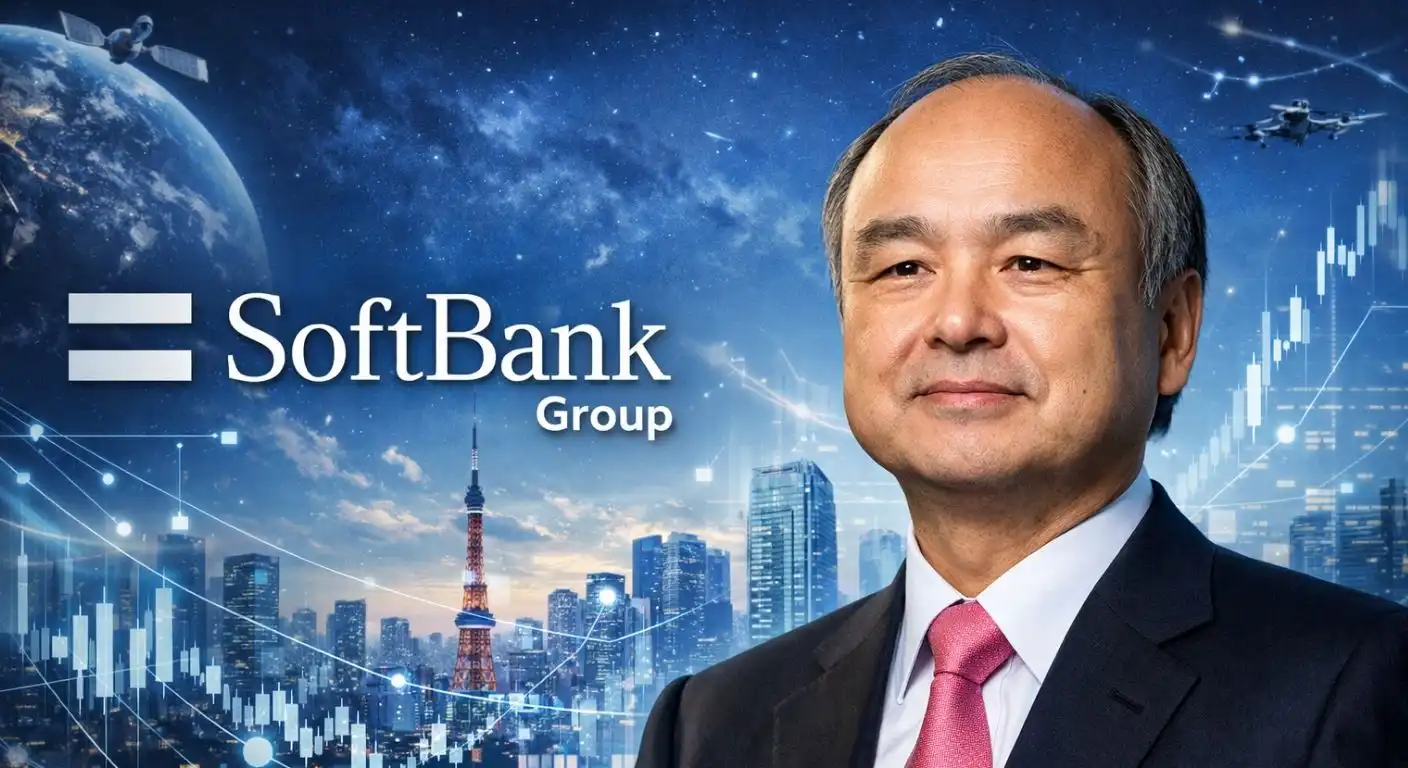
SoftBank Stock Jumps over 12% in early Monday trading, leading a spectacular, continent-wide rally in Asian technology equities. The massive single-session surge followed a historic geopolitical breakthrough, as the United States and Iran announced a comprehensive framework agreement to bring an immediate end to their military conflict. By successfully resolving the high-stakes Middle East energy crisis, the peace deal has injected intense confidence back into global risk-on markets. This rapid unwinding of geopolitical risk has allowed tech-focused investment conglomerates to recoup their recent losses and initiate a powerful, new market cycle.
A series of official announcements confirming a diplomatic end to the nearly four-month war triggered this historic market turnaround. Pakistani Prime Minister Shehbaz Sharif, who acted as the primary mediator between the two hostile states, announced that Washington and Tehran have agreed to a permanent termination of military operations on all fronts. The official signing ceremony is scheduled to take place on Friday, June 19, in Switzerland. U.S. President Donald Trump confirmed the accord on social media, announcing the immediate removal of the U.S. naval blockade of Iran and the toll-free reopening of the vital Strait of Hormuz to commercial shipping.
This expected return of normal energy flows has triggered a sharp, immediate collapse in global energy prices. Benchmark West Texas Intermediate (WTI) crude oil futures plummeted by more than 5% to trade around $80 per barrel, while Brent crude dropped over 4% to settle near $83 per barrel, updating their lowest pricing levels since early spring. Because the Strait of Hormuz handles roughly 20% of the world’s daily petroleum trade, its prolonged blockade had heavily weighed on global inflation expectations and supply chains. The sudden easing of these energy cost pressures has dramatically reduced the likelihood of further central bank rate hikes, sparking a massive rotation back into growth sectors.
As Europe and Asia’s biggest stock markets leapt overnight, the Japanese technology investment giant emerged as the strongest performer among major international tech stocks. Analysts note that SoftBank’s fortunes remain deeply tied to its massive, strategic portfolio of artificial intelligence and chipmaking assets. The conglomerate holds a dominant 90% ownership stake in advanced semiconductor designer Arm Holdings, alongside a vast portfolio of early-stage investments through its Vision Funds, including a highly lucrative multi-billion-dollar stake in ChatGPT-maker OpenAI. With its current price-to-earnings (P/E) ratio standing at an attractive 7.42x, investors viewed the stock as significantly undervalued relative to its massive AI-driven earnings potential.
This massive stock rally has officially cemented the personal financial comeback of SoftBank’s billionaire founder, Masayoshi Son. According to the latest rich list, Son recently reclaimed his crown as Japan’s wealthiest person after a four-year gap. Driven by the global AI frenzy, Son’s personal net worth swelled by an astonishing 184%, or $51.8 billion, to reach a staggering $80 billion. The massive wealth accumulation follows a record-breaking fiscal performance by SoftBank Group, which reported a historic net profit of ¥5 trillion (approximately $31 billion) for the year ended March 31, driven almost entirely by the soaring valuations of its AI and microchip holdings.
The geopolitical breakthrough did not act alone in driving Monday’s massive market euphoria; it arrived as a “double whammy” alongside the spectacular public debut of SpaceX on Friday. The rocket manufacturer priced its historic initial public offering at $135 per share, raising an unprecedented $75 billion and valuing the enterprise at $1.77 trillion. When the stock began trading, it surged by nearly 20% to close past a $2.1 trillion valuation, generating massive optimism across the global tech sector. This combination of a blockbuster tech debut and a major peace agreement has successfully unlocked a wave of pent-up investment capital, propelling major indices in Tokyo and Seoul to historic record highs.
The wave of risk-on sentiment lifted the entire Asian semiconductor and hardware landscape. In Tokyo, semiconductor manufacturing equipment makers Tokyo Electron and Advantest surged by 9.19% and 7.69%, respectively. Meanwhile, in Seoul, memory chip behemoths Samsung Electronics and SK Hynix gained 4.65% and 6.42% on the Kospi index, further solidifying their positions as the primary physical suppliers of the high-bandwidth memory chips required for advanced AI clusters. These coordinated moves show that global investors are eager to pile back into the hardware manufacturers that build the physical infrastructure of the digital age.
The extraordinary 12% surge in SoftBank’s stock demonstrates that the global artificial intelligence boom is successfully navigating major geopolitical roadblocks. By removing the primary driver of global inflation and securing key energy transit corridors, the U.S.-Iran peace deal has cleared a massive cloud of macroeconomic uncertainty. For long-term investors, the combined impact of the SpaceX public debut and the Middle East resolution has set the stage for a sustained, tech-led economic expansion. As the formal signing ceremony in Switzerland approaches, the newly re-energized market leader remains exceptionally well-positioned to drive the next wave of global technological innovation.