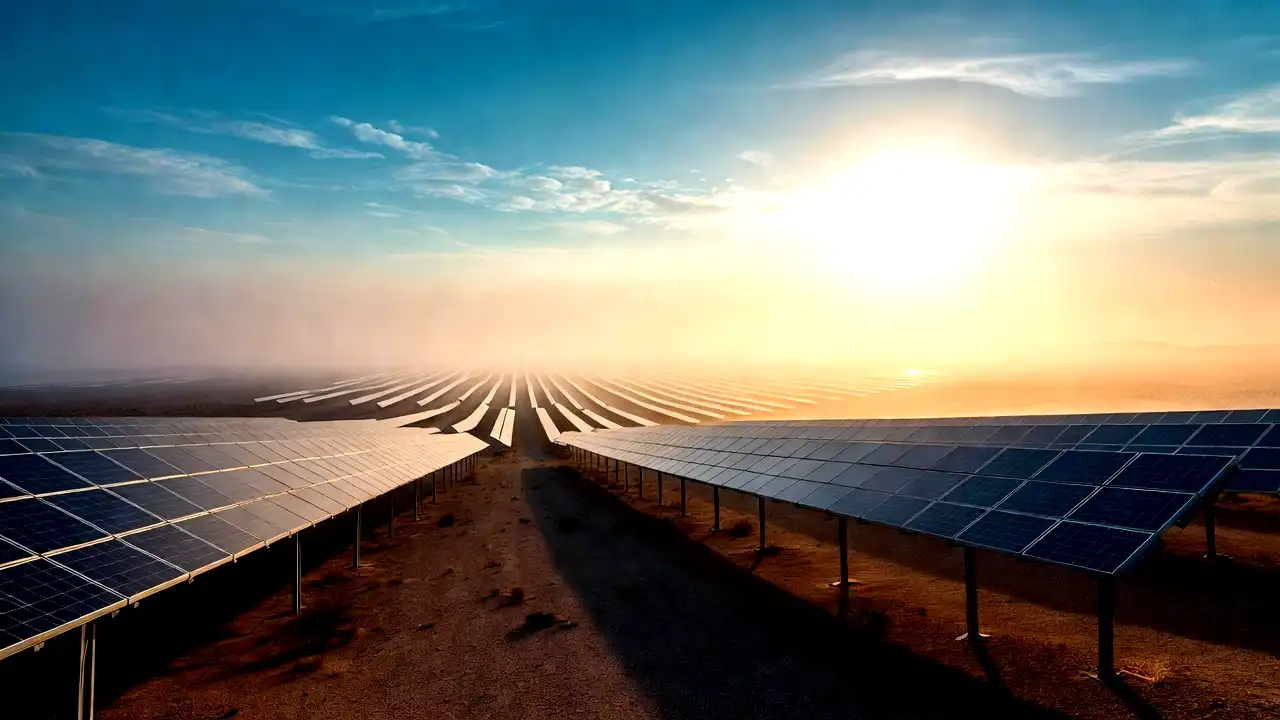
The global energy transition achieved a historic milestone in May 2026. For the first time on record in a calendar month, solar power generated more electricity in the United States than coal. According to a report published by Euronews, this historic milestone shows how quickly clean energy is reshaping the nation’s grid, even as political leaders in Washington make aggressive efforts to revive the fossil fuel industry and dismantle federal renewable energy policies.
Data compiled by global clean energy think tank Ember shows that solar power supplied 12.8% of total US electricity during the month, while coal’s share dropped to a meager 12.2%. This represents a dramatic, structural reversal in the nation’s power mix. Just five years ago, in May 2021, coal generated 19.7% of US electricity, while solar accounted for a minor 5.4%.
The fact that solar has more than doubled its share while coal continues its steady decline proves that market economics are completely outrunning political agendas. Driven by plunging solar panel manufacturing costs, rapid integration of battery storage, and soaring electricity demand from artificial intelligence data centers, the transition to clean energy has become a permanent market reality that federal policy rollbacks cannot stop.
The Historic Crossover: Analyzing the May 2026 Electricity Mix
The monthly energy data released by Ember highlights the shifting dynamics of the US power grid. US solar generation hit an all-time monthly record of 45.5 terawatt-hours (TWh) in May, representing an impressive 17% increase compared to May 2025. This record-breaking output surpassed the previous monthly solar generation record set last July, proving that solar’s growth is accelerating year over year.
The Seasonal Solar Advantage
Solar output typically peaks during the summer months of June and July due to longer daylight hours. However, solar’s overall share of the total electricity generation mix is often highest in the spring, particularly in April and May. During these spring months, strong, consistent sunshine lines up with milder temperatures across the country.
Because households and businesses do not yet need to run their heavy air conditioning units, overall electricity demand remains low. When this lower baseload demand meets record solar generation, solar’s share of the generation mix spikes, allowing it to overtake fossil fuel sources easily.
Coal’s Inevitable Downward Slide
While solar continues to set new records, the coal industry is facing an irreversible decline. Coal generation in the United States hit an all-time monthly low of 39.3 TWh in April. Although output recovered slightly in May to 43.4 TWh, it was still 11% lower than the May 2025 generation level.
Even with this minor seasonal rebound, coal-fired power plants simply could not keep pace with solar’s rapid growth. This monthly crossover officially established solar as the third-largest individual source of electricity in the United States, trailing behind only natural gas, which dominated the mix at 37%, and nuclear power at 18%.
Market Economics Outrun Federal Policy Rollbacks
This clean energy milestone is particularly remarkable because it occurred during a period of intense federal political opposition to renewable energy. Following the administration’s return to the White House with a strong “drill, baby, drill” fossil fuel agenda, federal support for clean energy has faced a severe, multi-front assault.
The administration has systematically dismantled federal climate rules, rolled back vehicle tailpipe emission standards, and slashed funding for renewable energy projects.
Slashed Growth Forecasts and Regulatory Hurdles
This hostile federal environment led the International Energy Agency (IEA) to make drastic revisions to its long-term forecasts. The global energy watchdog cut its expectations for US renewable energy growth this decade in half. While the IEA previously expected the United States to add 500 gigawatts (GW) of new solar and wind capacity by 2030, its updated forecast projects the country will add only 250 GW due to policy uncertainty, tax credit rollbacks, and delayed federal permitting.
However, the actual market data show that developers and utilities are largely ignoring the federal policy pivot. Building a new utility-scale solar farm remains far cheaper than keeping an aging, expensive coal-fired power plant running, even when the government removes clean energy tax incentives. Solar photovoltaic technology has become so cost-competitive that it no longer requires heavy government subsidies to beat fossil fuels in open-market bidding.
The Diminished Value of Coal Assets
The complete collapse of coal’s market value was on full display during the largest federal coal auction held in over a decade. Despite the administration’s public efforts to promote new coal leasing on public lands, there was virtually zero market interest. The lone bidder at the auction submitted a meager bid of just one-tenth of a penny per ton of coal.
This near-zero valuation underscores a profound reality: utilities and private grid operators view coal as a dying, high-liability asset. There are currently no plans to build any new coal-fired power plants in the United States, while dozens of existing coal units are scheduled for retirement over the next four years.
The AI Data Center Boom: Driving the Need for Fast, Cheap Power
While federal policies are attempting to steer the country back toward fossil fuels, a massive new driver of electricity demand is pushing utilities directly into the arms of solar developers. After nearly two decades of flat, stagnant electricity consumption, US power demand is exploding.
The US Energy Information Administration (EIA) projects that total US power demand will rise to record highs of 4,271 billion kilowatt-hours (kWh) in 2026 and 4,397 billion kWh in 2027. This rapid growth in demand is being led by the commercial sector, which is expected to outpace residential electricity consumption for the first time in history.
The Insatiable Power Appetite of AI and Crypto
The primary driver of this surge in commercial electricity demand is the rapid construction of massive, power-hungry data centers dedicated to artificial intelligence training and cryptocurrency mining. These high-density computing facilities run at full capacity twenty-four hours a day, requiring gigawatts of steady power.
Because these data centers require massive amounts of electricity immediately, developers cannot afford to wait five to seven years for utilities to build traditional natural gas or coal-fired power plants, which face lengthy environmental permitting battles and complex engineering timelines.
In contrast, utility-scale solar arrays can be manufactured, permitted, and deployed in under two years. For data center developers and utility operators looking to bring new generation capacity online as quickly as possible to meet the urgent needs of the AI boom, solar has become the only practical, fast-to-deploy option. This need for speed has turned tech giants like Microsoft, Google, and Meta into some of the world’s largest private buyers of solar energy.
The Battery Storage Revolution and State-Level Progress
The historic rise of solar power is also being accelerated by the rapid integration of large-scale battery energy storage systems (BESS). Historically, critics of renewable energy pointed to the “intermittency” problem, arguing that solar and wind could not replace coal because they do not produce electricity when the sun isn’t shining or the wind isn’t blowing.
Batteries have completely dismantled this argument. By storing excess solar power generated during sunny midday hours and releasing it back onto the grid during expensive evening peak-demand hours, battery storage has made solar a highly reliable baseload power source.
Solar-plus-Storage Dominance in Capacity Additions
This combination has become the dominant choice for new grid infrastructure, and according to a joint market report from the Solar Energy Industries Association (SEIA) and Wood Mackenzie, solar and battery storage systems together made up an extraordinary 91% of all new US electricity-generating capacity installed during the first quarter of the year.
Furthermore, the United States recently surpassed a major milestone, exceeding 6 million individual solar installations nationwide across residential, commercial, community, and utility sectors.
Texas Leads the Clean Energy Charge
This transition is particularly obvious in Texas, a state traditionally known for its oil and gas production. Operating under the Electric Reliability Council of Texas (ERCOT) grid, the state has become a major clean energy powerhouse.
The EIA forecasts that annual solar generation in Texas will surpass coal for the first time in 2026, reaching 78 billion kilowatt-hours (BkWh) compared to 60 BkWh for coal. Texas currently accounts for roughly 40% of all new US solar capacity additions this year, proving that even in red-state energy markets, clean energy economics are winning the day.
Other states are showing similar progress. In Iowa, South Dakota, and New Mexico, wind and solar combined generated more than half of all in-state electricity. Nationally, wind and solar combined generated a record 19% of total US utility-scale electricity, easily outstripping coal’s 16% share after first crossing that milestone in 2024.
Conclusion
The historic crossover of May 2026 represents a major turning point for the United States power sector. For the first time in history, solar power generated more electricity than coal in a single calendar month, proving that the clean energy transition is a permanent, structural shift that federal policy rollbacks cannot stop. Despite aggressive political efforts to revive the coal industry, utilities and private grid developers are choosing solar and battery storage because it is the cheapest, most affordable, and fastest-to-deploy energy source available. As the rise of power-hungry AI data centers forces utilities to scale up their generation capacity rapidly, the solar-plus-storage combination has become the dominant engine of new grid construction. Coal has permanently lost its status as a vital component of the US energy mix. As battery deployment continues to break records year after year, the era of coal-fired electricity is coming to an inevitable, clean-energy close.