Key Points:
- The ROKS Dosan Ahn Chang-ho completed a historic 14,000-kilometer trans-Pacific voyage to join military drills in Canada.
- The deployment supports a South Korean bid to win a 60 trillion-won (US$39.6 billion) contract for up to 12 Canadian submarines.
- A consortium of Hanwha Ocean and HD Hyundai is competing against Germany’s Thyssenkrupp Marine Systems for the project.
- The success of the voyage demonstrates the long-term operational capabilities and system reliability of South Korean naval tech.
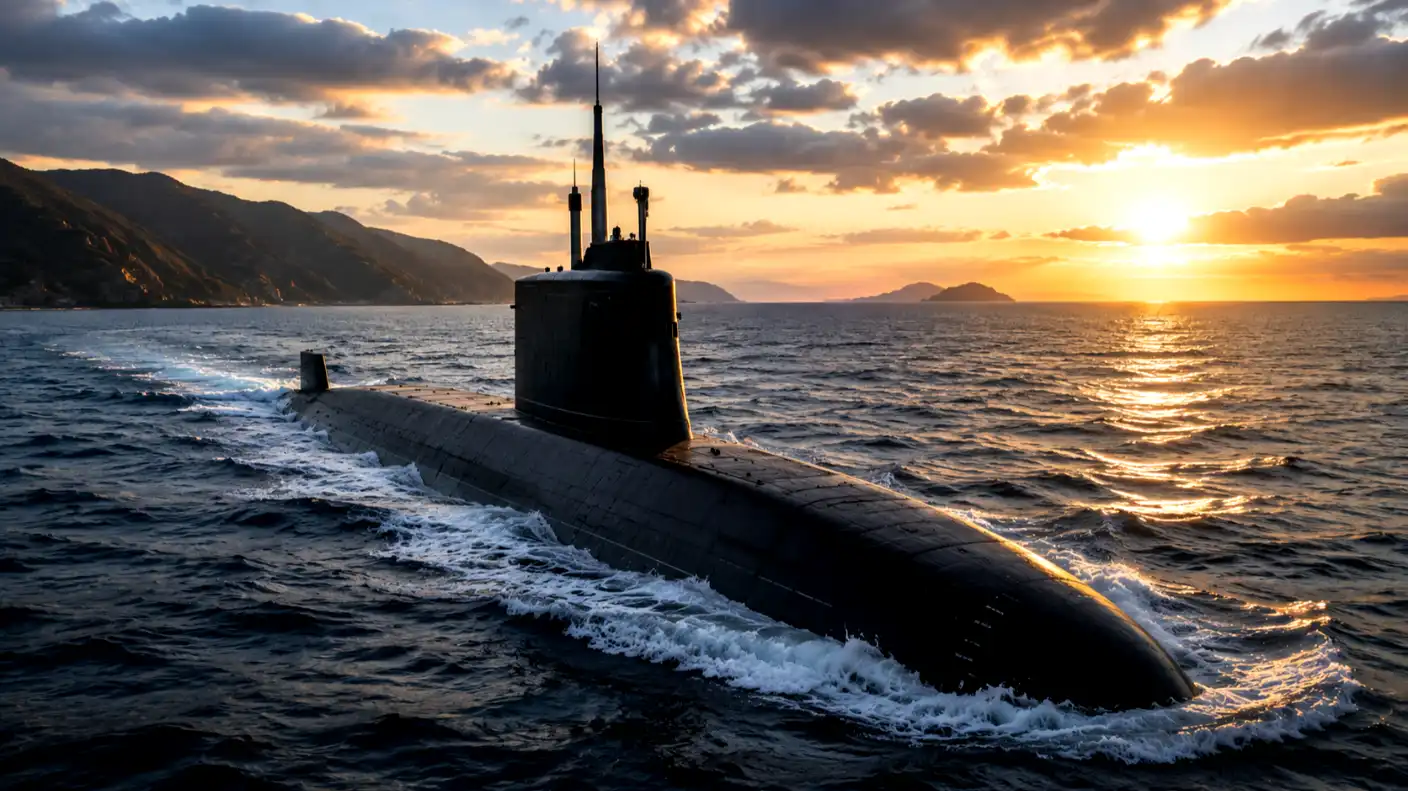
On Saturday, a South Korean Navy submarine made history by arriving at a Canadian naval base after completing its first-ever trans-Pacific voyage. The 3,000-ton ROKS Dosan Ahn Chang-ho docked at the Esquimalt naval base in Victoria, British Columbia, on Canada’s southwest coast. The journey covered approximately 14,000 kilometers, with stops in Guam and Hawaii. This milestone marks the first time a South Korean submarine has completed such a long-distance crossing, proving the global reach of the country’s naval tech.
The historic deployment comes at a critical moment for South Korea’s defense export ambitions. Seoul is actively campaigning to secure a massive Canadian naval contract estimated at 60 trillion won (approximately US$39.6 billion). Canada plans to replace its aging submarine fleet with up to 12 conventionally powered submarines. By sending its premier domestically built submarine directly to Canadian waters, the South Korean government aims to showcase the hardware’s real-world endurance and operational readiness to Canadian procurement officials.
The Dosan Ahn Chang-ho began its journey on March 25, departing from the naval base in South Korea’s southeastern port of Jinhae. To ensure operational safety and support, the 3,100-ton Daejeon frigate sailed alongside the submarine for the entire duration of the trip. To foster bilateral cooperation, two Canadian submariners boarded the South Korean vessel in Hawaii and participated in the final leg of the trans-Pacific journey to Victoria.
The South Korean Navy emphasized that this successful long-range mission directly highlights the high quality of its domestically built naval technology. Operating a submarine over 14,000 kilometers requires exceptional reliability across systems and life-support systems. The Navy noted that the vessel’s advanced onboard living conditions and highly dependable equipment kept the crew healthy and alert throughout the multi-week voyage. These factors are crucial for Canada, which requires submarines capable of patrolling vast, harsh maritime environments.
A high-stakes corporate battle is underway to win the multi-billion-dollar Canadian contract, with a final decision expected in June 2026. A South Korean consortium comprising Hanwha Ocean Company and HD Hyundai Heavy Industries Company is competing directly against Germany’s Thyssenkrupp Marine Systems, which has partnered with Norway. Both consortia are offering advanced, conventionally powered designs, but South Korea is leveraging its strong domestic manufacturing capacity and government-backed support to gain an edge.
The South Korean government has mobilized its top diplomatic and industrial leaders to support the bid. Earlier this month, Industry Minister Kim Jung-kwan traveled to Ottawa to hold talks with Canadian counterpart Melanie Joly and Minister of Energy and Natural Resources Tim Hodgson. Minister Kim previously made dedicated promotional trips to Canada in both January and March. Additionally, Chief of Naval Operations Admiral Kim Kyung-ryul met with Vice Admiral Angus Topshee, the head of the Royal Canadian Navy, in Ottawa to reiterate the government’s full support for the joint project.
On Monday, Admiral Kim Kyung-ryul and Lee Yong-cheol, the head of South Korea’s state arms procurement agency, will attend an official welcome ceremony hosted by the Canadian Navy. These high-level meetings help cement defense ties between the two Pacific nations. During his talks with Canadian defense officials, Admiral Kim highlighted the superior stealth, battery life, and combat capabilities of South Korean-built submarines, promising comprehensive technology transfers and local maintenance support if Canada selects the South Korean bid.
Before returning home, the South Korean vessels will participate in joint training exercises with the Royal Canadian Navy to improve tactical interoperability. Following these bilateral drills, the submarine and frigate will travel back to Hawaii to join the U.S.-led Rim of the Pacific (RIMPAC) exercise in late June 2026. This multinational exercise, the largest of its kind in the world, will provide yet another high-profile platform for South Korea to demonstrate its advanced naval technology on the global stage.