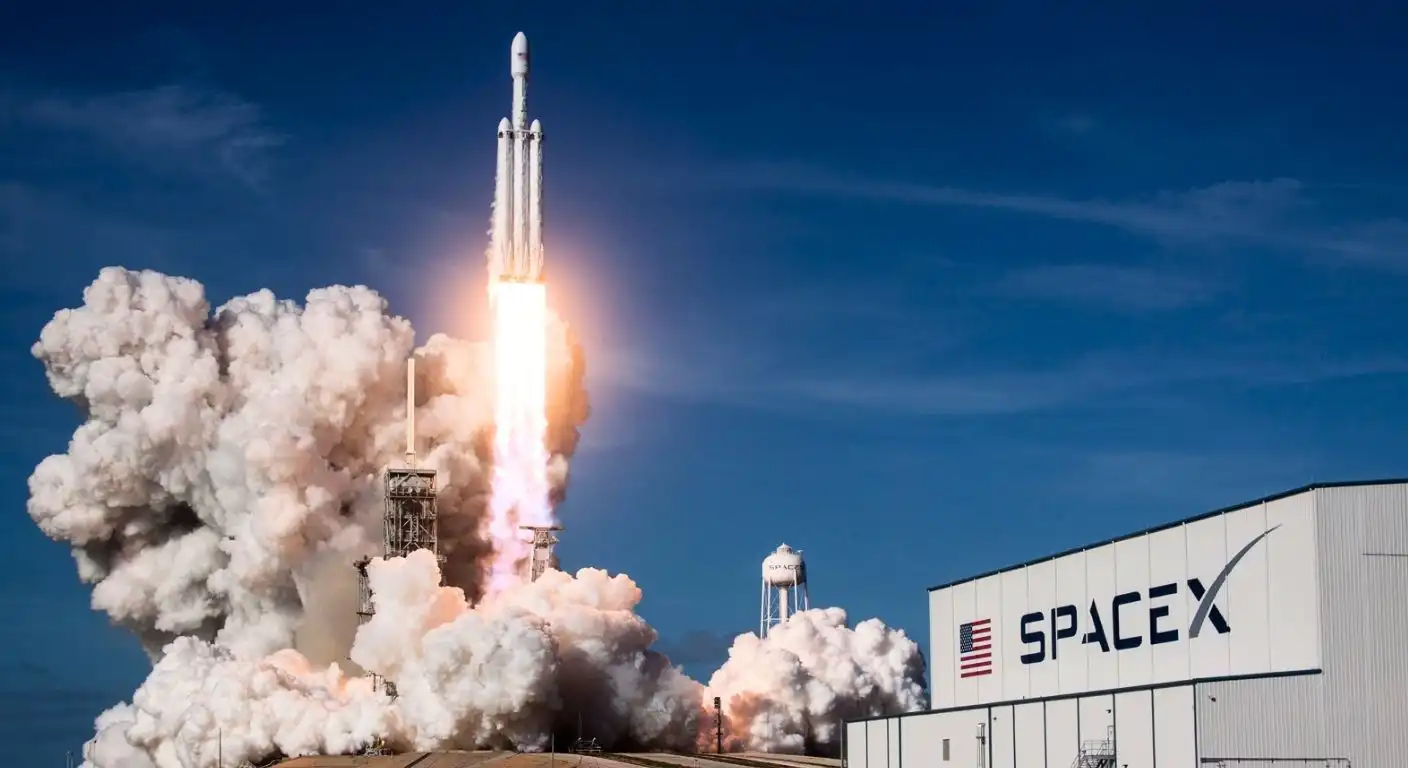
SpaceX recently completed its historic initial public offering on the Nasdaq, an event that fundamentally altered the landscape of the aerospace and defense sectors. Investors who once focused solely on the physics of rocket reusability, Starlink’s global broadband reach, and the colonization of Mars are now pivoting toward the more mundane, highly critical metrics of corporate branding, marketing, and internal culture. In a recent investor call that highlighted this shift, participants moved past deep-space technical roadmaps to ask questions about the company’s long-term consumer branding strategy, including the potential for high-profile, non-traditional marketing campaigns.
The shift toward mainstream corporate governance comes as the company balances its massive, trillion-dollar market valuation with the day-to-day realities of being a publicly traded entity. The stock, trading under the ticker symbol SPCX, has experienced significant volatility since its market debut. After soaring toward record highs, the share price has faced pressure from both short-selling campaigns and a broader rotation of institutional capital out of high-growth technology assets. This environment forces leadership to address investor concerns that previously seemed trivial, such as the company’s aesthetic identity, its stance on consumer advertising, and its overall brand positioning in an increasingly polarized political and social climate.
For a firm that built its entire reputation on disruption, arrogance, and engineering-first principles, the demand for corporate-friendly branding poses a unique challenge. Shareholders are no longer satisfied with watching spectacular launch videos or reading tweets about interplanetary exploration. They are demanding a clear, predictable, and market-friendly strategy that can sustain a massive valuation through various retail and consumer-facing channels. This transition marks the end of the company’s “startup phase” and the beginning of its life as a global, consumer-facing household brand.
The Cultural Transition: From Engineering Disruptor to Mainstream Household Brand
For the first twenty-four years of its existence, SpaceX operated almost entirely as an engineering laboratory. Its goals were absolute: lower the cost of orbital access, master retro-propulsion, and make humanity a multi-planetary species. The company never employed a massive public relations department, and it spent virtually zero dollars on traditional consumer advertising. The brand’s identity was defined entirely by its performance. When a rocket landed perfectly on a sea-based platform, the result was the only marketing the firm needed.
Now, that identity is under fire from shareholders who see untapped multi-billion-dollar potential in the company’s brand equity. Investors and potential marketing partners are asking if the firm should leverage its name for non-traditional purposes. During recent investor engagements, analysts raised questions ranging from whether the company would consider painting its rockets in corporate colors for high-profile sponsorship deals, to whether it would launch a consumer-facing retail line to monetize its cult-like global following.
This is not just about the paint color on a rocket; it is about how the company positions itself in the broader retail economy. Institutional investors are worried that the brand’s current, highly utilitarian image limits its total addressable market. They argue that to justify a trillion-dollar valuation, the firm must transition into a lifestyle brand that resonates with everyday consumers, not just aerospace engineers and government procurement officials.
Evaluating the Brand-Equity Monetization Strategy
The potential for branding and commercial sponsorships inside the aerospace sector remains largely untapped. While other luxury goods, automotive companies, and consumer tech firms utilize high-profile partnerships to build market share, SpaceX has remained focused on its core launch services. However, the sheer cost of maintaining a leadership position in space and artificial intelligence requires massive, diversified revenue streams. Selling naming rights to its launch vehicles or partnering with consumer brands to create limited-edition products could generate hundreds of millions of dollars in high-margin cash flow.
Analysts have proposed that the firm could follow the business model used by professional sports teams and Formula 1 racing outfits. Painting a launch vehicle in a distinctive, recognizable color or displaying a corporate partner’s logo would turn every single launch into a massive, global marketing event. With millions of viewers tuning in for every Starship flight, a sponsor would pay a massive premium for the sheer volume of global impressions.
However, management must balance this potential revenue against the risk of diluting the company’s “serious science” reputation. Any perceived shift toward “gimmicky” marketing could alienate the defense and government clients who prioritize reliability and sober operational execution. Maintaining the brand’s gravitas while exploring new, multi-billion-dollar monetization channels will be the primary marketing challenge for the executive team over the next several quarters.
The Institutional Skepticism of the AI and xAI Integration
While branding questions capture the attention of retail investors, the most serious scrutiny from institutional asset managers remains the integration of Elon Musk’s artificial intelligence venture, xAI, into the core corporate structure. The company’s February 2026 merger with xAI and the social media platform X created a massive, highly complex $1.25 trillion entity. This integration means that the aerospace business is now permanently and inextricably tied to the financial and operational success of a highly speculative artificial intelligence research division.
Institutional investors are demanding far more transparency regarding this segment. They are asking why a rocket company needs to burn through billions of dollars in capital to fund artificial intelligence research and development. The concerns are not entirely about the technology; they are about the dilution of the company’s core focus.
The division recorded a massive $4.28 billion net loss in the first quarter of 2026 alone, a figure that is largely attributed to the immense, ongoing costs of training frontier models, leasing massive computing clusters, and hiring elite software engineers. Investors want to know when, or if, this division will provide a direct, positive return on investment.
Capital Allocation and the Opportunity Cost of AI
The primary economic anxiety on Wall Street is that the AI division is actively starving the aerospace division of necessary development capital. Building the Super Heavy booster for Starship requires massive, continuous investment in new materials science, heavy-duty manufacturing equipment, and testing facilities. Every billion dollars that the company redirects toward funding the next generation of generative AI models is a billion dollars that is not being spent on accelerating the Starship launch cadence.
Institutional analysts are increasingly critical of this capital allocation model. They argue that the aerospace business possesses a clear, established, and growing revenue stream from commercial and government satellite launches. The artificial intelligence business, while revolutionary, is currently pre-revenue and highly capital-intensive.
If the artificial intelligence venture requires further multi-billion-dollar injections to survive its research phase, the company may be forced to divert cash from its launch division, potentially allowing competitors to catch up and eroding the company’s most important competitive advantage: its dominant market share in orbital logistics.
Transparency Demands and Governance Standards
Beyond the capital allocation concerns, the merger has brought the company’s corporate governance practices under intense institutional scrutiny. Because Musk maintains absolute voting control over the combined entity—owning approximately 42 percent of the stock but controlling 85 percent of the total voting power—shareholders have very few tools to influence corporate strategy or demand changes to the current operational direction.
This concentration of control is a major deterrent for pension funds, mutual fund managers, and conservative investment trusts, who are legally restricted from holding significant positions in companies with such lopsided governance structures.
The firm’s management is under pressure to reform these practices to improve its eligibility for inclusion in major broad-market indices, which would trigger a massive, passive inflow of capital.
Institutional investors are pushing for the board of directors to implement new, independent oversight committees specifically tasked with monitoring the financial relationship between the aerospace and artificial intelligence divisions, ensuring that one business does not disproportionately jeopardize the other.
Navigating the Volatility of the Post-IPO Era
The volatility in the company’s share price since its June Nasdaq debut serves as a powerful reminder that the public market is fundamentally different from the private venture capital environment. In the private sector, SpaceX could operate under a shroud of secrecy, ignoring short-term financial fluctuations and focusing entirely on a five-to-ten-year roadmap.
As a publicly traded company, it must now satisfy the quarterly expectations of a global investor base that reacts instantly to every rumor, product delay, and management statement.
The current share price dip from the peak of $220 down toward $150 reflects this shift. The market is attempting to determine the “fair value” of an enterprise that is part rocket-maker, part satellite-internet utility, and part artificial intelligence research lab.
There is no traditional business model to compare it against, leaving investors to rely on highly variable, speculative forecasts.
As a result, any news regarding the integration of xAI, the progress of Starship launches, or the company’s overall capital expenditure discipline will continue to cause significant, sharp price movements, creating a high-stress environment for both retail and institutional shareholders.
Managing the Technical Overhang of Insider Lockups
Beyond the fundamental business questions, the company faces a series of technical market challenges that will influence its price trajectory over the coming months. One of the most immediate concerns is the upcoming expiration of the company’s tiered insider lock-up agreements.
The lock-up structure, which was designed to prevent a massive, sudden sell-off of shares following the IPO, mandates that a large percentage of pre-IPO shares remain restricted from trading for 180 days.
As these expiration dates approach, market participants are actively watching for signs of significant, large-scale stock sales by early venture capital backers and veteran employees looking to realize their gains.
Even if these early investors remain bullish on the long-term potential of the company, the sheer volume of shares set to hit the market—potentially in the hundreds of millions—creates a massive, short-term supply-and-demand mismatch that can easily overwhelm the buying power of the public market, dragging the stock price lower regardless of the company’s underlying fundamentals.
Maintaining Trust Through Consistent Operational Execution
The most powerful antidote to the stock market’s current skepticism is the same strategy the company used to build its brand in the first place: consistent, reliable operational execution. Every single launch that ends in a perfect, vertical booster landing is a massive, highly visible marketing victory.
Every successful launch of a new batch of Starlink satellites demonstrates the company’s growing, recurring revenue base to Wall Street.
If the company continues to demonstrate its ability to scale its launch cadence, reduce its Starship development costs, and prove the real-world value of its artificial intelligence platform, it will easily silence the critics.
The volatility of the current stock price is a natural, healthy component of the post-IPO transition, but the fundamental, long-term trajectory of the business remains anchored in the company’s unmatched ability to solve the most difficult engineering problems in human history.
The transformation from an engineering-led aerospace startup to a global, multi-trillion-dollar household brand is a grueling, multi-year process. By navigating these early public market hurdles, maintaining operational transparency, and focusing on the core businesses that drive real, high-margin revenue, the company can successfully bridge the divide, providing its shareholders with the value they expect while maintaining the disruptive spirit that built the modern space economy.