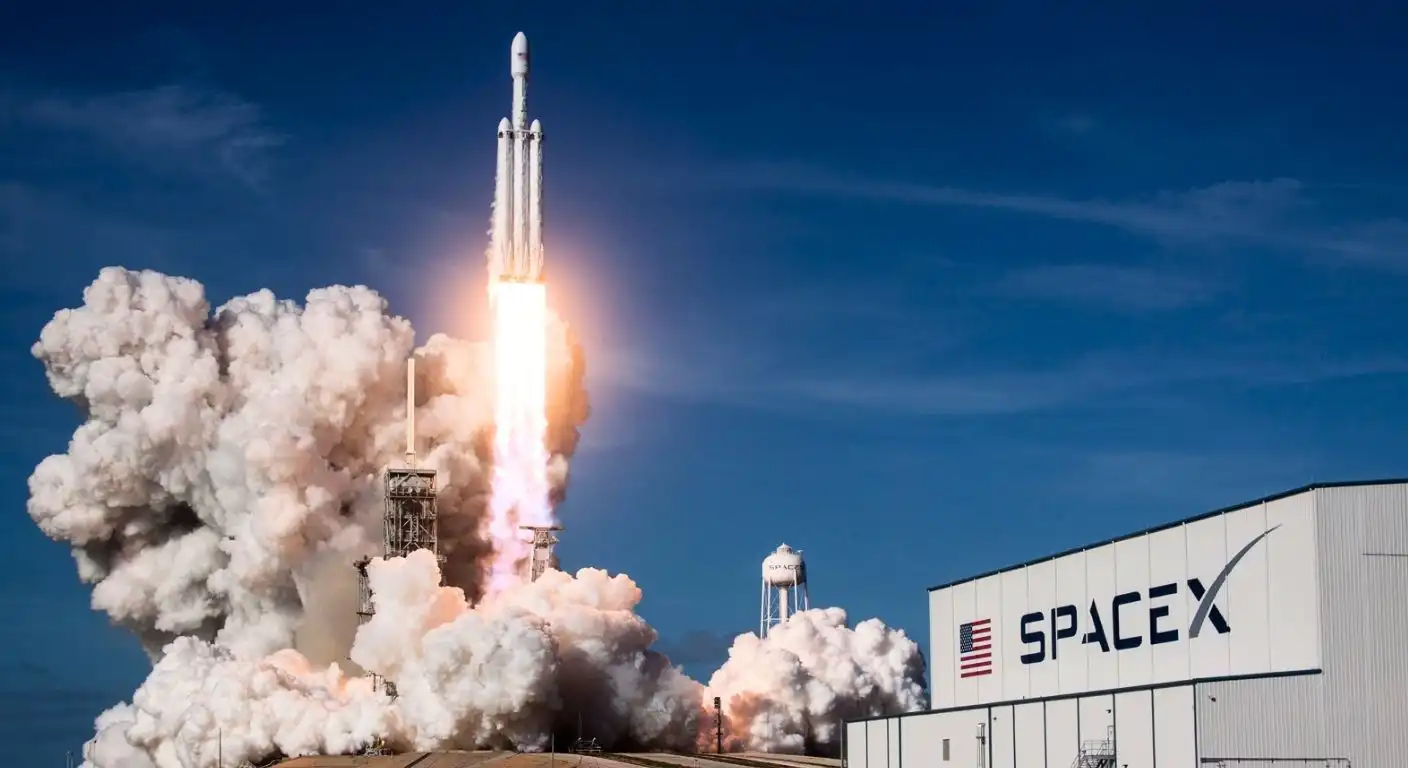
The global aerospace sector is preparing for its most significant financial event in history. Elon Musk’s rocket, satellite, and orbital computing giant, SpaceX, is scheduled to make its highly anticipated public debut on the Nasdaq exchange under the ticker symbol SPCX. Seeking to raise a record-setting $75 billion by selling 555.6 million shares at a fixed price of $135 each, the initial public offering (IPO) is set to value the company at approximately $1.8 trillion.
However, as institutional and retail investors scramble to secure allocations for what promises to be the largest public listing on record, the global cryptocurrency market is experiencing a severe, real-time liquidity squeeze.
While the traditional stock market prepares to absorb this massive offering, digital assets have become the unexpected first casualties of the listing. According to an in-depth report published by Reuters, the blockbuster SpaceX IPO is spelling major bad news for the cryptocurrency market.
The decision to set aside an unprecedented 30% of the $75 billion offering specifically for everyday retail investors has turned the highly liquid digital asset market into a virtual ATM. Retail traders are rapidly liquidating their Bitcoin, Ethereum, and other digital tokens to raise the necessary cash to participate in the heavily oversubscribed offering, sucking billions of dollars in liquidity out of the crypto market and sending coin prices into a sharp tailspin.
Understanding the SpaceX IPO and the Capital Squeeze
To understand why the SpaceX public listing is having such a devastating impact on the digital asset market, one must look at the sheer scale of the capital involved. Raising $75 billion in a single public offering requires an extraordinary mobilization of capital. In previous mega-listings, such as Saudi Aramco’s record-setting $29.4 billion IPO in 2019, the demand was absorbed almost entirely by massive institutional funds, sovereign wealth portfolios, and corporate treasuries.
The SpaceX offering has completely shattered those previous scale records. Investment bankers managing the book-building process report that the IPO has already drawn a staggering $250 billion in total investor demand, making the offering nearly four times oversubscribed before the official pricing is finalized.
Because demand for the stock is so intense and the company has taken the highly unusual step of dedicating a massive $22.5 billion portion of the raise specifically to everyday retail buyers, the IPO has created a literal “capital vacuum” across both the equity and cryptocurrency markets.
Key Components of the SpaceX Liquidity Vacuum
The massive drain of capital away from digital assets and into the upcoming aerospace listing relies on several key market and structural mechanisms:
- The 30% Retail Earmark: Reserving a historic $22.5 billion tranche of the IPO specifically for everyday retail traders, bypassing traditional institutional limits.
- The Crypto-to-Cash Liquidations: Using highly liquid, 24/7 digital asset holdings as a personal cash-reserve mechanism to fund IPO bids.
- Pre-IPO Perpetual Futures Hype: Leveraging synthetic derivatives on exchanges like Binance and Coinbase to speculate on the listing price.
- Nasdaq 100 Fast Entry Rules: Allowing the mega-cap stock to enter the index within 15 trading days, forcing passive index funds to sell other equities.
- Multi-Billion Bitcoin Balance Sheet: Holding 18,712 BTC on SpaceX’s corporate balance sheet, exposing the index to direct digital asset volatility.
The Retail Squeeze: Turning Crypto into a Personal ATM
The primary reason why the SpaceX IPO is proving so uniquely bearish for the cryptocurrency market is the massive size of its retail allocation. In a standard corporate listing, retail investors are typically allocated only 5% to 10% of the total share pool. Because the cash requirements for everyday traders are so small, these traditional listings rarely cause a ripple in the broader financial markets.
But with up to 30% of SpaceX’s $75 billion offering set aside for retail, everyday investors must raise a collective $22.5 billion in hard cash almost overnight to fund their brokerage allocations.
To raise this cash, retail investors are selling what is easiest to exit. Unlike real estate, retirement accounts, or structured mutual funds—which take days or weeks to liquidate and carry heavy transaction fees—cryptocurrencies can be sold instantly. Because crypto markets operate twenty-four hours a day, seven days a week, and allow for instant cash withdrawals, everyday traders are aggressively using their digital asset portfolios as a personal piggy bank to fund their SPCX bids.
The operational results of this massive capital rotation are evident throughout the digital asset market. Over the past week alone, the global cryptocurrency market shed more than $180 billion in total value as retail investors systematically cashed out of their positions.
Andri Fauzan Adziima, the research lead at the Bitrue Research Institute, explained that the ongoing crash in crypto and tech stocks is not a random market movement. Instead, he characterized the decline as a direct “IPO tax” triggered by SpaceX’s record-breaking deal, as retail investors liquidate their portfolios to meet the cash requirements of the listing.
The Pre-IPO Derivatives Frenzy
This intense capital rotation has been further accelerated by the emergence of highly speculative pre-IPO perpetual futures contracts. Because every day, traders are desperate to gain early exposure to the aerospace giant before the official listing date, major cryptocurrency exchanges have launched synthetic derivative products that track SPCX’s expected price.
Binance’s $2.1 Billion Milestone
These pre-IPO derivatives have seen massive, unprecedented traction among global retail traders. For example, Binance’s pre-IPO perpetual futures for SPCX generated a staggering $2.1 billion in cumulative trading volume in just 18 days of trading, with participation spanning across more than 130 countries.
Shunyet Jan, the head of spot and derivatives at Binance, pointed out that this rapid volume growth reflects an intense desire among retail investors to gain regulated-style market exposure to high-profile private companies through native digital asset products.
The Decentralized Arbitrage on Hyperliquid
At the same time, the decentralized trading platform Hyperliquid has processed over $70 million in daily volume for its own synthetic SpaceX contracts.
However, this massive speculative interest has also introduced extreme price volatility. After initially launching at a synthetic price of $210 per share, the contracts have tumbled down to approximately $157, reflecting a sharp re-pricing as traders realize that the official listing price of $135 will likely cap early gains on the secondary market. This rapid price drop has triggered massive leveraged liquidations, putting further downward pressure on the broader cryptocurrency market.
The Broader Index Squeeze and the “Capital Vacuum”
The liquidity squeeze is not limited to retail investors. The massive scale of the SpaceX listing is also preparing to unleash a major “capital vacuum” across the institutional equity markets, with indirect consequences that could further depress cryptocurrency prices.
Under the newer Nasdaq “fast entry” listing rules, mega-cap companies with a post-IPO valuation over $1 trillion can be fast-tracked into the Nasdaq 100 index within 15 trading days of their market debut. With SpaceX’s initial valuation expected to land near the $1.8 trillion range, the aerospace giant will almost certainly qualify for this rapid index inclusion, immediately becoming one of the largest constituents of the tech-heavy benchmark.
Forced Index Rebalancing
Once SpaceX is officially added to the Nasdaq-100, passive index-tracking mutual funds and exchange-traded funds (ETFs) will be legally required to purchase billions of dollars’ worth of SPCX shares to match the index’s new weightings.
To raise the cash required to buy these massive new allocations of SpaceX, these passive funds must sell their existing holdings in other major technology companies, such as Apple, Microsoft, and Nvidia.
Financial analysts at JPMorgan estimate that this forced rebalancing will act as a massive capital vacuum, putting immediate, artificial selling pressure on the broader technology sector. Because high-growth technology stocks and cryptocurrencies have exhibited a strong correlation over the past year, any sharp pullback in the Nasdaq 100 will likely drag the cryptocurrency market down with it, compounding losses for digital asset holders.
The Paradox of SpaceX’s Bitcoin Balance Sheet
The ultimate irony of this liquidity squeeze is that while the SpaceX IPO is currently crushing short-term cryptocurrency prices, the company itself is one of the world’s largest corporate holders of Bitcoin.
The 18,712 BTC S-1 Disclosure
In its official S-1 registration statement filed with the SEC, SpaceX revealed that it holds a massive 18,712 BTC on its corporate balance sheet, a treasury holdings portfolio worth roughly $1.15 billion at current market prices.
This disclosure has massive, long-term implications for the institutional adoption of digital assets. Once SpaceX officially begins trading on the Nasdaq, it will join Tesla—which currently holds 11,509 BTC—as the second Elon Musk-led mega-cap company with direct, multi-billion-dollar exposure to Bitcoin listed on a public exchange.
As Strategy CEO Phong Le pointed out, SpaceX’s successful listing will expand the elite group of mega-cap technology stocks from the “Magnificent Seven” to the “Magnificent Eight.” More importantly, 25% of these eight dominant companies will now have Bitcoin on their corporate balance sheets.
While the short-term capital rotation out of crypto to fund the IPO is causing a painful market crash, the long-term inclusion of SpaceX in major passive index funds will automatically expose millions of regular retirement accounts to Bitcoin, providing a massive, structural stamp of institutional approval for the digital asset class over the coming decade.
Conclusion
The upcoming SpaceX initial public offering represents a historic milestone for the global aerospace sector, but its immediate impact on the financial markets is a severe, real-time liquidity squeeze. By offering an unprecedented 30% of its massive $75 billion raise to retail investors, the company has turned the highly liquid, 24/7 cryptocurrency market into a personal cash-reserve mechanism for everyday traders, causing the crypto market to shed over $180 billion in a single week. As retail investors liquidate their portfolios to fund their SPCX bids and passive index funds prepare for a massive, forced rebalancing to accommodate the new $1.8 trillion giant, Bitcoin has become the first casualty of Elon Musk’s record-breaking public listing. However, once the short-term pricing volatility subsides, the presence of 18,712 BTC on SpaceX’s corporate balance sheet will provide a massive, permanent bridge between Wall Street and the digital asset economy, proving that even as the IPO squeezes near-term liquidity, it is cementing the long-term institutional future of cryptocurrency.