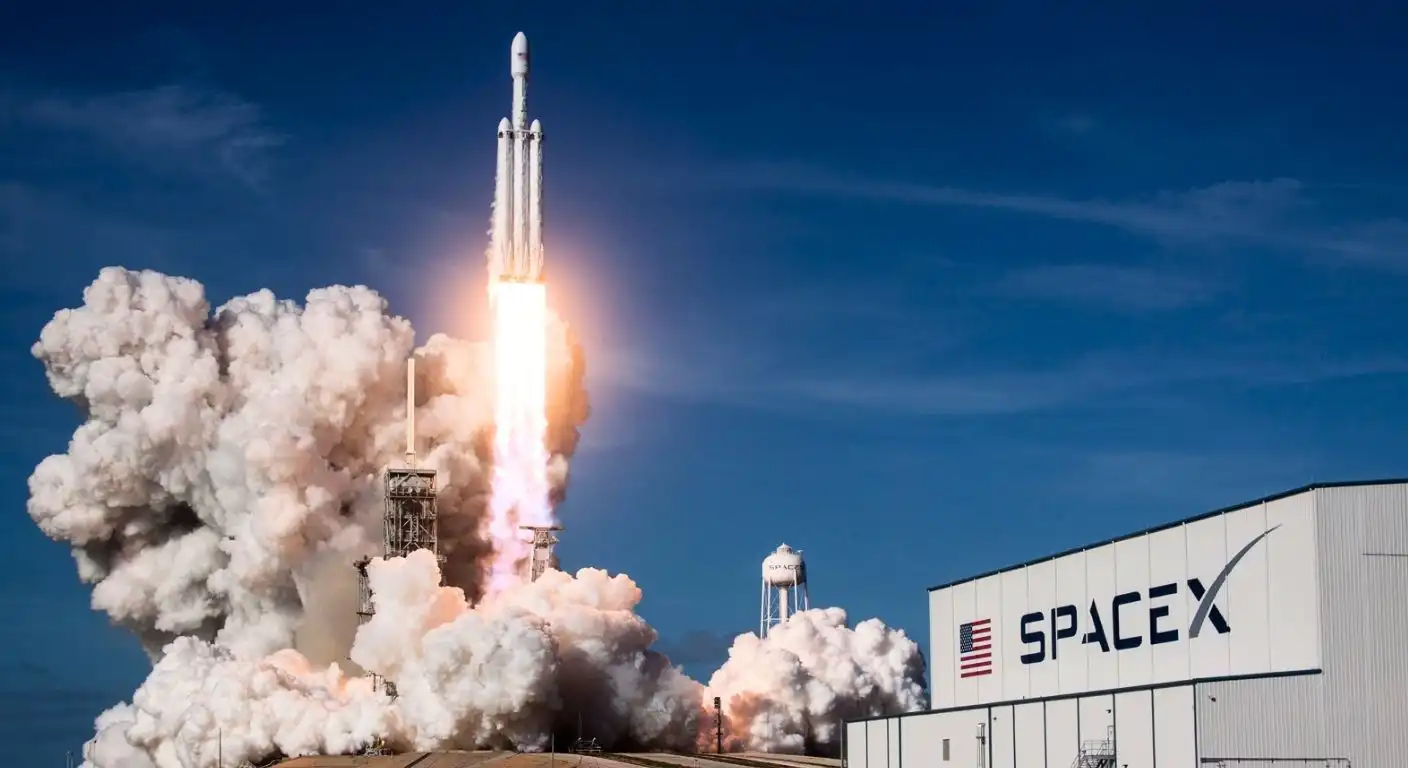
The global financial markets have officially entered a new epoch. On Friday, June 12, 2026, Space Exploration Technologies Corp. made its historic debut on the Nasdaq exchange, completing the largest initial public offering (IPO) in history. Trading under the ticker SPCX, the rocket and satellite manufacturer priced its offering at $135 per share, successfully raising $75 billion. This staggering capital raise completely eclipsed the previous global record set by oil giant Saudi Aramco, which raised $29.4 billion during its 2019 listing.
The market’s reception on opening day was overwhelmingly positive. SpaceX opened at approximately $163 per share, eventually closing its first session at $161.11, representing a strong 19.3% gain. The momentum continued into the next trading session on Monday, June 15, as shares climbed another 19.6% to reach approximately $193. Within days of its debut, the company’s market capitalization surged past $2.6 trillion, briefly making it one of the most valuable corporations in the world and officially crowning founder Elon Musk as the world’s first trillionaire.
This blockbuster listing represents far more than a single corporate victory. Analysts and economists widely view the SpaceX debut as the first major salvo in a highly anticipated new era of mega-IPOs. For years, the world’s most valuable private technology and infrastructure companies chose to remain private longer, relying on deep pools of private capital. The successful execution of the SpaceX IPO has shattered that template, signaling a massive structural shift as multi-trillion-dollar giants return to public stock exchanges.
The Epic Demand: Why Investors Flocked to Elon Musk’s Space Giant
The scale of global investor demand for SpaceX shares was unprecedented, cutting across geographic boundaries and investor classes. In Japan, where retail investment has surged alongside the Nikkei 225’s climb past the 69,000 level, the appetite for a piece of the space revolution was particularly voracious. Japanese retail investors demonstrated extraordinary interest in the initial public offering, seeking more than $6.2 billion (over one trillion yen) worth of shares.
Although the high level of oversubscription meant that Japanese investors ultimately secured approximately $2.2 billion in final allocations, the rush highlighted a broader global trend. For the first time in a mega-IPO of this size, retail platforms like Robinhood and SoFi offered access to individual investors. This allowed ordinary savers to buy shares at the initial $135 offering price, a privilege traditionally reserved for sovereign wealth funds and Wall Street institutions.
The primary catalyst for this massive demand is the unique commercial moat that SpaceX has established. The company has secured an effective monopoly over the global space launch market. Its workhorse Falcon 9 rockets and the development of the fully reusable Starship system have drastically reduced the cost of reaching orbit, leaving legacy aerospace competitors far behind.
Japanese Retail Investors Lead a $6.2 Billion Rush
The surge of interest from Japanese retail investors represents a major turning point for the country’s domestic savings. Historically, Japanese households maintained a highly conservative approach, keeping the vast majority of their wealth in cash deposits. However, a combination of corporate governance reforms, rising inflation, and the landmark performance of the Tokyo Stock Exchange has encouraged a dramatic shift toward equity markets.
When SpaceX announced its intention to list on the Nasdaq, Japanese brokerage platforms saw a record number of new account openings. Even though individual investors in Japan faced complex regulatory hurdles, the desire to own a stake in Elon Musk’s primary commercial venture overrode traditional risk aversion. This massive cross-border capital flow shows how globalized retail trading has become, allowing retail investors to act as a significant force in institutional-grade listings.
Cash Flow and Starlink’s $11 Billion Revenue Engine
Unlike many previous technology listings that relied on future promises of profitability, SpaceX presented public markets with a highly functional, cash-generating business model. The company’s satellite internet segment, Starlink, has transitioned from an ambitious capital experiment into a highly lucrative global enterprise, generating nearly $11 billion in annual revenue.
Starlink’s revenue engine provides SpaceX with a stable foundation of recurring subscription cash flow, balancing the highly volatile and capital-intensive nature of its deep-space exploration programs. This stable financial base has reassured institutional investors who were previously skeptical of space-focused equities. By proving that orbital infrastructure can generate massive, predictable cash flows, SpaceX has validated the commercial viability of the wider space economy.
A New Template for Mega-IPOs: The Shift from Private to Public Markets
The success of the SpaceX debut has established a new template for how high-profile companies transition to public markets. For the past decade, a major trend dominated Silicon Valley: startups chose to remain private for as long as possible. This behavior was driven by the abundance of private capital, as venture capital firms, private equity barons, and sovereign wealth funds were eager to write billion-dollar checks.
However, the current technology cycle has reached a scale that even the deepest private markets can no longer support. Building planetary-scale satellite networks, constructing advanced robotics, and funding the immense computing infrastructure required for artificial intelligence require tens of billions of dollars in continuous capital expenditures. Public stock markets, with their trillions of dollars in daily liquidity, represent the only capital pool large enough to fund these initiatives over the long term.
A massive pipeline of trillion-dollar private companies is now preparing to follow the path blazed by SpaceX. AI model-making laboratories Anthropic and OpenAI are reportedly mulling their own initial public offerings. These three companies together are poised to add almost $4 trillion in market capitalization to public exchanges, fundamentally altering the index weights and sectoral composition of the global stock market.
Capital Constraints of Private Markets: The Multi-Trillion Dollar Squeeze
While private capital markets have matured significantly, they suffer from inherent structural limitations. Private funds operate on fixed timelines, typically requiring venture capital and private equity managers to return capital to their limited partners within ten to twelve years. This structure creates friction for companies building multi-decade infrastructure, such as reusable rocket systems or global satellite constellations.
Furthermore, the rising cost of capital has made private valuations highly sensitive. As interest rates remain elevated globally, private equity firms can no longer use cheap debt to inflate asset prices. By transitioning to the public markets, mega-cap firms can establish a highly transparent, continuously traded currency—their public stock—allowing them to fund long-term capital projects and execute massive acquisitions without relying on private fund raises.
The AI Build-Out and the Space Tech Pipeline
The expected surge in mega-IPO activity in 2026 is deeply connected to the global artificial intelligence boom. The software and hardware required to run advanced AI models require an unprecedented amount of capital. Startups that previously raised hundreds of millions of dollars in private rounds are finding that they need billions more just to lease server capacity from cloud providers and purchase high-end graphics processing units.
This capital squeeze is pushing high-profile labs like Anthropic and OpenAI toward the public markets, where they can tap into the voracious retail and institutional appetite for technology stocks. The arrival of these firms, alongside SpaceX, will create a highly concentrated technology sector on Wall Street, forcing index providers and mutual fund managers to systematically reallocate capital away from legacy industries and into these next-generation platforms.
The Performance Paradox: Historical Lessons from Past Giants
While the initial market reaction to the SpaceX IPO was highly enthusiastic, historical data suggests that investors who buy into blockbuster listings on their first day of trading often face a difficult path to profitability. An analysis of the 50 largest initial public offerings over the past five years shows a striking performance paradox: investors would have been better off buying a simple S&P 500 index fund about three-quarters of the time.
This historical underperformance is even more pronounced for mega-IPOs that raise $15 billion or more. A closer look at the last five listings of this scale—Saudi Aramco (2019), SoftBank (2018), Alibaba (2014), Meta Platforms (2012), and General Motors (2010)—reveals that only Meta Platforms managed to consistently outperform the broader market over the long haul. The other four companies lagged major benchmarks significantly, with Saudi Aramco and SoftBank underperforming their respective national indices by double-digit percentages.
The primary reason for this trend is that private market investors and early venture backers typically capture the vast majority of a company’s growth before the public listing. By the time a firm reaches a valuation of $1.75 trillion or $2 trillion, its growth trajectory naturally slows down, making it highly difficult to deliver the multiple-fold returns that early-stage investors enjoy.
The S&P 500 vs. Mega-IPOs: Analyzing the 27% Average Returns
The historical returns for investors who participate in these highly publicized listings are often surprisingly modest. On average, an investor who bought into each of the 50 largest IPOs over the past five years at their initial offering price would be up approximately 27%. While a 27% positive return is respectable, it lags the average 53% gain delivered by the S&P 500 over those same periods.
This performance gap highlights the difficulty of finding bargains among companies whose valuations have surged long before their public debut. For retail investors who typically buy shares during the frenzied first day of trading rather than at the IPO price, the financial outcomes are often even worse, as initial hype frequently pushes the share price to unsustainable levels before a subsequent market correction occurs.
The Index Battle: Nasdaq and S&P Diverge on Quick Inclusion Rules
The arrival of multi-trillion-dollar companies like SpaceX has triggered a fierce battle among major index providers over inclusion rules. Because passive investment funds and exchange-traded funds (ETFs) manage trillions of dollars, their mandate to track major benchmarks means that any change in index composition triggers massive, automated buy and sell orders.
SpaceX and other mega-IPO candidates have actively lobbied index committees to relax their seasoning and profitability requirements to allow for faster index inclusion. S&P Dow Jones Indices recently made its stance clear, choosing to keep its existing eligibility requirements for its main benchmarks, including the S&P 500. Under these rules, newly listed companies must demonstrate positive net income over the past year before they can be considered for inclusion, meaning SpaceX must wait at least a year before joining the benchmark.
In contrast, Nasdaq and the London Stock Exchange Group (LSEG) are taking a highly aggressive approach to courting these giant listings. Nasdaq is considering reducing its seasoning window for entry into the Nasdaq 100 index to just five trading days, while LSEG has suggested similar changes for its Russell indices. By lowering these barriers, these exchanges hope to attract a larger share of the upcoming mega-IPO pipeline, boosting their own transaction fees and trading volumes.
S&P’s Strict Profitability Hurdle vs. Nasdaq’s Aggressive Courtship
The divergence between S&P Dow Jones and Nasdaq highlights a fundamental debate over the purpose of stock market indexes. S&P’s strict profitability requirement is designed to protect passive investors from highly volatile, speculative companies that may have massive valuations but lack stable earnings. By forcing firms to prove their financial health over four consecutive quarters, the index committee aims to maintain the stability of the benchmark.
Nasdaq, on the other hand, operates in a highly competitive environment where stock exchanges fight to win prestigious listings. By shortening its seasoning window and offering fast-track index inclusion, Nasdaq can offer a powerful incentive to founders like Elon Musk, who want their newly public companies to immediately benefit from the massive, automated capital flows of passive index funds.
What the New Era Means for Global Portfolios
The historic debut of SpaceX has permanently altered the landscape of the global financial markets. By successfully raising $75 billion and demonstrating that public markets can absorb a multi-trillion-dollar aerospace giant, the company has fired the first salvo in a new era of mega-listings. As other high-profile tech and artificial intelligence companies prepare to transition from private to public hands, the sectoral concentration of major stock indexes will continue to rise.
For global investors, this new era presents both incredible opportunities and significant risks. While the chance to own a direct stake in the commercial space economy and advanced AI systems is exciting, historical data warns that chasing hot IPOs during their initial market frenzy rarely outperforms a simple, broad-market index fund. As the public markets adapt to these massive new entrants, maintaining a disciplined, long-term approach to asset allocation remains the only reliable path to portfolio growth.