Key Points:
- SpaceX shares rose over 3 percent in early premarket trading, extending their first-day gains.
- The continued upward momentum has solidified the aerospace giant’s valuation past $2.1 trillion.
- Market analysts attribute the rally to a broader global risk-on mood following U.S.-Iran peace hopes.
- The stock began trading on Friday, closing at $160.95, up 19 percent from its $135 IPO price.
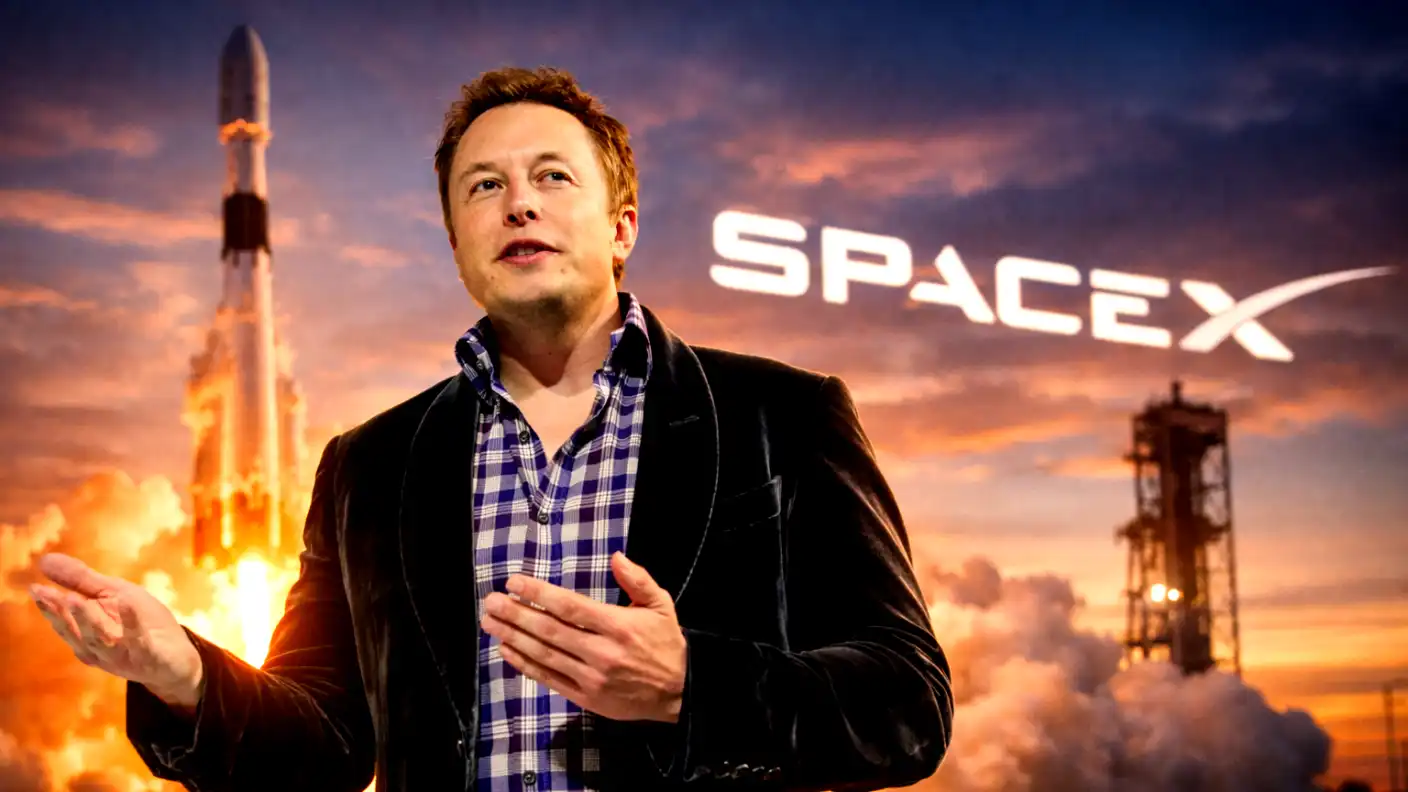
SpaceX Stock Extends its spectacular gains in premarket trading on Monday, demonstrating that the market’s insatiable appetite for the aerospace and satellite giant has not slowed down after its historic debut. Following its record-breaking, $75 billion initial public offering (IPO) on the Nasdaq last week, shares of the newly listed space conglomerate caught another massive wave of buy orders in early trading. This continued upward momentum has further solidified the company’s market capitalization comfortably past the $2.1 trillion threshold, cementing its position as one of the most dominant and valuable industrial enterprises on Earth.
The robust premarket surge follows a stellar first day of public trading on Friday under the ticker symbol SPCX. Underwriters originally priced the blockbuster offering late Thursday at a fixed price of $135 per share, raising an unprecedented $75 billion. When trading officially commenced, the stock immediately jumped by 11% to open at $150 per share, before climbing as high as $169 during a frantic afternoon buying session. The shares ultimately closed their inaugural session at $160.95, representing a massive 19.2% gain from the initial offering price and valuing the firm at approximately $2.12 trillion.
In Monday’s early premarket trading, the stock extended these gains, rising by an additional 3.5% to trade around $166.50 per share. Financial analysts attribute this continued momentum to a broader rally in global equity markets, which received a massive boost over the weekend. President Donald Trump announced that the United States and Iran have officially agreed on a memorandum of understanding to end their military conflict and immediately reopen the Strait of Hormuz. This major geopolitical de-escalation drove down Brent crude oil prices and triggered a powerful, global risk-on rally, with investors eagerly pouring capital back into high-growth technology equities.
At its current, elevated valuation, SpaceX stands firmly as the sixth-largest publicly listed company in the United States, ahead of legacy hardware and industrial giants. The firm’s $2.12 trillion market capitalization places it comfortably ahead of microchip supplier Broadcom at $1.8 trillion, energy producer Saudi Aramco at $1.7 trillion, and even its electric-vehicle sibling, Tesla, which currently holds a valuation of $1.4 trillion. This rapid valuation climb has defied early warnings from conservative analysts, who argued prior to the listing that a company generating $18.7 billion in annual revenue should not trade at such an astronomical price-to-sales multiple.
The continued appreciation of the stock has also cemented the historic personal wealth expansion of its founder, Elon Musk. Musk remains the undisputed controller of the aerospace empire, holding approximately 42% of the total equity and commanding about 85% of its corporate voting power. At the current trading level, Musk’s personal holdings in the company are worth roughly $890 billion. When combined with his $260 billion stake in Tesla and his private holdings in artificial intelligence startup xAI, the successful listing has officially made Musk the world’s first trillionaire, with his total net worth estimated at an unprecedented $1.15 trillion.
The successful market debut has also reaped a massive, historic financial windfall for the underwriting syndicate on Wall Street. Even though the company negotiated an incredibly tight commission rate of just 0.67%, the unprecedented $75 billion size of the capital raise generated a record-breaking $500 million fee pool. Joint lead bookrunners Goldman Sachs and Morgan Stanley claimed the largest share of this bounty, earning approximately $100 million each in direct fees. The financial institutions expect to earn millions more in secondary trading commissions and prime brokerage fees as massive index funds and institutional managers adjust their portfolios to hold the stock.
The immense scale of the listing has forced major index providers to adjust their traditional inclusion timelines to prevent tracking errors. The Nasdaq index committee recently activated its “Fast Entry” rules for the stock, eliminating standard float waiting periods to fast-track its inclusion into the benchmark Nasdaq-100 index within 15 trading days. FTSE Russell and MSCI global funds have enacted similar accelerated timelines, planning to add the stock to their flagship indexes within 5 to 10 trading days. This upcoming, mandatory index-tracking buying will force passive mutual funds and ETFs to purchase billions of dollars in shares, creating a massive, structural demand wave.
Bullish investors argue that the company’s valuation is fully justified because it operates as three highly lucrative, monopolistic businesses wrapped into one corporate structure. The launching division commands a dominant 90% share of the global commercial space launch market, while its Starlink satellite constellation generated a massive $11.4 billion in 2025, accounting for 61% of total corporate revenues. Additionally, the company recently consolidated Musk’s AI startup, xAI, embedding advanced machine learning models directly into its orbital communications network to build a highly defensible, next-generation AI-data infrastructure that traditional telecom and tech rivals cannot easily replicate.
The continued premarket momentum of the newly listed stock signals a permanent turning page for global capital markets. By proving that public markets possess more than enough depth to absorb a trillion-dollar technology conglomerate, the company has officially re-energized a sluggish initial public offering market, paving a clear path for other highly valued private AI and tech giants to go public. As trading continues on the Nasdaq, the performance of this monumental listing will establish a powerful precedent for how the market prices the future of space exploration, global satellite connectivity, and advanced artificial intelligence.