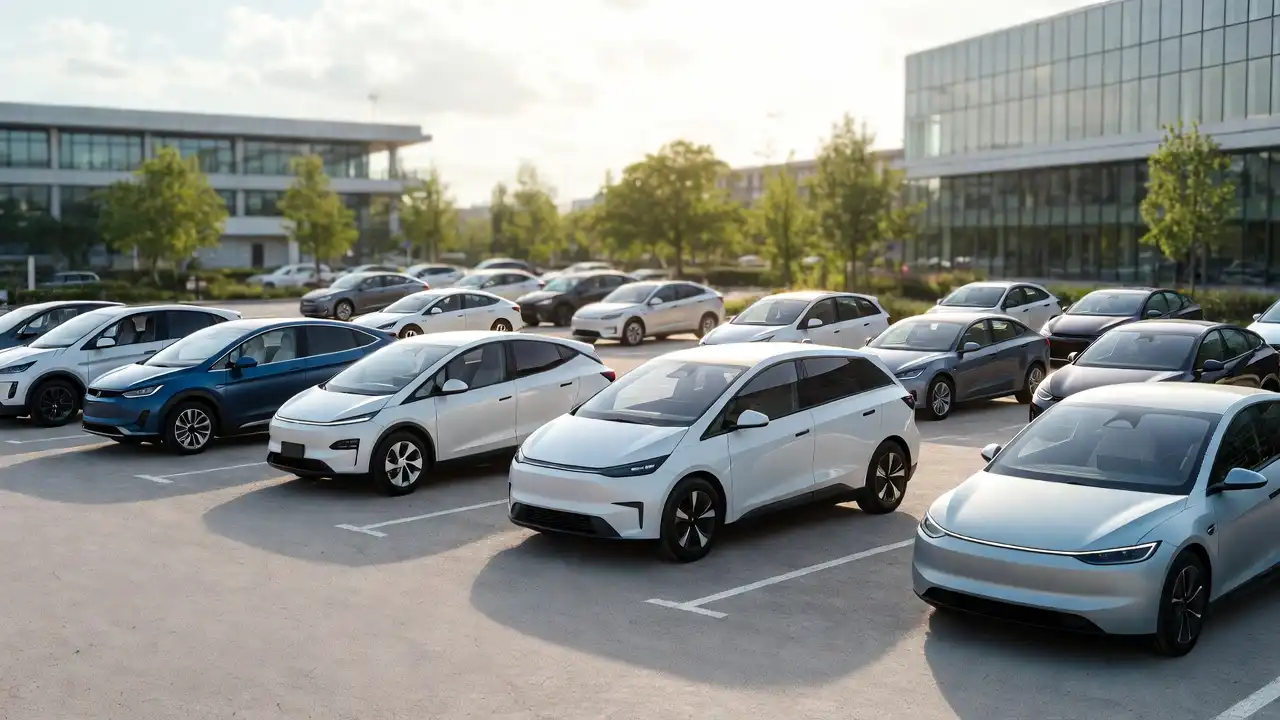
The global automotive sector is experiencing a profound, highly contentious geopolitical shift, and Spain has emerged as the premier gateway for Chinese electric vehicle manufacturers entering Europe. While the European Union’s executive branch in Brussels implements punitive anti-subsidy tariffs on imported Chinese electric vehicles, Spanish authorities are taking a radically different, highly collaborative approach. Rather than shutting out Chinese companies, Spain is actively rolling out the welcome mat, handing over idle automotive factories, and encouraging joint-venture partnerships to secure its own industrial future.
This strategic hospitality is a matter of economic survival for the southern European nation. Spain stands as Europe’s second-largest automobile manufacturer, trailing only Germany. However, the country’s domestic automotive sector has struggled for years to recover from the economic fallout of the pandemic, with many major factories operating at less than half of their designed capacity. By welcoming Chinese giants like Chery, SAIC Motor, Leapmotor, and Geely, Spain is successfully protecting thousands of local manufacturing jobs, absorbing underutilized factory capacity, and turning itself into China’s primary industrial fortress inside the European Union.
The immediate result of this welcoming policy is a massive wave of capital investment and industrial re-shoring. Chinese automakers are no longer treating Europe as a mere export destination; they are building complete, localized manufacturing ecosystems on European soil. This transition represents a major paradigm shift in global manufacturing, proving that as trade barriers rise, the companies that can successfully localize their production will continue to dominate the global market, regardless of tariff wars.
Shifting the Factory Keys: Why Spain Replaced Germany as China’s Industrial Choice
When international observers think of Europe’s automotive heartland, their minds naturally drift to Germany, the home of legendary luxury brands like Mercedes-Benz, BMW, and Porsche. However, when Chinese automakers began mapping out their European manufacturing strategies, they selected a different destination. Spain has rapidly emerged as the preferred industrial hub for Chinese electric vehicle brands looking to build factories within the European Union’s regulatory borders.
The primary driver behind this geographic shift is cost efficiency. While Northern European countries like Germany and France offer highly skilled engineering pools, their labor costs, electricity prices, and corporate tax rates are exceptionally high. Spain, by contrast, offers a highly attractive compromise: a mature, world-class automotive supply chain, an experienced and highly trained local workforce, and labor costs that are significantly lower than those in Northern Europe.
Furthermore, Spain boasts excellent maritime logistics infrastructure. With major deep-water ports located in Barcelona, Valencia, and Galicia, Chinese manufacturers can easily ship raw materials and components from Asia, assemble the vehicles in Spanish factories, and distribute the completed cars to wealthy consumer markets across the continent via efficient rail and shipping networks.
The Underutilization Crisis of European Fabs
The willingness of Spanish authorities to welcome Chinese partners is driven by a quiet but severe industrial crisis. The European automotive market has never fully recovered from the supply chain shocks and economic contractions of the post-pandemic era. Overall European car sales fell from 15.3 million units in 2019 to less than 13 million units, leaving the continent with a massive surplus of underutilized manufacturing capacity.
Operating a high-tech automobile factory requires immense, constant volume to cover massive fixed overhead costs. When a plant’s output drops to 50% or 60% of its designed capacity, the facility quickly becomes an unsustainable financial drain on its parent company. Rather than shutting down these underutilized factories, laying off thousands of workers, and devastating local communities, European legacy automakers and regional governments are choosing to sell or lease their excess capacity directly to Chinese partners who possess the product momentum and capital to run them at full speed.
The Brussels Tariff Battle and the Local Assembly Loophole
The urgency for Chinese carmakers to establish local manufacturing hubs has been heavily accelerated by the European Union’s protective trade policies. In an attempt to protect domestic brands from cheap imports, the European Commission implemented countervailing anti-subsidy duties on Chinese-made electric vehicles, raising import tariffs significantly.
Furthermore, the European Union introduced the Industrial Accelerator Act. This strict legislation requires electric vehicles to be assembled within the EU and source at least 70% of their non-battery components locally to qualify for lucrative public procurement contracts and government consumer subsidies.
By localizing their manufacturing operations in Spain, Chinese brands can completely bypass these punitive import tariffs and satisfy local sourcing requirements, allowing them to offer their technologically advanced, highly competitive vehicles to European consumers without facing a regulatory price penalty.
The Major Alliances: Inside Spain’s High-Tech Automotive Revivals
The reindustrialization of Spain’s automotive sector is being led by four massive, highly strategic joint ventures and acquisition projects. These deals have brought together the pioneering software and battery technologies of Chinese manufacturers with the legacy assembly lines and local market expertise of Spanish partners.
These projects do not merely involve finishing vehicles that are almost entirely imported from Asia. To satisfy European regulators and secure long-term market access, Chinese brands are actively investing to build complete, local supply chains, set up regional headquarters, and establish dedicated research and development facilities directly within Spain.
Chery and the Ebro Joint Venture in Barcelona
The most advanced and highly watched project belongs to Chery Automobile, the leading vehicle exporter in China. Chery joined hands with Spanish brand Ebro-EV Motors to revive the idle, historic former Nissan factory in the Zona Franca industrial zone of Barcelona, which had been shut down in 2021, leaving thousands of local workers unemployed.
The joint venture represents a massive €400 million investment, with both public and private sectors contributing to the facility’s modernization. The plant will initially assemble electric and combustion versions of Chery’s popular Omoda 5 and Jaecoo 7 SUV models, with mass production scheduled to scale rapidly.
The project has already successfully restored 1,000 direct manufacturing jobs and created over 3,000 indirect positions in the local supplier network, earning high praise from both Spanish Prime Minister Pedro Sánchez and regional Catalan authorities as a model of international cooperation.
Furthermore, Chery’s commitment to Spain extends far beyond the assembly line. The company has officially established its European Operations Center in Barcelona and launched the Chery Spain R&D Institute in Cornellà de Llobregat, marking the first time a Chinese automaker has set up its primary regional headquarters and research hub outside of China.
This localized integration allows Chery to adapt its vehicle specifications, software systems, and safety features directly to European consumer tastes, ensuring that its products are fully compliant with local regulations and establishing a solid, long-term foundation for its European expansion.
SAIC Motor’s Multi-Million Euro MG Hub in Galicia
Not to be outdone, China’s state-owned automotive giant SAIC Motor, which owns the highly popular MG brand, announced an ambitious plan to build its first European Union manufacturing facility in Spain. The company has selected the Galician port town of Ferrol in northwestern Spain as the site for a massive logistics, assembly, and powertrain manufacturing hub.
The initial investment in the Galician project is set at €200 million ($232 million), with construction scheduled to begin in 2027 and the plant targeting full operational status by the end of 2028. The facility, located between the port of Ferrol and the nearby town of As Pontes, will have an annual production capacity of 120,000 vehicles, creating more than 2,300 local jobs, including 1,000 direct assembly positions.
By building this massive port-side facility, SAIC can easily import critical components, assemble the highly popular MG electric vehicles locally, and export them directly to markets across Western Europe via secure maritime shipping channels, completely bypassing long-distance overland logistics.
The Stellantis-Leapmotor Joint Venture in Zaragoza and Madrid
The collaborative trend has also infected the world’s third-largest automotive group, Stellantis. In a historic move that represents the first time a major Western automaker has offered its European production lines to a Chinese partner, Stellantis announced that its underutilized factory in Zaragoza will begin producing electric vehicles for its Chinese joint-venture partner, Leapmotor, starting in the second half of this year.
Furthermore, Stellantis revealed plans to build Leapmotor’s compact electric models at its plant in Villaverde, Madrid, and is actively considering transferring ownership of the Madrid facility directly to the Spanish subsidiary of its Leapmotor joint venture.
For Stellantis, partnering with Leapmotor solves a massive financial problem: the Zaragoza and Madrid plants have seen their output plummet significantly compared to pre-pandemic levels, driving up fixed overhead costs and threatening local jobs.
By handing these lines over to Leapmotor, Stellantis can keep its factories running, protect local employment, and gain access to Leapmotor’s highly efficient, low-cost electric vehicle platforms, allowing the European group to offer competitive, budget-friendly EVs to consumers faster than it could develop them in-house.
Ford’s Valencia Assembly Line Sale to Geely
The American automotive giant Ford has also joined the Spanish re-shoring movement. Faced with declining sales and a slow-moving electrification strategy in Europe, Ford agreed to sell a major assembly line at its sprawling manufacturing plant in Valencia, Spain, to Chinese conglomerate Geely.
Geely, which already owns Volvo, Polestar, and Lotus, intends to use the Valencia assembly line to build multi-energy vehicles under its own brand.
The vehicles will utilize Geely’s Global Intelligent New Energy Architecture, allowing the factory to produce hybrid, plug-in hybrid, and battery-electric models on the same production line.
For Ford, the transaction provides a vital financial injection and prevents massive layoffs at the Valencia site, while granting Geely immediate, low-cost access to a world-class European manufacturing facility with an established local supplier network.
The Consumer Explosion: Chinese Brands Conquer the Spanish Roadways
The physical integration of Chinese automakers into Spain’s industrial base is being matched by an equally explosive rise in consumer adoption on the streets. For decades, European car buyers were notoriously loyal to domestic, established brands, making it incredibly difficult for new, foreign entrants to capture meaningful market share.
The economic realities of the post-pandemic era have completely shattered this traditional brand loyalty. Confronted by persistent inflation and high interest rates, Spanish consumers have become exceptionally price-sensitive.
Chinese brands, which offer highly advanced, tech-rich vehicles equipped with premium safety and connectivity features at prices that are significantly lower than traditional European rivals, have captured the market’s imagination.
Cracking the Top Ten Brand Rankings
The consumer transition is clearly visible in the latest vehicle registration data. During the first four months of the year, Chinese car brands expanded their presence in the Spanish market dramatically, accounting for 13.7 percent of all new vehicle registrations, representing 55,972 car registrations out of a total of 407,389 vehicles registered in Spain.
The real-world market penetration is even more dramatic when measured against sales to private individuals and families, where Chinese brands captured a stunning 20 percent of the market.
The momentum continued to accelerate through June, as Chinese e-commerce giant SAIC’s MG brand successfully broke into the top ten overall brand sales rankings in Spain, with total sales for all Chinese brands reaching 16,458 units in a single month to capture a collective 12.8% market share.
This represents an extraordinary 5.5% year-on-year increase, with several newly arrived Chinese brands registering year-on-year growth rates exceeding 100%.
The Projected Thirty-Percent Market Penetration
Automotive industry experts expect this rapid growth to continue unabated over the next several years. Raul Morales, the communications director for Faconauto, the federation representing Spain’s automotive dealership associations, projected that Chinese brands will likely capture an extraordinary 30 percent of the Spanish market within the next two to three years.
Morales noted that this rapid growth mirrors developments in other highly competitive, mature markets like Chile, where Chinese brands achieved 40 percent market penetration in less than ten years.
By investing heavily in brand building, establishing physical dealership networks, and offering comprehensive, long-term warranties, Chinese manufacturers have successfully convinced Spanish consumers that their vehicles are high-quality, reliable, and premium products, removing the “cheap import” stigma and establishing a permanent, dominant presence on European roadways.
Strategic and Economic Repercussions: Navigating the Trade War
The rapid, state-supported migration of Chinese carmakers to Spain has triggered intense, highly polarized debates within the European Union regarding the future of the continent’s industrial strategy. While Spanish authorities and labor unions celebrate the influx of Chinese capital as a vital lifeline that preserves local jobs and revitalizes historic manufacturing hubs, other European members, led by France and Germany, have expressed deep concern over the long-term strategic consequences.
Critics warn that allowing Chinese companies to buy up underutilized European factories is a dangerous “Trojan Horse” strategy. They argue that by completing only the final assembly stages in Europe while sourcing 90% of the high-value technology and battery components directly from China, these joint ventures are not creating real, long-term industrial value for Europe.
Instead, they are hollow-ing out the continent’s own technological capabilities, transforming European workers into low-cost assembly laborers for Chinese corporations and ensuring that Europe remains permanently dependent on Chinese technology for its green transition.
However, for Spanish policymakers and automotive executives, the alternative—allowing factories to close, laying off thousands of skilled workers, and watching the domestic manufacturing sector slowly collapse under the weight of global competition—is simply unacceptable.
They argue that cooperating with Chinese partners is the only viable way to protect the country’s industrial base, learn from China’s superior electric vehicle engineering, and buy the time necessary to transition local suppliers toward the electric future.
The global automotive transition is moving at a relentless pace, and Spain’s decision to welcome Chinese carmakers proves that in a world defined by rising trade barriers and intense technological disruption, corporate pragmatism and job preservation will always take precedence over political protectionism.