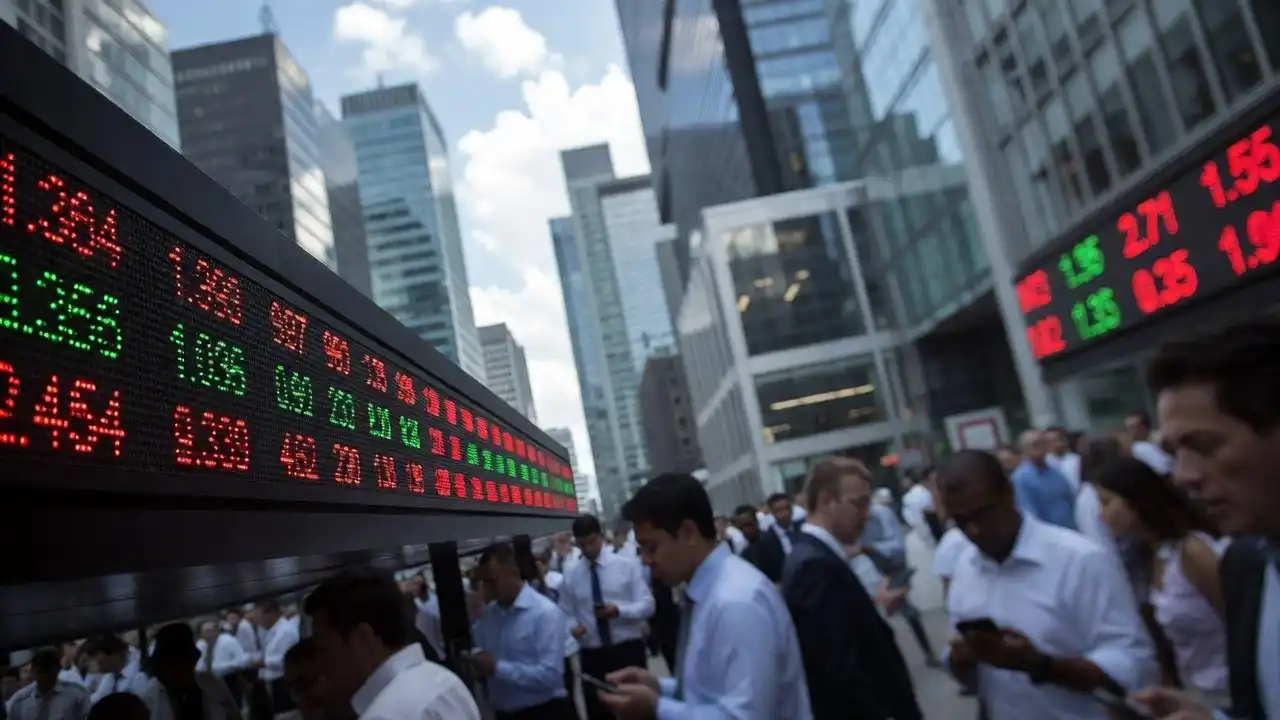
Financial markets are experiencing a significant period of transition as investors adjust their expectations for monetary policy. After a period of relative stability, a series of economic indicators, rising commodity prices, and persistent core inflation have forced market participants to reconsider the future path of interest rates. According to the CME FedWatch Tool and recent derivative pricing, financial markets are increasingly pricing in between one and two Federal Reserve interest rate hikes by the end of 2026. This sudden shift in expectations has triggered moderate anxiety across Wall Street, raising fears that a new monetary tightening cycle could choke off economic growth and depress corporate earnings.
However, a comprehensive historical analysis released by Barclays strategists suggests that these anxieties may be highly overblown. U.S. stock markets heading into a potential monetary tightening cycle can take significant comfort in history. By analyzing equity performance across every single Federal Reserve rate hike cycle over the past three decades, the research team demonstrated that the stock market has consistently delivered positive gains during periods of rising interest rates.
This historical resiliency suggests that rate hikes are not an automatic death sentence for equities. Instead, because the central bank typically raises interest rates to prevent a healthy, rapidly expanding economy from overheating, corporate earnings and consumer demand are usually strong enough to offset the headwind of higher borrowing costs. By looking past the immediate headline anxiety and focusing on these underlying economic realities, investors can navigate the upcoming monetary cycle with confidence, identifying the specific sectors and strategies that are historically positioned to thrive.
Decoding the Barclays Study: S&P 500 Performance Since the 1990s
The study conducted by Barclays strategists, led by Venu Krishna, provides a detailed, data-driven look at how the S&P 500 behaves when the Federal Reserve embarks on a tightening campaign. Rather than relying on short-term market reactions or speculative economic models, the researchers examined every single interest rate hike cycle dating back to the early 1990s.
The Fundamental Link Between Economic Growth and Rate Hikes
The core finding of the Barclays research is highly reassuring for long-term investors. The study revealed that the S&P 500 generated positive annualized returns in every single rate hike cycle over the past three decades, measured from the date of the very first rate hike to the date of the final one.
These annualized returns ranged from a minor gain of 0.1% to a highly robust 7.8%, with the median annualized return across all cycles standing at a very healthy 5.6%.
This consistent profitability highlights a fundamental economic truth: the Federal Reserve does not raise interest rates in a vacuum. Central bankers typically initiate a tightening cycle because they see strong, self-sustaining economic growth. When gross domestic product is expanding, corporate revenues are rising, and consumer spending remains robust, businesses can easily absorb higher borrowing costs.
The positive equity performance recorded during these hiking cycles is not surprising, as these rate hikes mostly occur in healthy growth environments where corporate earnings are expanding fast enough to easily outrun the rising cost of capital.
Measuring the Range of Historical Annualized Returns
The wide range of historical returns—from 0.1% to 7.8%—shows that while the overall trajectory of the stock market remains positive during rate hike cycles, the strength of the stock market’s performance depends heavily on the broader macroeconomic context.
For instance, during cycles where inflation remains moderate and economic growth is driven by genuine technological and productivity gains, the stock market can generate highly impressive, upper-end returns.
On the other hand, if the central bank is forced to raise rates aggressively to combat severe, supply-driven inflation, the stock market’s gains may be significantly compressed, landing near the lower end of the historical range. By analyzing these historical variations, investors can set realistic expectations for their portfolios, recognizing that while a rate hike cycle may slow down the pace of stock market gains, it rarely triggers a broad-based market collapse.
The Role of Investor Perception: Ahead or Behind the Curve
While the historical data provides significant comfort, the Barclays strategists also warned that past performance is not a guaranteed blueprint for future returns. The ultimate success or failure of a stock market during a tightening cycle depends heavily on investor perception and the perceived credibility of the central bank.
The Critical Impact of Central Bank Credibility on Equity Valuations
A primary factor determining how the stock market reacts to rising interest rates is whether investors believe the Federal Reserve is “ahead or behind the curve.” If the market believes that the central bank is acting proactively and decisively to contain inflation before it becomes deeply embedded in the economy, investors will view the rate hikes as a healthy, stabilizing measure. This positive perception supports investor confidence, allowing equity valuations to adjust smoothly to higher interest rates without triggering a panic-driven sell-off.
Conversely, if the market perceives that the Fed is acting too slowly, allowing inflation to run out of control before scrambling to raise rates aggressively, the stock market’s reaction can be highly volatile.
When investors believe the central bank is behind the curve, they worry that policymakers will eventually be forced to implement exceptionally harsh rate hikes that could tip the economy into a severe recession. This fear can compress valuation multiples rapidly, causing sharp sell-offs even if current corporate earnings remain strong, proving that central bank credibility is a vital driver of equity market stability.
Lessons from the 2022-2023 Inflation Battle
The critical role of investor perception was clearly demonstrated during the Federal Reserve’s historic inflation battle of 2022 and 2023. During this period, market dynamics diverged significantly from historical norms, largely because the central bank was perceived as having waited too long to address a massive surge in consumer prices.
Because the Fed had to raise its benchmark rate from near-zero to over 5% in a highly compressed timeframe, traditional defensive sectors like real estate, utilities, and financials suffered heavy, highly unusual sell-offs. These interest-rate-sensitive sectors, which typically perform stably during standard tightening cycles, were crushed by the rapid rise in borrowing costs.
At the same time, the Technology and Energy sectors surged, driven by structural growth trends and rising oil prices. This historic divergence proved that sector-specific performance during a rate hike cycle is highly dependent on the unique macroeconomic drivers of that specific era, forcing modern investors to be far more selective when building their portfolios.
Sector-Specific Winners: Why Tech and Energy Lead the Pack
The Barclays study also analyzed sector-specific performance, identifying which industries are historically positioned to deliver the strongest returns when interest rates are rising. The data revealed that two sectors consistently outperform the broader market during monetary tightening cycles: Technology and Energy.
The Pricing Power of the Modern Technology Sector
According to the historical data compiled by Barclays, the Technology sector has posted the strongest performance during rate hike cycles, generating a highly impressive median annualized return of 14%. This outstanding performance challenges the traditional financial theory that high-growth tech stocks are highly vulnerable to rising interest rates because their future cash flows are worth less when discounted at higher yields.
The resilience of the modern Technology sector stems from its immense pricing power and structural growth drivers. Unlike the speculative dot-com startups of the late 1990s, today’s leading technology giants generate massive, highly stable revenues from recurring software subscriptions, enterprise cloud services, and global digital advertising.
Furthermore, the ongoing artificial intelligence revolution has created a massive, non-discretionary capital expenditure boom, where companies are investing billions of dollars to upgrade their computing infrastructure regardless of interest rate levels. This structural demand allows leading tech firms to maintain strong earnings growth even during a tightening cycle, easily offsetting the financial drag of higher interest rates.
Commodity Cycles and the Resilience of Energy Stocks
The second-best performing sector identified in the Barclays study was Energy, which posted a highly robust median annualized return of 8.8% during historical rate hike cycles. This strong performance is closely linked to the macroeconomic conditions that typically trigger a central bank tightening campaign.
The Federal Reserve usually raises interest rates when the economy is overheating, consumer demand is high, and commodity prices are rising. Because energy stocks are highly sensitive to the price of crude oil and natural gas, a rising commodity cycle directly boosts the revenues and profit margins of exploration, production, and refining companies.
Furthermore, energy companies have significantly improved their capital discipline over the past decade, using their massive cash flows to pay down debt and return capital to shareholders through dividends and share buybacks rather than funding speculative drilling projects. This disciplined approach has turned energy stocks into highly attractive, cash-generative defensive assets that can provide a vital hedge against inflation and rising interest rates.
Macroeconomic Implications for late 2026 and Beyond
Applying these historical lessons to the current economic landscape of late 2026 provides vital clarity for investors attempting to navigate a highly complex and volatile market environment.
While the Federal Reserve recently chose to hold its benchmark interest rate steady, a series of geopolitical and domestic developments have kept the threat of future rate hikes alive. Geopolitical conflicts, including ongoing tensions in the Middle East and supply disruptions in the Red Sea, have driven up transport costs, while global agricultural trade remains complicated by shifting tariff regimes.
These supply-side pressures have kept core inflation sticky, forcing central bank hawks to warn that further tightening may still be necessary to bring consumer price inflation back to its official 2% target.
However, the broader U.S. economy remains remarkably resilient:
- Corporate earnings for the S&P 500 continue to expand, driven by robust consumer demand and massive infrastructure investments in data centers and semiconductor manufacturing.
- While economists warn of a minor 1.5% margin of error in national GDP projections, the underlying economic engine remains strong.
- Major technological projects, including multi-billion-dollar data center campuses requiring over $1 billion in individual capital outlays, are moving forward at a rapid pace, providing a powerful, ongoing stimulus to the industrial and technology sectors.
This combination of strong economic growth and sticky inflation represents a classic, historical environment for a Federal Reserve tightening cycle. If the central bank is eventually forced to raise interest rates by 25 or 50 basis points later in the year, the Barclays study suggests that the stock market is highly capable of absorbing the move.
As long as the Fed communicates its decisions clearly, maintains its regulatory credibility, and avoids a sudden, panic-driven series of aggressive hikes, the S&P 500 is historically positioned to continue its upward trajectory, proving that the digital economy can easily survive and thrive in a higher-interest-rate environment.
Shifting Focus to Quality and Cash Flow
The completed analysis by Barclays regarding stock market performance during Federal Reserve rate hike cycles represents a vital, much-needed reality check for the global investment community. By demonstrating that the S&P 500 has consistently delivered positive annualized returns in every single tightening cycle since the 1990s, the research has proven that rising interest rates are not an automatic threat to equity valuations.
As investors prepare for the potential of further monetary tightening, the key to long-term portfolio success lies in selectivity, capital discipline, and a focus on high-quality cash flows. By allocating capital to resilient sectors like Technology and Energy, which possess the pricing power, structural growth drivers, and commodity hedges necessary to thrive in a high-rate environment, investors can successfully navigate the upcoming monetary cycle.
History shows that those who look past the short-term headline panic and keep their money to work in robust, cash-generative businesses are well-compensated for their actions, ensuring that the stock market will continue to serve as a powerful engine of wealth creation long after the final rate hike has been implemented.