The physical map of Taiwan may be small, but its digital footprint spans the entire globe. As the global technology sector transitions from basic software applications to complex generative and agentic artificial intelligence, the island’s economic fortunes have reached unprecedented heights.
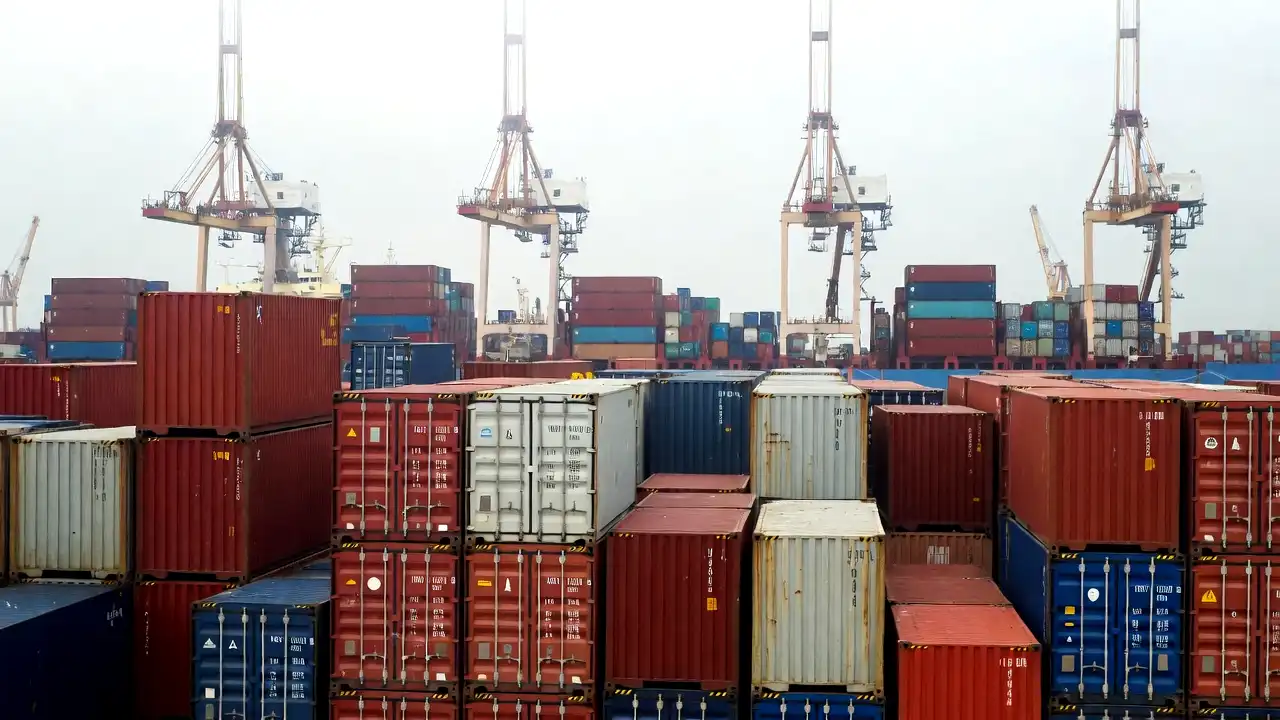
Recently, in early July 2026, official trade data confirmed that Taiwan’s outbound shipments surged by nearly 50% during the first half of the year.
This historic export performance is driven by an insatiable global appetite for advanced processors, AI servers, and high-performance computing hardware.
This export explosion aligns with the strategic vision of President Lai Ching-te. Since taking office, Lai has actively championed an ambitious plan to construct a highly resilient “AI Island” and transform the local stock exchange into “Asia’s Nasdaq.”
By leveraging its dominant position in the global semiconductor supply chain, Taiwan is translating its physical chip manufacturing capabilities into massive macroeconomic growth.
While other export-oriented economies struggle with cooling global demand, Taiwan’s specialized technology focus has propelled its real gross domestic product expansion to its fastest pace in nearly four decades.
Decoding the Massive Export Surge
The scale of Taiwan’s external trade performance has consistently outperformed Wall Street projections. According to data released by the Ministry of Finance, the country’s outbound sales reached near-record heights month after month.
During the first five months of the year, cumulative exports surged by 48.7% year-on-year to hit US$341.83 billion.
At the same time, cumulative imports grew by 37.8% to reach US$256.63 billion, yielding a massive trade surplus of US$85.20 billion—representing a staggering 95.1% increase compared to the same period in the previous year.
When the June trade data is integrated, the first-half export expansion comfortably approaches the 50% mark, setting up the full-year outbound shipments to surpass US$800 billion for the first time.
The primary engine of this trade boom is the Information, Communication, and Audio-Video (ICT) sector, alongside the electronic components industry.
In May alone, exports from the ICT and video/audio industries skyrocketed by 75.2% year-on-year to US$34.84 billion, while semiconductor sales climbed to US$25.50 billion. Together, these two technology-centric categories accounted for 78.6% of the month’s total export value.
By geographic destination, the data reveals a rapid restructuring of global technology supply chains. Outbound shipments to the United States jumped by as much as 151.8% earlier in the year, driven by a bilateral trade agreement aimed at boosting American advanced manufacturing in exchange for lower tariffs.
Simultaneously, Taiwan’s exports to Singapore surged by an incredible 247.5% year-on-year, pushing Singapore’s share of Taiwan’s total export portfolio to 9.7%.
This regional spike indicates that global cloud service providers and hyperscalers are utilizing Southeast Asian hubs to build out their localized AI computing networks, with Taiwan serving as the primary hardware provider for these massive capital projects.
President Lai Ching-te’s “AI Island” and “Asia’s Nasdaq” Strategy
Taiwan’s economic outperformance is not a random byproduct of market cycles; it is the result of a deliberate, long-term industrial policy executed by the government. President Lai Ching-te has framed the semiconductor and AI industries as the core pillars of the island’s economic security and global strategic value.
Under his administration’s “Four Pillars of Peace” action plan, economic resilience is positioned as a primary deterrent to regional aggression.
By establishing Taiwan as an indispensable global hub for advanced technology, the administration aims to link the island’s physical security directly with the economic interests of the world’s leading democracies.
Lai has consistently urged domestic companies to look to fellow democratic partners in the West, Europe, and the Asia-Pacific region for trade and technology cooperation, systematically reducing critical dependence on mainland Chinese supply chains.
To support this industrial transition, the government has launched a series of market reforms to transform Taiwan’s financial ecosystem. Lai has set an official goal to turn the island’s capital market into “Asia’s Nasdaq,” making it a primary destination for global technology listings and venture capital.
To achieve this, regulatory bodies have implemented over 52 specific policy changes designed to ease market rules, simplify capital-raising procedures, and encourage retail trading participation through expanded day trading and margin trading structures.
By combining its physical manufacturing dominance with high-liquidity capital markets, Taiwan is attempting to build a comprehensive, self-sustaining technology ecosystem that can attract and fund the world’s most promising AI startups.
The Silicon Linchpin: TSMC and the $14.5 Billion Debt Rush
At the absolute center of Taiwan’s economic ascendancy is Taiwan Semiconductor Manufacturing Company (TSMC), the world’s largest dedicated chip foundry. TSMC currently manufactures over 90% of the world’s highly advanced processors and virtually 100% of the specialized chips used to run modern artificial intelligence models.
The chipmaker’s financial performance highlights the scale of the AI infrastructure boom. TSMC reported a record-breaking quarterly revenue of NT$1.13 trillion (approximately US$35.6 billion) in the first quarter of the year, representing a 35% year-on-year increase.
Its net profits for the quarter reached $18.2 billion, more than double what it generated during the same stretch two years prior.
To share this wealth with its workforce and maintain high talent retention, the company’s leadership approved a 30% increase in average employee profit-sharing payouts.
To maintain its dominant market share and expand its capacity for advanced packaging technologies, such as Chip-on-Wafer-on-Substrate (CoWoS), TSMC and its local suppliers have embarked on an unprecedented capital expenditure campaign.
Taiwanese technology companies have completed a record $14.5 billion in corporate debt deals to fund new factory construction and tool installations.
This intense corporate activity has driven the benchmark Taiwan Stock Exchange (TAIEX) to historic records, passing India’s domestic stock market to establish Taiwan as the world’s fifth-largest bourse by overall market capitalization.
The Hidden Flaws of a K-Shaped Recovery
While the aggregate trade and stock market numbers suggest an economy in perfect health, local financial analysts and central bank officials are urging caution, pointing to a growing economic divergence within the domestic workforce.
The primary structural risk facing Taiwan is a highly pronounced K-shaped economic recovery. While the technology, semiconductor, and hardware server sectors are expanding at a blistering pace, non-technology industries—such as textiles, basic metals, plastics, and domestic retail—are experiencing weak growth or outright stagnation.
Because the high-tech semiconductor sector is highly automated and capital-intensive, it employs a relatively small percentage of the total domestic workforce, despite generating the vast majority of the country’s export revenue.
This concentration of wealth and growth in a single sector has created real domestic challenges. Average consumer prices in Taiwan hit a 17-month high recently, with the consumer price index rising 2.60% year-on-year, driven by high global fuel costs and food price spikes.
For the average worker employed outside of the high-paying semiconductor sector, this combination of rising living costs and flat wages represents a real decline in purchasing power.
The central bank has warned that if this K-shaped divergence continues to widen, it could lead to social friction and domestic consumption imbalances, potentially requiring targeted state intervention or monetary tightening to cool down the overheated technology sector.
Geopolitical Squeezes and Energy Bottlenecks
Taiwan’s economic future is also shaped by intense geopolitical realities and geographical limitations. The island imports roughly 96% of its energy, making its industrial base exceptionally vulnerable to global energy supply disruptions.
The ongoing military conflicts in the Middle East have repeatedly roiled global energy markets, creating significant price volatility.
Although the Taiwanese government has absorbed nearly 75% of these fuel price increases to protect local consumers and businesses, a prolonged closure of global maritime chokepoints like the Strait of Hormuz—through which a quarter of the world’s oil and 20% of its liquefied natural gas passes—would present a severe threat to Taiwan’s electrical grid.
Because advanced chip fabrication plants require an uninterrupted, high-volume supply of electricity to operate, any domestic energy shortage would instantly paralyze production lines, triggering a global tech crisis.
Beyond energy, the most significant threat remains the ongoing political and military pressure from mainland China. Beijing’s ambition to unify Taiwan with the mainland has not wavered, and the Chinese military regularly conducts naval and air maneuvers around the island.
In response, the Lai administration is systematically building up its domestic defense capabilities, with local drone manufacturers and defense aerospace firms seeing their shares hit daily limits on the stock exchange.
For international investors, this ever-present security risk remains a persistent concern, as any direct conflict or blockade in the Taiwan Strait would decimate global GDP and halt the worldwide artificial intelligence rollout overnight.
The US Tariff Threat and the Next Phase of Global Sourcing
The final major challenge on Taiwan’s economic horizon is the changing trade policies of its Western allies. While the United States remains Taiwan’s most critical security and economic partner, the widening bilateral trade surplus is attracting scrutiny from American policymakers.
As the U.S. government looks to correct trade imbalances and protect its domestic manufacturing base, there are rising concerns that a future U.S. administration could implement universal import tariffs or increase regulatory pressure on foreign chip imports.
To mitigate this risk, President Lai has actively supported TSMC’s international expansion strategy. The chipmaker has committed to spending up to $56 billion to construct and operate advanced semiconductor fabrication plants outside of Taiwan, including major projects in Arizona, Japan, and Germany.
While some domestic critics worry that building factories overseas could weaken Taiwan’s strategic position as the world’s premier chip hub, the administration argues that these overseas facilities serve as a necessary safety valve.
By transferring a portion of its physical manufacturing capacity closer to its primary customers in North America and Europe, Taiwan can reduce its trade surplus concerns, secure its position within Western supply chains, and protect its core intellectual property and high-value research hubs on the island.
Balancing Growth and Risk in the AI Era
Taiwan’s nearly 50% export surge in the first half of the year represents a clear validation of the island’s technical expertise and the rapid execution of President Lai’s “AI Island” vision. By positioning itself as the indispensable hardware engine of the artificial intelligence revolution, Taiwan has delivered record-breaking economic growth that remains the envy of the developed world.
Yet, to sustain this trajectory over the next decade, the country’s leadership must navigate a highly complex array of structural and geopolitical risks.
Managing the internal K-shaped economic divide, securing resilient energy import networks, and maintaining stable relations with both the United States and China will require exceptional policy agility.
If Taiwan can successfully balance its rapid technological expansion with proactive risk management, the island will remain the secure, prosperous, and indispensable heart of the global digital economy for generations to come.