Key Points:
- Canada’s Telesat held preliminary talks with the Italian government to provide highly secure, encrypted satellite communications.
- The proposal targets secure connections for Italy’s diplomats, defense officials, and government agencies operating in high-risk zones.
- Rome previously considered a five-year, €1.5 billion ($1.6 billion) deal with Elon Musk’s dominant SpaceX Starlink network.
- Telesat is pitching its upcoming Lightspeed Low Earth Orbit (LEO) constellation as a secure, sovereign alternative to U.S. giants.
Canada’s satellite communications pioneer, Telesat, has held preliminary talks with the Italian government to provide highly secure, encrypted satellite services. According to three sources close to the matter who spoke to Reuters, the Ottawa-based satellite operator pitched its upcoming low-Earth-orbit (LEO) network, Telesat Lightspeed, to Italian officials in May 2026. This potential partnership aims to ensure robust, military-grade communications for Italy’s government, diplomats, and defense forces operating in high-risk areas worldwide.
The potential agreement would provide Italy with a critical sovereign communications alternative as European nations grow increasingly wary of their dependency on American commercial giants. Sources revealed that Rome had previously considered a massive, five-year, €1.5 billion (approximately $1.6 billion) contract with SpaceX’s Starlink network. While Starlink currently dominates the global space-based broadband market with around 7,000 active LEO satellites, the proposed deal sparked deep concerns among Italian defense and security officials regarding data sovereignty and unilateral control by Elon Musk’s private company.
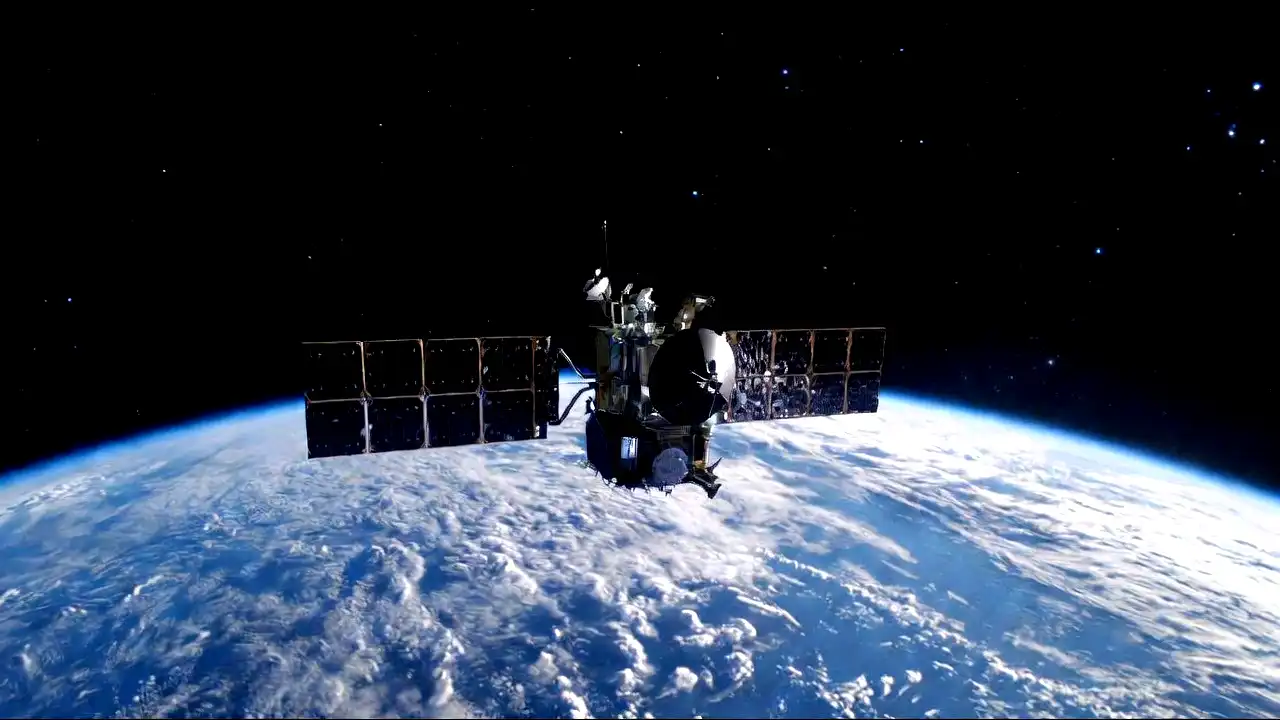
Telesat is positioning its Lightspeed constellation as a highly secure, enterprise-grade alternative specifically designed to meet the strict sovereignty requirements of allied governments. Designed from its inception for government, aviation, and military end-users, Lightspeed will consist of a planned global mesh network of 198 state-of-the-art LEO satellites. To make the network even more attractive to defense users, Telesat recently added 500 MHz of military Ka-band spectrum to the constellation. This adjacent spectrum allows allied defense agencies to maintain secure, highly resilient communication links that are deeply resistant to electronic jamming and adversarial interference.
Low Earth orbit (LEO) satellites offer immense technical advantages over traditional geostationary (GEO) satellites. Because LEO satellites operate at altitudes between 500 and 2,000 kilometers, they orbit approximately 36 times closer to the Earth than older GEO vessels. This massive reduction in physical distance drastically cuts signal latency down to milliseconds. Low-latency connections are vital for modern military and diplomatic operations, enabling real-time video feeds, secure tactical coordination, and immediate cloud-based intelligence sharing from remote regions.
While the preliminary discussions in Rome did not address specific financial figures, the talks highlight a broader shift in how European governments procure satellite communications. Over the past year, European policymakers have slowly come to realize that they need homegrown, sovereign LEO solutions today to protect their critical infrastructure. While the European Union’s planned €6 billion IRIS² multi-orbit security constellation continues to face severe administrative delays and national rivalries, governments are looking to non-U.S. commercial partners like Telesat to bridge the gap.
The potential Italian deal aligns with Telesat’s broader commercial expansion across Europe. The Canadian satellite operator has already signed several high-profile contracts with major European telecommunications and defense groups, including France’s Orange and Space Norway. By establishing local landing stations and secure gateways in Europe, Telesat is building a resilient, integrated space-and-terrestrial network that allows regional operators to maintain absolute control over their national data flows, avoiding the legal reaches of the U.S. CLOUD Act.
However, Telesat must still navigate significant near-term financial and logistical challenges. The company is currently working to refinance $1.7 billion of outstanding corporate debt due in December 2026, a move that has drawn scrutiny from credit analysts. To reassure its investors, Telesat has focused heavily on accelerating the deployment of its Lightspeed network. The company plans to launch its first two Pathfinder satellites on a SpaceX Falcon 9 rocket in December 2026, before starting a heavy launch schedule in mid-2027 to achieve global coverage by early 2028.
As the Italian government evaluates Telesat’s proposal, the outcome of these preliminary talks will be an essential indicator of the future of the sovereign satellite market. If Rome chooses to partner with the Canadian operator rather than SpaceX’s Starlink, the decision will demonstrate that European defense agencies are willing to pay a premium for data sovereignty and customized security architectures. By successfully positioning its Lightspeed network as a secure, neutral, and allied-friendly alternative, Telesat is carving out a highly profitable, resilient niche in the highly competitive global space race.