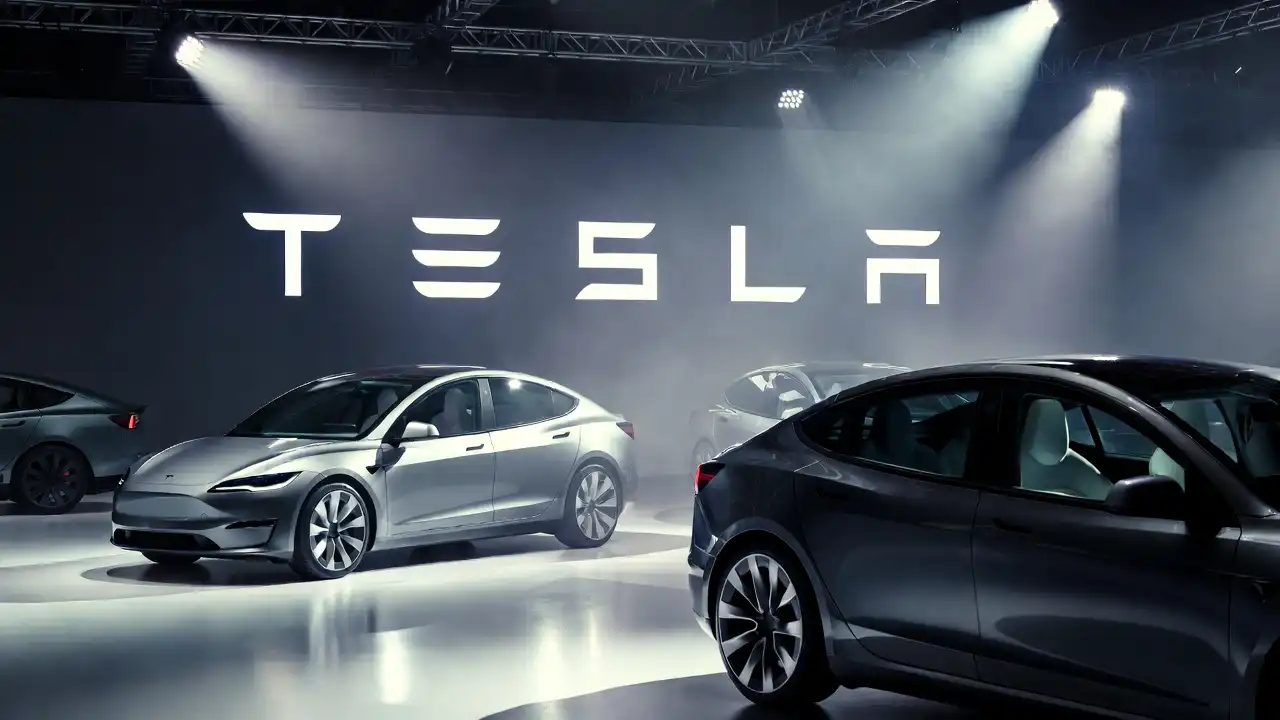
Tesla is reportedly evaluating strategic options for its Chinese business operations, including a potential equity sale, joint-venture restructuring, or structural ring-fencing of Gigafactory Shanghai. The corporate maneuver aims to clear national security, foreign ownership, and regulatory roadblocks that currently prevent a proposed mega-merger or parent holding company consolidation between Tesla and aerospace leader SpaceX. By creating a clear legal firewall around its Chinese manufacturing and retail assets, Tesla could resolve strict federal conflict-of-interest rules, paving the way to combine Chief Executive Officer Elon Musk’s automotive and aerospace empires under a single multi-trillion-dollar corporate umbrella.
The underlying catalyst driving the potential restructuring is the sharp geopolitical conflict between SpaceX’s classified defense contracting and Tesla’s deep manufacturing ties to mainland China. SpaceX functions as an indispensable national security contractor for the United States government, holding multi-billion-dollar contracts with the U.S. Space Force, the Department of Defense, and NASA to launch national security satellites, deploy the classified Starshield communications constellation, and build lunar landing craft. Conversely, Tesla operates its largest and most efficient vehicle manufacturing plant in Shanghai, producing over 900,000 electric vehicles annually—accounting for nearly 50% of Tesla’s total global delivery volume.
Federal regulatory agencies, including the Committee on Foreign Investment in the United States and the Department of Defense, maintain strict oversight policies regarding defense contractors with major manufacturing assets inside foreign adversary nations. National security officials express concern that an overarching corporate structure uniting SpaceX and Tesla could expose sensitive aerospace technology, satellite communications protocols, or classified software code to Chinese state oversight under Beijing’s Data Security Law and Anti-Espionage Law. Carving out or selling a stake in Tesla’s China business eliminates this regulatory friction, allowing a consolidated parent company to satisfy United States defense security standards while maintaining commercial vehicle sales in Asia.
TechGolly provides a detailed financial, legal, and geopolitical analysis of Tesla’s potential China business restructuring, evaluating national security review mechanisms, Gigafactory Shanghai manufacturing economics, SpaceX defense contract flows, CFIUS regulatory hurdles, and the broader strategic outlook for an integrated Musk holding company.
Unpacking the Geopolitical Wall: Why SpaceX Contracts Force China Ring-Fencing
The primary force compelling Tesla to consider restructuring its Chinese operations is the strict legal and regulatory environment governing United States defense contracting. SpaceX has established a virtual monopoly over North American space logistics, securing high-value contracts across military, intelligence, and civil space agencies.
SpaceX’s defense portfolio includes the U.S. Space Force National Security Space Launch Phase 3 program, which awards billions of dollars in launch manifests for classified military satellites. Furthermore, SpaceX is constructing Starshield, a dedicated low-Earth-orbit satellite constellation engineered specifically for military reconnaissance, tactical battlefield communications, and real-time Earth observation. These military contracts require SpaceX executives, software developers, and manufacturing technicians to maintain high-level security clearances and adhere to strict federal defense security regulations.
Under United States defense acquisition rules and CFIUS guidelines, a company holding top-secret national security clearances cannot maintain operational structures that allow foreign governments to exercise leverage over its corporate assets. If a consolidated parent company owns both SpaceX and Gigafactory Shanghai, Chinese regulatory authorities could theoretically threaten to seize or suspend Tesla’s Shanghai plant during international trade disputes, using the factory as leverage to demand technological concessions or data access from SpaceX.
Furthermore, China’s statutory framework creates direct compliance risks for United States defense contractors. Chinese data laws require foreign corporations operating within mainland China to store all locally gathered data—including high-definition vehicle camera footage, mapping telemetry, and user location logs—on domestic Chinese servers managed by state-approved data centers. Chinese law enforcement agencies also maintain broad statutory authority to inspect corporate IT systems during national security reviews. Ring-fencing or selling an equity stake in Gigafactory Shanghai to local investors removes this systemic risk, isolating Chinese data operations from corporate parent balance sheets.
The Gigafactory Shanghai Footprint and Manufacturing Dependency
To evaluate the financial impact of a potential China business restructuring, investors must analyze the central role Gigafactory Shanghai plays in Tesla’s global automotive operations.
Constructed in 2019 under a unique municipal agreement that allowed Tesla to become the first foreign automaker to operate a wholly owned factory in China without a local joint-venture partner, Gigafactory Shanghai developed into Tesla’s highest-volume and most cost-effective manufacturing plant. In recent operating cycles, the Shanghai plant achieved an annual production capacity exceeding 950,000 vehicles, assembling popular Model 3 sedans and Model Y crossovers for both the domestic Chinese market and export destinations across Europe, Asia, and Australia.
Gigafactory Shanghai achieves industry-leading manufacturing margins due to its high degree of localized supply chain integration. Over 95% of the components used in Shanghai-built vehicles—including battery cells from CATL and LG Energy Solution, structural stampings, and interior electronics—are sourced directly from domestic Chinese suppliers operating within a short radius of the plant.
However, executing a structural carve-out or equity sale does not mean Tesla must abandon its Chinese manufacturing footprint. Under a potential restructuring model, Tesla could sell a controlling 51% equity stake in its local Chinese manufacturing and retail operations to a consortium of local Chinese state guidance funds, private investors, or automotive partners. Tesla would retain a minority equity interest, while signing long-term licensing and brand royalty agreements that allow the local Chinese entity to continue manufacturing and selling Tesla-branded vehicles using licensed software and design blueprints.
This license-and-royalty model mirrors proven corporate structures deployed by global industrial brands in high-risk foreign markets. Tesla would collect high-margin brand royalties and software licensing fees on every vehicle sold in China, while transferring physical real estate liabilities, local labor management, and direct regulatory exposure to local equity partners, satisfying United States national security requirements.
The Financial Architecture of a Tesla-SpaceX Merger
The corporate rationale driving the potential sale of Tesla’s China assets is the creation of an overarching parent holding company often referred to as “X Holdings.” Combining Musk’s diverse corporate ventures under a unified corporate umbrella has long been discussed by Wall Street analysts, but executing the transaction requires aligning public market equities with private market valuations.
A consolidated parent holding company would combine Tesla’s public market valuation—hovering around $800 billion—with private market giants including SpaceX ($210 billion-plus valuation), xAI ($50 billion-plus valuation), and Neuralink. Combining these technology assets would create a multi-industry conglomerate valued between $1.2 trillion and $1.5 trillion on public stock exchanges.
Financial statements reveal that the balance sheets of Tesla and SpaceX are already financially intertwined. In its second-quarter earnings report, Tesla disclosed a massive $1.005 billion pre-tax unrealized paper gain on its internal holdings of private SpaceX equity. The paper investment gain proved crucial to Tesla’s reported financial results, accounting for nearly two-thirds of the automaker’s $1.11 billion in total quarterly GAAP net income.
Formally consolidating the enterprises through a stock-for-stock swap would allow public Tesla shareholders to own a direct equity stake in SpaceX’s high-margin Starlink satellite broadband monopoly and government launch business. In exchange, SpaceX would gain direct access to Tesla’s public market liquidity, deep retail shareholder base, and massive annual operating cash flows to fund its ambitious Starship lunar and Mars exploration programs.
Furthermore, a holding company structure solves Musk’s long-standing voting control objectives. Musk has repeatedly stated that he requires at least 25% voting power across his artificial intelligence and robotics enterprises to ensure long-term strategic alignment and prevent activist shareholder intervention. Consolidating his voting shares across Tesla, SpaceX, and xAI under an X Holdings umbrella guarantees the corporate voting leverage needed to direct long-term technology roadmaps.
Navigating the Chinese EV Market Price War and Domestic Competition
Beyond national security and merger considerations, restructuring Tesla’s China operations addresses growing commercial headwinds inside the domestic Chinese automobile market.
China’s domestic electric vehicle market has devolved into an intense, margin-crushing price war. Domestic Chinese automotive champions—led by BYD, Xiaomi Auto, Geely, Nio, and Huawei’s automotive division—are launching low-cost, feature-packed electric vehicles priced significantly below Tesla’s Model 3 and Model Y. Chinese automakers update vehicle models on rapid 12-to-18-month cycles, introducing advanced digital cockpits, interactive voice assistants, and localized autonomous driving software tailored specifically to Chinese consumer preferences.
Concurrently, Tesla faces localized administrative restrictions in China driven by government security concerns. State agencies, military bases, government ministries, and state-owned enterprises across multiple Chinese provinces have restricted or banned Tesla vehicles from entering their premises, citing concerns that Tesla’s external vehicle cameras and sensor arrays could record sensitive spatial data and transmit it to foreign servers.
Selling a controlling equity stake in Gigafactory Shanghai to local Chinese investors or state guidance funds would transform Tesla’s local presence from a foreign importer into a recognized domestic enterprise. A local joint-venture entity could navigate local data security audits more effectively, lift government complex access bans, and compete more aggressively against domestic rivals, preserving vehicle sales volumes while de-risking Tesla’s corporate balance sheet.
Regulatory Approval Pathways: CFIUS, the SEC, and Chinese Regulators
Executing a corporate transaction of this magnitude requires navigating a formidable, multi-jurisdictional regulatory approval gauntlet involving United States national security panels, federal securities regulators, and Chinese trade agencies.
In the United States, the Committee on Foreign Investment in the United States—an inter-agency panel led by the Department of the Treasury alongside the Department of Defense and Department of Homeland Security—would exercise primary jurisdiction over any corporate restructuring linking SpaceX with Tesla. CFIUS reviews focus specifically on identifying potential foreign access to sensitive technology, critical infrastructure, and national security supply chains.
To secure CFIUS approval for a Tesla-SpaceX consolidation, corporate legal teams must present an airtight structural isolation plan. The legal framework must prove that Tesla’s remaining Chinese sales channels or minority equity holdings in Shanghai cannot access SpaceX’s defense technology, Starshield satellite communications protocols, or classified Space Force launch parameters.
In addition to federal security reviews, the transaction must satisfy the Securities and Exchange Commission and state chancery courts protecting minority shareholder rights. Because Tesla is a public company while SpaceX is a private enterprise controlled by Musk and internal insiders, any asset sale, equity swap, or merger valuation must be reviewed by an independent special committee of Tesla’s board of directors supported by independent financial advisers.
Finally, Chinese regulatory approval represents a secondary critical hurdle. China’s State Administration for Market Regulation (SAMR) and local Shanghai municipal authorities must approve any equity transfer or corporate restructuring involving Gigafactory Shanghai. Chinese regulators will ensure that any ownership change protects local manufacturing employment, maintains tax revenues, and preserves technology transfer commitments made when Tesla first entered the Shanghai market.
Technology Transfers and Supply Chain Firewalls
A primary requirement for securing regulatory sign-offs in Washington is establishing immutable technological firewalls separating United States defense research from international automotive manufacturing.
In modern technology architectures, software code and artificial intelligence training models represent high-value intellectual property. Tesla’s Full Self-Driving (FSD) software and Optimus humanoid robotics models are trained on massive supercomputing clusters located in the United States, including xAI’s 200,000-GPU Colossus supercomputer in Memphis, Tennessee.
To satisfy U.S. defense authorities, Tesla must enforce strict data localization and network isolation between its domestic AI training clusters and its Chinese software engineering teams. Autonomous vehicle data gathered from Tesla cars in China must remain strictly isolated on domestic Chinese servers, while software code developed for U.S. military or aerospace applications remains completely inaccessible to Chinese operating units.
Physical supply chain security requires equal operational isolation. Shared material science innovations—such as cold-rolled stainless steel alloys developed for SpaceX Starship and used on the Tesla Cybertruck—must be audited to ensure that manufacturing blueprints and proprietary chemical formulations are not exported to foreign suppliers, preserving Western technological leads in advanced metallurgy and aerospace manufacturing.
Strategic Outlook for the Global Automotive and Aerospace Industry
The potential restructuring of Tesla’s China business and its ultimate consolidation with SpaceX signals the emergence of a new paradigm in global corporate organization, where mega-conglomerates reorganize their physical assets to adapt to a permanently fragmented geopolitical world.
Looking forward through the late 2020s, global technology and automotive enterprises will increasingly adopt geographically bifurcated operational models:
- In Western markets, corporate parent entities will focus on high-margin, security-sensitive technologies—such as defense space launch, satellite communications, advanced artificial intelligence, and automated defense hardware—operating in full compliance with U.S. and allied security mandates.
- In emerging and international markets, those same corporations will operate through decentralized, locally partnered subsidiaries or licensing frameworks, allowing them to capture high-volume commercial sales without exposing their core parent balance sheets to foreign regulatory retaliation or national security sanctions.
For Elon Musk’s corporate empire, restructuring Gigafactory Shanghai unlocks the ultimate strategic objective: creating X Holdings as the premier industrial, aerospace, and artificial intelligence conglomerate on Earth. Combining Tesla’s volume manufacturing capabilities, SpaceX’s launch monopoly, Starlink’s global internet reach, xAI’s computing power, and Neuralink’s medical interfaces creates a multi-trillion-dollar technological flywheel that will dictate the future of transportation, energy, space exploration, and artificial intelligence for decades to come.
Key Takeaways for Executives, Investors, and Policy Analysts
The potential restructuring of Tesla’s China operations and the rising probability of a SpaceX merger deliver vital strategic lessons for corporate decision-makers, institutional equity investors, defense contractors, and geopolitical policy analysts.
First, geopolitical risk dictates modern corporate architecture. Multinational corporations operating in sensitive technical sectors must design flexible corporate structures that allow them to ring-fence or divest foreign manufacturing assets quickly to satisfy national security requirements in their home markets.
Second, defense contracting and foreign manufacturing create inherent corporate conflicts. Companies holding classified military contracts cannot maintain direct operational dependencies on foreign adversary nations without facing severe regulatory scrutiny from federal defense and intelligence agencies.
Third, holding company structures offer powerful capital allocation flexibility. Creating an overarching parent company allows visionary founders to cross-collateralize balance sheet strength, lower capital costs, and unite complementary technology divisions under a unified strategic vision.
Finally, physical scale and technological integration represent the ultimate competitive moats. By aligning electric transportation, satellite communications, space launch logistics, and artificial intelligence training into a unified operational loop, mega-conglomerates build resilient physical networks capable of dominating global commerce throughout the 21st century.